College of Menominee Nation calendar blends culture, classes and career events
CMN’s spring calendar ties beadwork, talking circles and Ribbon Shirt Wednesdays to classes, internships and career prep in Keshena.
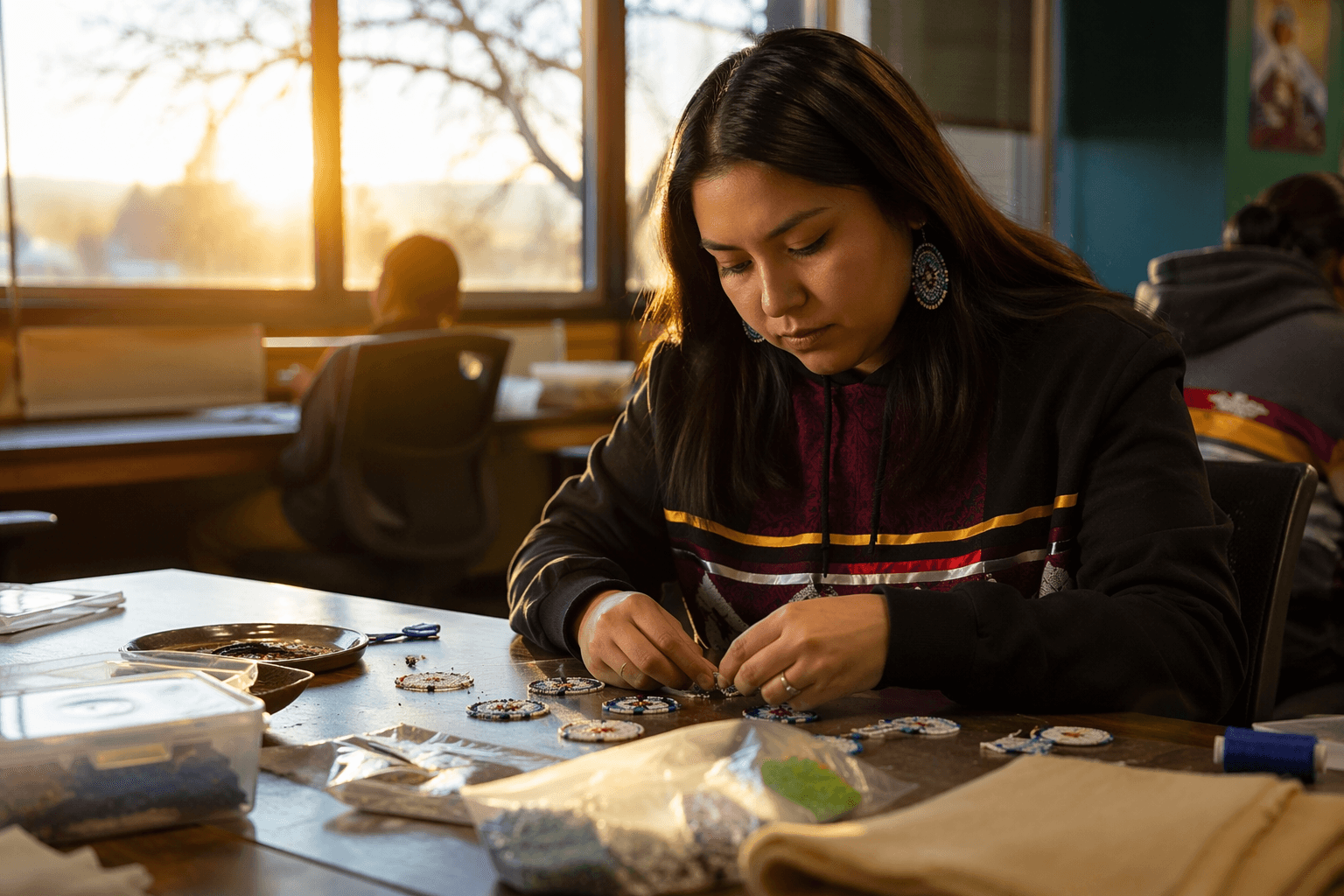
Campus life that mixes culture and coursework
The College of Menominee Nation’s late-spring calendar shows a campus moving on several tracks at once: cultural practice, academic work and career preparation. In Keshena, that means beadwork sessions, ribbon shirt and skirt days, talking circles, presentations, a wellness workshop and a career expo are all part of the same institutional rhythm.
The clearest takeaway for Menominee County is that CMN is not operating as a narrow classroom-only campus. Its schedule folds tradition and student support into the same weekly framework, with events such as Beading for Bliss, Ribbon Shirt or Skirt Wednesdays, Breathe and Bead sessions, Weaving Wednesdays, moccasin making and talking circles sitting alongside BUS495 class presentations, a mini internship fair, the last day of classes for the spring term, a 5th Annual WTCS Recognition Event, a president meeting and commencement.
What the calendar says about the spring term
The spring calendar is especially useful because it shows how CMN is guiding students from the final weeks of class into the next stage of college and work. BUS495 class presentations and the last day of classes for SP26 mark the academic finish line, while the mini internship fair and career expo push students toward employment, training and further education.
The most visible milestone on the list is 2026 commencement. CMN held the ceremony on May 15, 2026 at the Menominee Casino Resort Conference Center in the Five Clans Ballroom, starting at 10 a.m. The college said the celebration honored one of its largest graduating classes yet, a sign that the spring term was ending with real momentum.
That mix matters for families and community members because the calendar is spread across different parts of the day. Some events happen in the middle of the day, others in the late afternoon or evening, which makes it easier for working parents, students and elders to take part. For a county where campus, tribal and family life are closely linked, that scheduling flexibility is not a minor detail. It is part of how the college stays visible and accessible.
Culture is built into the weekly routine
The recurring cultural programming stands out just as much as the academic dates. Beading for Bliss, Ribbon Shirt or Skirt Wednesdays, Breathe and Bead, Weaving Wednesdays, moccasin making and talking circles all point to a campus environment where cultural identity is treated as part of student life, not something separate from it.
That approach fits the college’s broader mission. CMN says it promotes, perpetuates and nurtures American Indian language and scholarship, and its calendar gives that mission a daily shape. When students gather for beadwork or a talking circle, they are not only filling time between classes. They are participating in the kind of community-based learning that has long defined the college’s role in Keshena.
Why this matters in Menominee County
The calendar also makes more sense when placed against the demographics of Menominee County. The county had a 2020 census population of 4,255, and 78.5 percent of residents identified as American Indian and Alaska Native alone in Census Bureau QuickFacts data. In a place with that profile, culturally specific programming carries outsized importance because it speaks directly to the community’s identity and lived experience.
That local context helps explain why CMN remains such a central institution in the county. The college says it is a tribal Land Grant college chartered by the Menominee People, with its main campus in Keshena and a second campus in Green Bay. The Menominee Tribal government says the charter was established by Menominee Tribal Ordinance No. 93-2 to provide quality higher education to the Menominee people and advance the interests of the Menominee Nation.
The college itself opened in 1993, but its roots go further back into tribal self-determination. The Menominee Indian Tribe regained federal recognition in 1973 through the Menominee Restoration Act, Public Law 93-197, signed on December 22, 1973. That history matters because CMN was created in the wake of that restoration, as part of the tribe’s effort to build educational institutions that serve Menominee students on their own terms.
More than a campus, an economic anchor
CMN’s role is not only cultural and academic. Its 2024 economic impact study found that the college generated more than $16 million in added income for the Menominee Indian Reservation and the Shawano County economy in fiscal year 2022-23. The same study said CMN and its students supported 321 jobs, or roughly one out of every 68 jobs in the region.
That economic footprint gives the calendar added weight. A mini internship fair or career expo is not just a student service item on a flyer. It is part of a larger pipeline that connects local education to local employment. The study also noted that a similar analysis had been done in 2014, underscoring that CMN has been tracking its regional influence for years.
The college says its student-support system includes career services, wellness resources and library-community partnerships. Those pieces show up in the calendar too, especially in the wellness workshop and the events designed to help students stay grounded while they move toward graduation, work or advanced study.
What Keshena should take from the calendar
The spring calendar reads like a snapshot of how CMN functions in daily life: a place where students present class work, communities share cultural practices, and career planning sits beside traditional teaching. It is also a reminder that the college’s mission is practical as well as symbolic. CMN is preparing students for leadership, careers and advanced studies while staying rooted in Menominee language, scholarship and community life.
For Menominee County, that combination is the story. The calendar is not just a list of campus dates. It is a map of how culture, education and opportunity keep meeting in Keshena.
This article was produced by Prism’s automated news system from verified source data, official records, and press releases, then run through automated quality and moderation checks before publishing. The system is built and supervised by the people who set the standards it runs under. Read our full AI policy.
Did this article answer your question?


