Keshena to Host 34th Annual Sturgeon Feast and Celebration Powwow
Lake Superior's sturgeon population dropped from 500,000 to roughly 30,000. On April 18, Keshena's 34th annual feast pairs intertribal ceremony with conservation spring training.
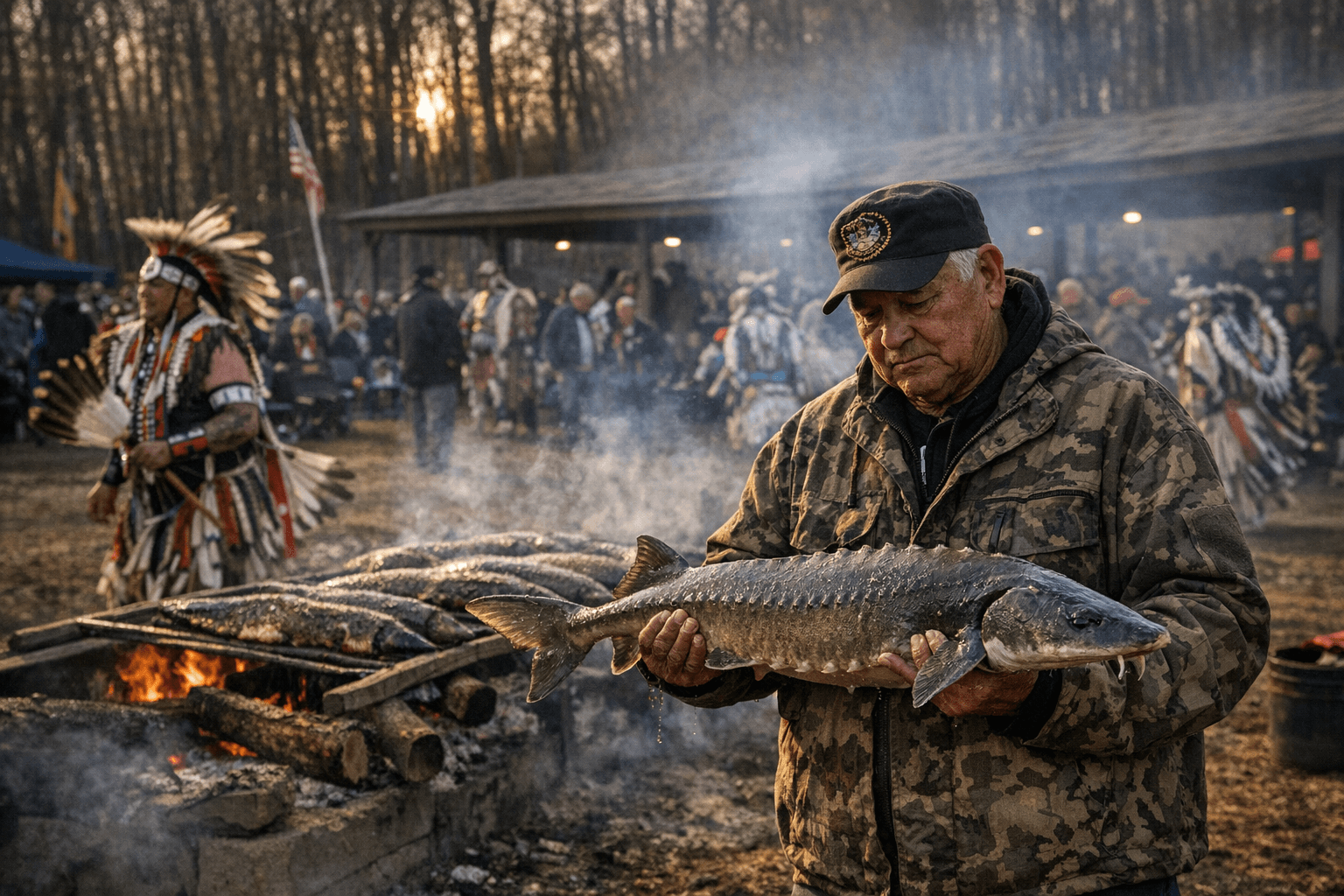
Lake Superior once held an estimated half a million lake sturgeon. Today roughly 30,000 remain, a collapse that sharpens the stakes around the Sturgeon Protection Spring Training woven into the 34th Annual Sturgeon Feast and Celebration Powwow, arriving at Menomonee Nation High School in Keshena on April 18.
Mark Denning, of the Oneida and Menominee Nations and a leader with Sturgeon Protectors MKE, has been central to the Milwaukee-based Native-led organization connecting conservation education to cultural practice. The event runs 10 a.m. to 6 p.m. at N 522 STH 47-55 and pairs that conservation mandate with ceremony: intertribal singing and dancing, arts and crafts vendors, socializing, and a communal feast centered on the fish that Wisconsin tribal communities have stewarded for thousands of years.
The spring training component makes this gathering more than a cultural calendar entry. Lake sturgeon females do not spawn until age 20 to 25 and reproduce only every four to seven years, which means poaching and accidental harvesting during the spring spawning run carry outsized consequences for population recovery. The Wolf River, which runs through the Menominee Reservation, remains one of Wisconsin's critical sturgeon spawning corridors, and the training lands precisely when spawning activity peaks.
Prior years have opened with a Sturgeon Walk to Keshena Falls at 10 a.m. before a noon Grand Entry, with the traditional Maec-Micehswan, the "Big Feast," anchoring the closing hours. For local artisans and food vendors, the powwow provides one of the spring season's primary earned-income opportunities, drawing visitors from neighboring counties to the accessible grounds of Menomonee Nation High School.
Wisconsin imposed its first sturgeon harvest limits in 1915, earlier than most states, and tribal conservation programs have anchored the species' partial recovery here since. The spring training component of the powwow extends that legacy, giving tribal conservation staff, school science programs, and community members practical knowledge that statutory protections alone cannot deliver: how to identify spawning sturgeon on the Wolf River and what responsible action looks like when one surfaces at the end of a line.
Attendance is free and open to the public. Organizers encourage guests unfamiliar with powwow protocol to observe standard etiquette, including asking permission before photographing dancers.
This article was produced by Prism’s automated news system from verified source data, official records, and press releases, then run through automated quality and moderation checks before publishing. The system is built and supervised by the people who set the standards it runs under. Read our full AI policy.
Did this article answer your question?