Menominee County Board Urges State to Adopt Sustainable Transportation Funding
Menominee County adopted Resolution 2026-01 urging the state to fix a transportation funding gap the Wisconsin Counties Association says exceeds $1 billion.
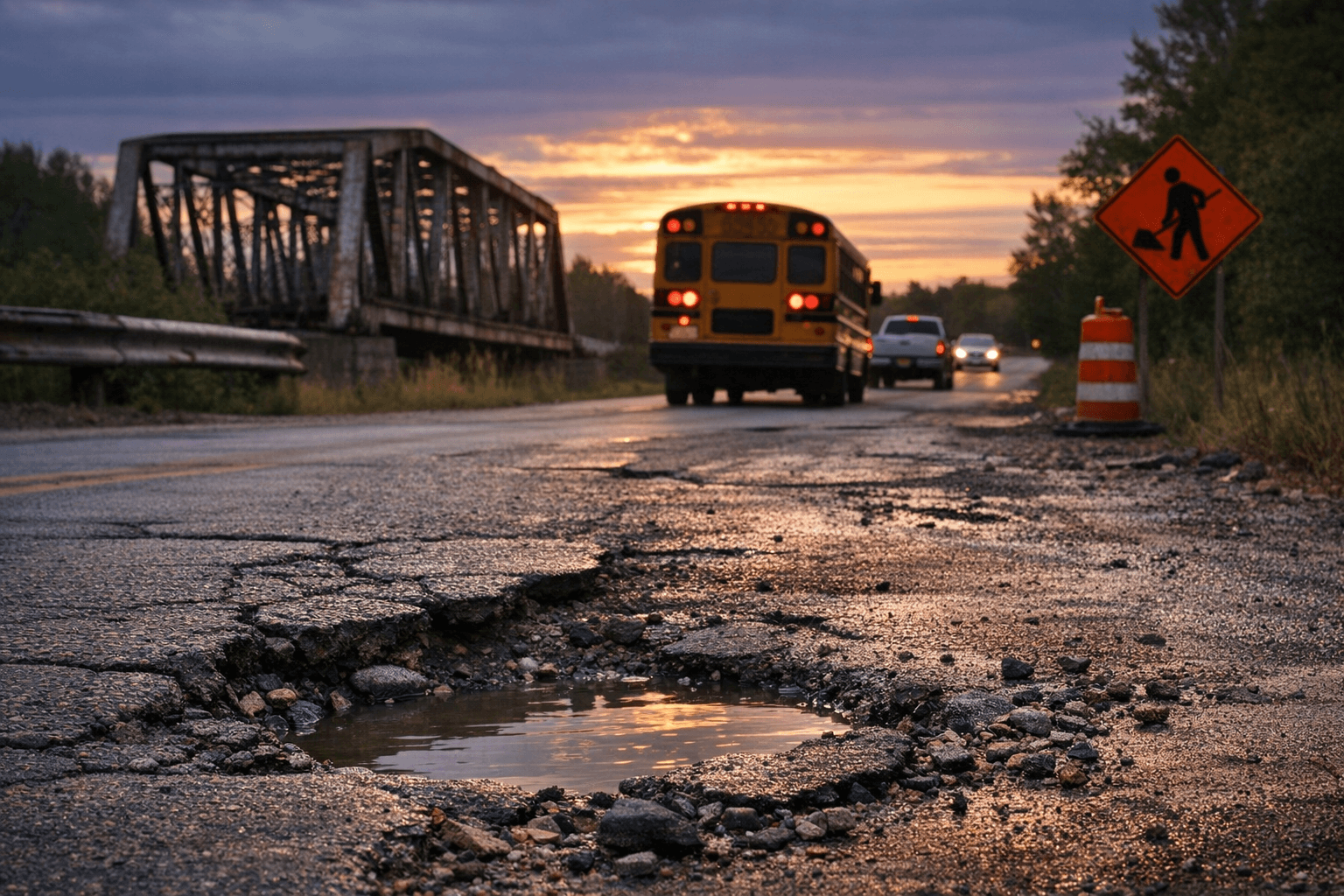
The Menominee County Board of Supervisors adopted Resolution 2026-01, formally urging the Governor and Wisconsin Legislature to enact a long-term, sustainable transportation funding solution and putting the county on record about what it describes as inadequacies in how the state funds local roads, bridges, and transit.
The resolution aligns with a statewide push by the Wisconsin Counties Association, which on January 12, 2026, launched a multi-faceted coalition campaign asking counties across Wisconsin to pass similar resolutions. The WCA framed the urgency in stark terms: "We have an unsustainable funding gap in the state's Transportation Fund. This gap has been filled over the last few biennia with state sales and income tax dollars. The state won't always have a surplus that can fill this over $1 billion gap."
At the heart of the funding structure is the Segregated Transportation Fund, which is built from user fees such as gas taxes and vehicle registration fees rather than general tax revenue. That account feeds programs that county governments depend on directly: General Transportation Aids, the Local Road Improvement Program, its supplemental counterpart, the Agriculture Road Improvement Program, and new funding added this budget cycle for replacing and rehabilitating bridges between six and twenty feet in length. When that segregated account runs short, as the WCA says it has in recent years, the state has covered the difference with general purpose revenue drawn from income and sales taxes. The WCA's position is that this arrangement is not sustainable. "We need lawmakers and future governors to address the issue by finding a sustainable solution," the organization stated.
The WCA acknowledged bipartisan cooperation on transportation to date while cautioning that it cannot last under the current structure. "While we're extremely appreciative that lawmakers and the current administration have continued to prioritize transportation in a bipartisan fashion, we're also cognizant that these increases to local transportation programs will not continue if a state surplus isn't available."
The campaign's strategy is sequential. Phase one asks counties to adopt resolutions, with the WCA hoping to collect as many as possible before the end of April. "Our hope is to have as many resolutions passed by the end of April, so we have them in hand when we move into phase two: legislative meetings and candidate forums," the organization said.
Menominee County's transportation challenges extend beyond road funding. The Shawano and Menominee County Specialized Transportation Coordinated Plan 2024-2028, prepared by Abby Mader, Associate Planner at the East Central Wisconsin Regional Planning Commission, identifies a shortage of providers as a core obstacle and outlines steps to broaden the county's transit network. Under the plan, the Transportation Coordinating Committee is charged with bringing in new partners, including non-traditional ones such as the Tavern League and rideshare services like Uber and Lyft, while coordinating with employers to expand evening and shift-based transportation options. NEWCAP and Forward Services are named as partners in efforts to connect residents with bus passes and employment-related transportation. The plan also directs staff to investigate federal Section 5310 funding, which supports enhanced mobility for seniors and people with disabilities, and to continue marketing Menominee transit as an option for all county residents.
The ECWRPC, which provided the planning framework, is chaired by Jeff Nooyen and includes Menominee County representatives Tom Egan, Jane Comstock, Bob Schmeichel, Gene Caldwell, Robert Keller, and Elizabeth Moses among its commission members.
The full text and exact adoption date of Resolution 2026-01 had not been released as of publication, and no county board members had provided public comment on the resolution's local fiscal implications.
This article was produced by Prism’s automated news system from verified source data, official records, and press releases, then run through automated quality and moderation checks before publishing. The system is built and supervised by the people who set the standards it runs under. Read our full AI policy.
Did this article answer your question?