Menominee Tribe Forestry Committee to Meet Wednesday in Keshena
The Menominee Indian Tribe of Wisconsin's Forestry Committee held its regular meeting Wednesday at noon in Keshena, overseeing a forest that sustains half the reservation's economy.
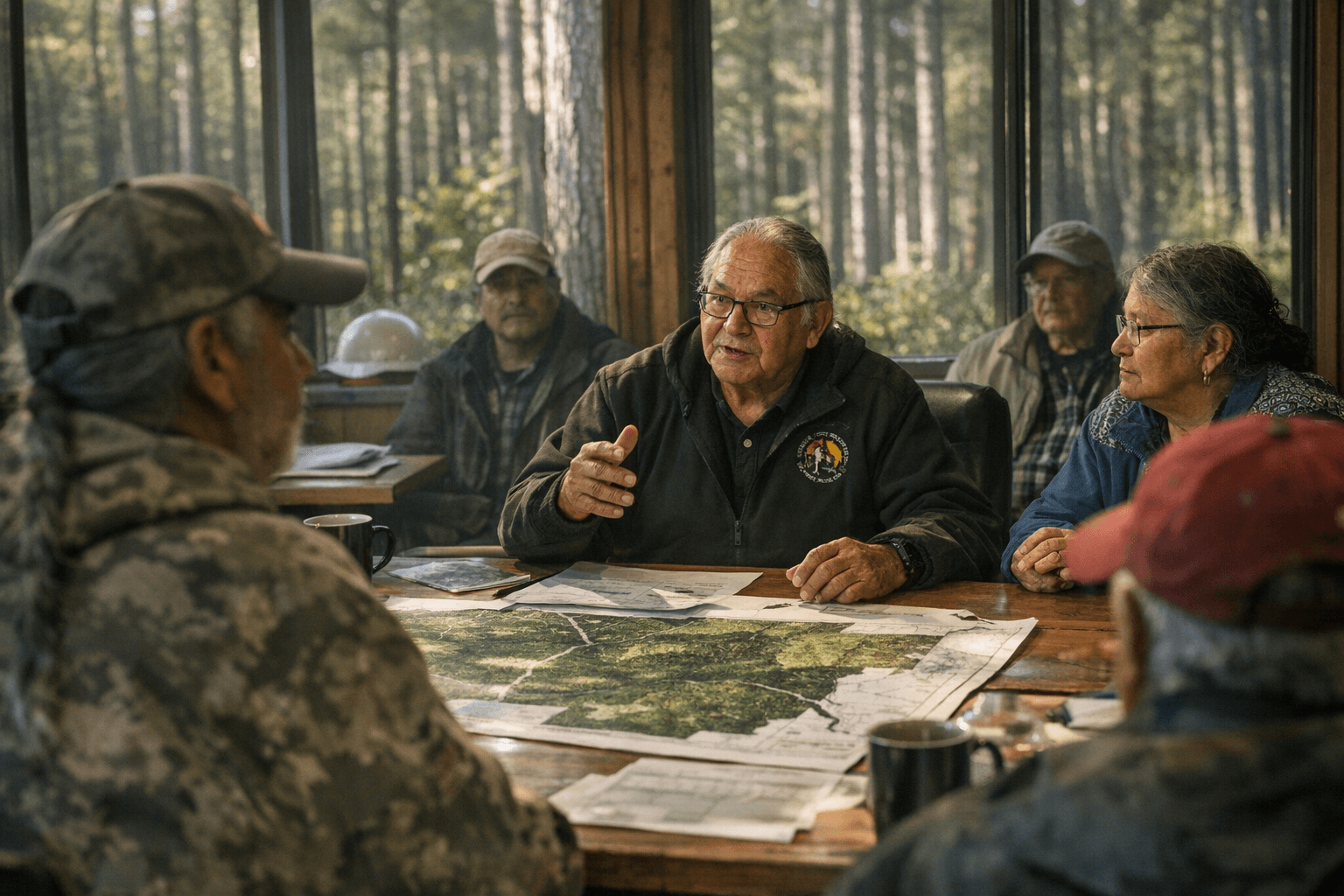
The Menominee Indian Tribe of Wisconsin's Forestry Committee gathered Wednesday at noon in the Forestry Board Room in Keshena for its regular monthly meeting, convening over one of the most consequential portfolios in all of Menominee County: the stewardship of a forest that has been continuously and sustainably managed for more than 150 years.
The forest and sawmill employ many of the reservation's roughly 3,500 inhabitants, with lumber sales accounting for around half of the reservation's economic activity. That makes the Forestry Committee's regular reviews of operational and policy matters far more than administrative routine; its decisions ripple through employment, land health, and the tribe's long-term financial foundation.
The Menominee Forest spans 217,000 commercial acres in Wisconsin's "tension zone" and showcases thirteen distinct forest cover types, with Northern Hardwood at 32% and White Pine at 16% dominating the canopy. Because of the tribe's world-famous sustained-yield management practices, 95% of the reservation produces old-growth stands of hardwood, pine and hemlock, with 46 of Wisconsin's timber varieties grown and harvested on reservation land.
As the business arm of the Menominee Indian Tribe of Wisconsin, Menominee Tribal Enterprises employs approximately 300 individuals and embodies the tribe's cultural values, viewing the forest as sacred and integral to their existence. The Forestry Committee provides the tribal governance layer above that operation, setting policy direction and reviewing management outcomes.
The committee's work also carries weight in environmental compliance. The MTE forestry program maintains comprehensive environmental compliance, publishing annual Environmental Assessments, Decision Notices and Findings of No Significant Impact; in 2024, additional assessments were completed for two blowdown salvage operations.
The emerald ash borer reached the Menominee reservation in late 2022, and forest managers have flagged the combination of climate change and invasive species as their primary long-term concern, with the goal of maintaining as biodiverse a forest as possible so it can adapt to future threats. Issues like these give the committee's regular meetings an urgency that extends well beyond the walls of the Forestry Board Room.
Meeting details, locations, times, and agenda links are posted on the tribe's public meetings page, giving residents the opportunity to review items slated for discussion before sessions convene. The tribe's approach to transparent governance mirrors its approach to the forest itself: decisions made with an eye toward what comes next, not just what is needed today.
This article was produced by Prism’s automated news system from verified source data, official records, and press releases, then run through automated quality and moderation checks before publishing. The system is built and supervised by the people who set the standards it runs under. Read our full AI policy.
Did this article answer your question?