Miami Beach crews battle daily sargassum buildup along shoreline
Miami Beach crews are blending sargassum daily across 7.5 miles of shoreline, while advisories, odor and tourism pressure keep the cleanup under scrutiny.

Miami Beach crews are blending sargassum across the city’s 7.5-mile shoreline every day as the bloom keeps washing ashore and some stretches carry water advisories. Miami-Dade County Parks crews check for nests first through the Sea Turtle Program, then work the sand until sunset. Beachgoers are being told not to block the moving tractors as City of Miami Beach Ocean Rescue keeps lifeguard service active.
Cleanup crews collect, remove, cut and turn the buildup of seaweed on the water line, but they cannot pull it out of the water before it reaches shore because county, state and federal rules prohibit that. Miami-Dade County uses beach-friendly equipment to manage the piles along the surf line. As the seaweed decomposes, it can release hydrogen sulfide, the gas that creates the rotten-egg smell many beachgoers notice first.
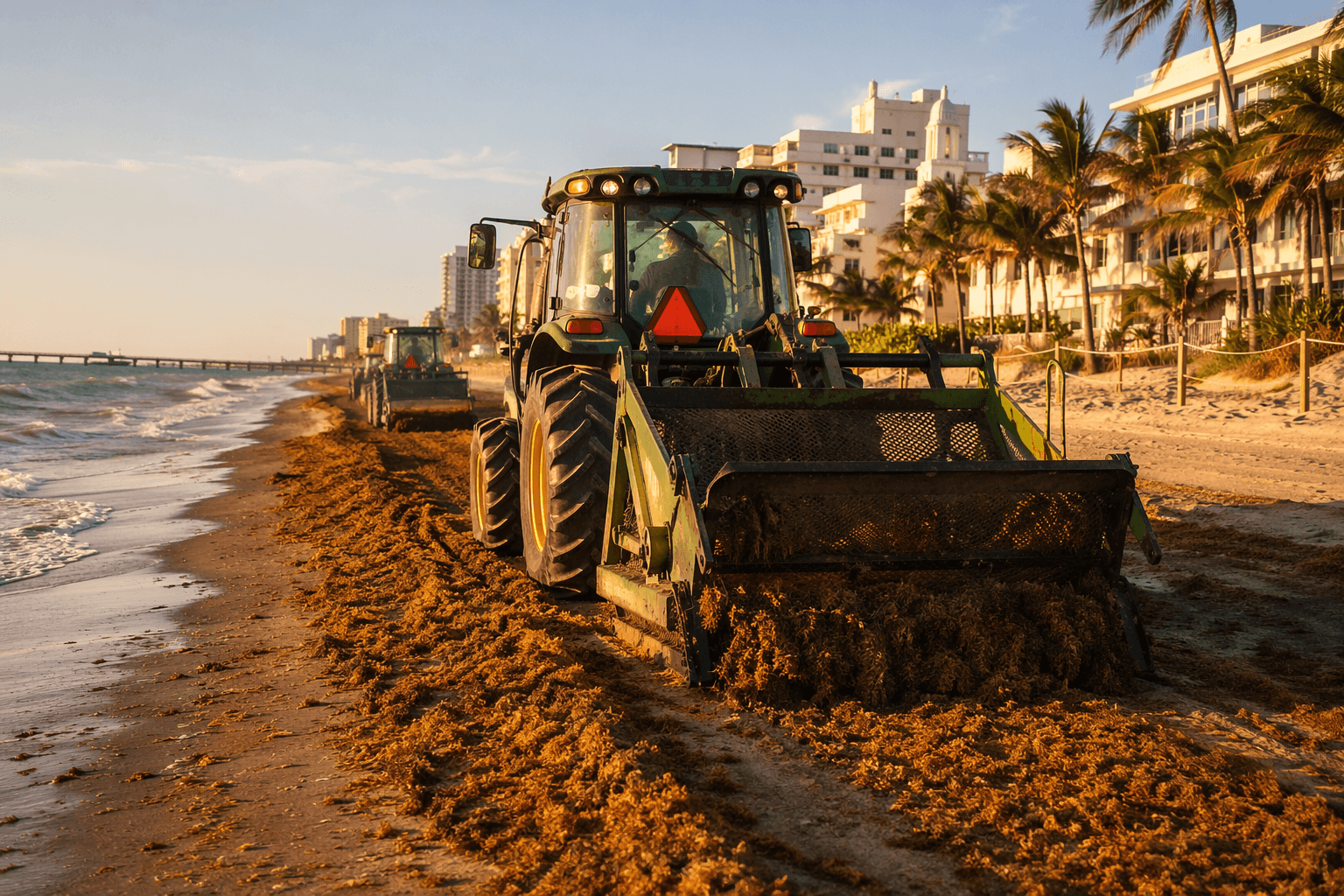
Scientists have already detected elevated sargassum earlier than in previous years across the Atlantic and Caribbean. May 2026 was a record sargassum month, and June exceeded historical levels by mid-month.
Miami-Dade taxpayers spend nearly $4 million a year on tractors to remove sargassum from the shore, while another estimate puts the county’s annual sargassum removal cost at about $9 million as part of beach maintenance. Hotel operators, condominium owners, residents and tourism advocates have warned that heavy buildup can hurt beach access and reputation. One Miami beach was left off Dr. Beach’s 2026 Top 10 list because of excess sargassum.
County officials have also worked with the Miami-Dade Innovation Authority on possible reuse options, including fertilizer and building materials. Community advocates are pressing for more flexible permits, a structural review of breakwaters and possible offshore interception methods.
This article was produced by Prism’s automated news system from verified source data, official records, and press releases, then run through automated quality and moderation checks before publishing. The system is built and supervised by the people who set the standards it runs under. Read our full AI policy.
Did this article answer your question?