79-Year-Old Driver Leads Deputies on 100 mph Keys Chase, Arrested
A 79-year-old Hollywood man hit 100 mph in a Toyota sedan on U.S. 1 before deputies ended a 35-mile late-night chase through active Keys construction zones.
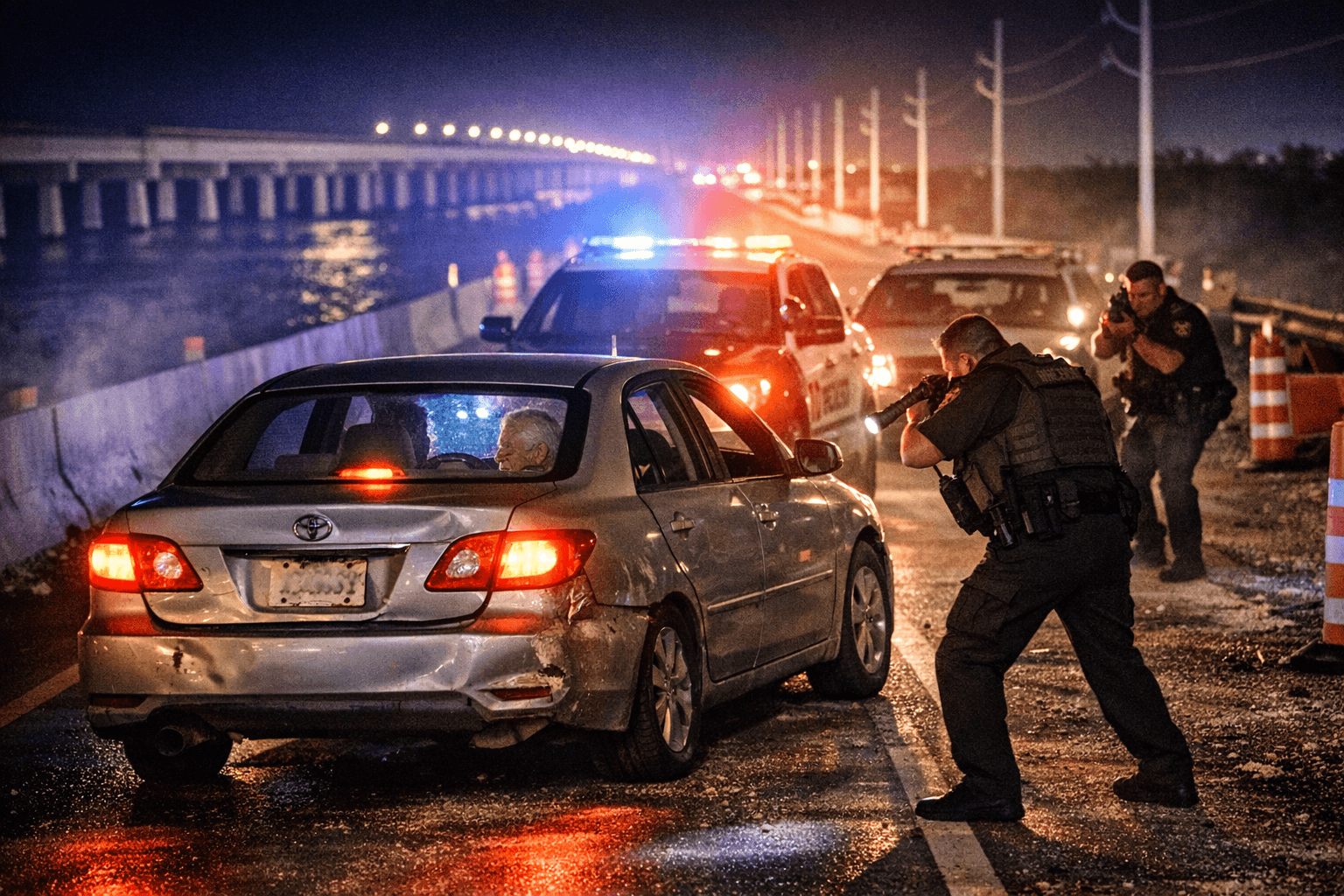
Around 11 p.m. on March 31, a Toyota sedan blew past Mile Marker 87 near Islamorada at close to 100 mph, cutting through an active construction zone with Monroe County Sheriff's Office deputies behind it. Behind the wheel was Tyrone James Causey, 79, of Hollywood.
Deputies had tried to stop Causey after observing erratic behavior on the Overseas Highway. Rather than pull over, he continued south, tailgating other motorists and making illegal passes while the Toyota pushed toward triple-digit speeds. Anyone in that stretch of U.S. 1 at that hour, whether in a rental car, a delivery truck, or a tour van, had fractions of a second to react to a vehicle bearing down at 100 mph through reduced construction lanes.
The pursuit ran roughly 35 miles before Causey eventually stopped near Mile Marker 52.5. That corridor passes through some of the most compressed driving conditions in the Keys, where active construction narrows usable pavement and nighttime work crews operate within feet of moving traffic. The Overseas Highway carries no parallel route; every vehicle on it shares the same narrow strip, and there is simply no shoulder option large enough to absorb a vehicle out of control at those speeds.
Deputies took Causey into custody without further incident and transported him to a Monroe County detention facility. He was charged with reckless driving and speeding. No injuries were reported.
The age of the driver drew immediate attention: a 79-year-old behind the wheel at nearly 100 mph on one of the most constrained highway corridors in the country is not a scenario MCSO encounters routinely. But the structural danger holds regardless of who is driving. High-speed pursuits on U.S. 1 force deputies to weigh the risk of sustaining a chase, including potential collisions in construction zones where emergency response can be stretched thin across miles of bridges and islands, against the risk of letting a dangerous driver continue unchecked. In Causey's case, deputies maintained pursuit for more than three dozen miles until he stopped on his own.
Prosecutors will determine whether the reckless driving count advances as a criminal charge beyond a traffic citation, a threshold that turns partly on the documented public-safety risk Causey created by running that long, at those speeds, through an active work zone. Witnesses who observe dangerous driving on U.S. 1 before it escalates to that point can contact MCSO directly, with immediate threats handled through 911.
This article was produced by Prism’s automated news system from verified source data, official records, and press releases, then run through automated quality and moderation checks before publishing. The system is built and supervised by the people who set the standards it runs under. Read our full AI policy.
Did this article answer your question?