Advocates offer seven alternatives after downtown parking garage rejection
Seven lower-cost options are being pushed as Key West weighs whether to solve downtown access by building more parking or by making biking, walking, and transit work better first.

Bike lanes that make short trips feel easier
The first and fastest payoff would come from a better bike network, because that is the kind of change residents notice on the next trip to Duval Street, the grocery store, or a meeting downtown. Key West’s Bicycle Pedestrian Master Plan, approved by the City Commission in 2019, already says the city should reduce congestion by improving bicycle and pedestrian accessibility, so this is not a new idea so much as a plan the city has not fully pushed to the street.
For many downtown trips, a safer lane does more than move cyclists around. It cuts down on the slow, repetitive cruising for parking that clogs the historic district, and it gives people a realistic option for errands that are too short to justify another car trip into Old Town.
Safer walking routes through Old Town
The second alternative is a walking network that feels safer at the curb, because that is where the walkable historic district either succeeds or fails. Better crossings, clearer lighting, smoother sidewalks, and less conflict at corners would be felt immediately by people moving between parking, shops, homes, and restaurants.
That matters in a city where the question is not whether people will walk, but whether they can walk without dodging traffic or detouring around broken links in the network. A garage at Angela and Simonton streets would add supply for cars; safer walking routes would change the street itself, which is the point advocates say Key West should keep pursuing.
Transit access that reaches downtown without another garage
The third option is to make transit easier to use for the kinds of trips that actually generate parking demand. Better routing, clearer stops, and more dependable service would not solve every downtown trip, but they would give workers, residents, and visitors a way to reach the center of town without filling another structure with cars.
That approach lines up with the city’s long-running transportation goals better than a new garage does. If the goal is to reduce congestion, then every rider who leaves a car elsewhere is one less driver circling Caroline Street, Grinnell Street, and the rest of the Old Town grid looking for a space.
Making the existing 300-space garage work harder
The fourth alternative is to squeeze more utility out of the parking already on the books at the Park N Ride and Old Town Parking Garage at 301 Grinnell Street, at Caroline and Grinnell streets. The city says that garage has 300 spaces and charges $6 per hour plus tax, $48 per day, and $300 per month, with residential permits allowing up to four hours of free parking once per day.
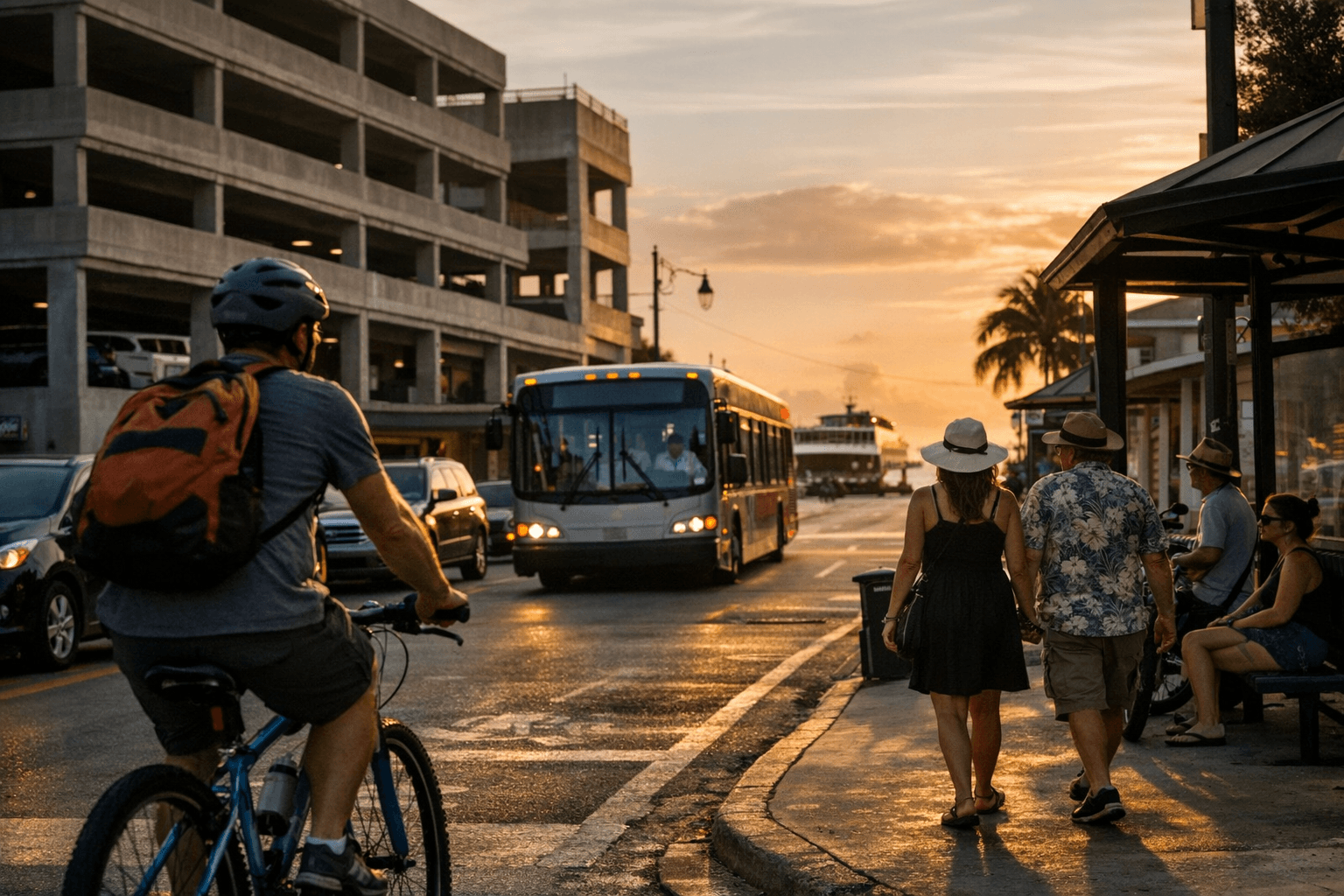
Before Key West builds more concrete, advocates argue, the city should make the current system easier to understand and easier to turn over. Better direction signs, clearer pricing, and tighter management of spaces could reduce the pressure that leads drivers to circle the historic district looking for a place to stop.
Curb management instead of more curb pressure
The fifth alternative is to manage the curb more intelligently, because in a place as dense as Old Town, every pickup zone, delivery stop, and time-limited space affects the rest of the block. If the city can keep loading activity organized and prevent long blocks of unnecessary cruising, more of downtown becomes predictable for both drivers and pedestrians.
That kind of fix is often cheaper and faster than a garage, and it speaks directly to what people feel first: fewer bottlenecks, fewer double-parking conflicts, and less friction on streets that were never built to absorb modern traffic patterns. In a district where every inch matters, managing the curb may do more practical work than adding 85 more spaces in a new structure.
Flood-resilient street upgrades that answer the drainage concern
The sixth alternative is to invest in the street and drainage work that residents already worry a garage could worsen. Public objections to the January 27, 2026 workshop centered on cost, flooding, and the fear that another parking structure would make drainage problems worse, so any serious transportation plan has to deal with water, not just vehicles.
That is where the Duval Street Revitalization and Resiliency project comes in. The city says extensive renovations have not been performed on Duval Street for more than 40 years, and the project is tied to CDBG-MIT funding from the U.S. Department of Housing and Urban Development to preserve and improve the historic corridor while addressing sea-level-rise and flood risks. If the city is already planning to rebuild parts of the corridor, it can use that work to protect access without locking itself into another parking-heavy solution.
A corridor plan that delivers faster than a $6 million garage
The seventh alternative is to keep the transportation fix tied to the larger Duval Street planning effort rather than treating parking as the main event. The city selected Stantec on November 1, 2022, after a request for qualifications was released on March 11, 2022, and the first public open house for the Duval Street Revitalization and Resiliency project was held on January 31, 2024, at the San Carlos Institute, giving Key West a ready-made planning framework to build on.
That matters because the garage proposal at Angela and Simonton streets was reported as a $6 million project that would add 85 spaces, a narrow return for a big public outlay. If the city wants changes residents can feel quickly, the smarter path is to use the Duval planning process, the Bicycle Pedestrian Master Plan, and the existing parking system together: improve bike access, protect walkers, move transit more efficiently, manage the curb, and address flooding before it becomes another excuse to pour money into car storage.
This article was produced by Prism’s automated news system from verified source data, official records, and press releases, then run through automated quality and moderation checks before publishing. The system is built and supervised by the people who set the standards it runs under. Read our full AI policy.
Did this article answer your question?