Coast Guard Plans New Housing at Islamorada Station, Floodplain Review Underway
The Coast Guard wants to build new housing at Station Islamorada — and plans to demolish on-site volleyball and basketball courts to do it.
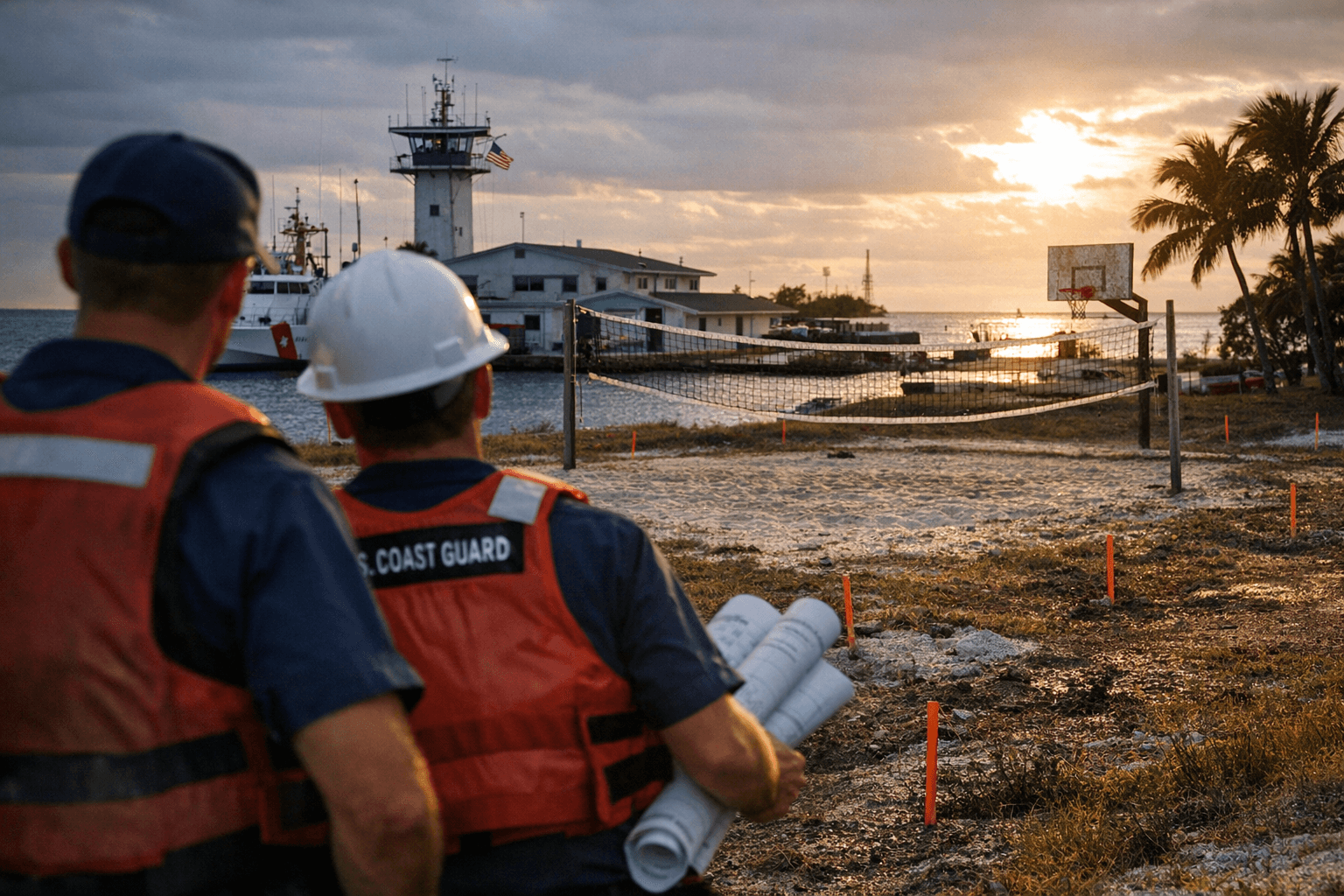
The U.S. Coast Guard filed a federal floodplain review on March 23 for a proposed Unit Personnel Housing project at Coast Guard Station Islamorada, 183 Palermo Drive, setting up a public-comment window that will determine whether new quarters for station personnel get built where the station's volleyball and basketball courts now stand.
The project would place new housing on roughly 1.26 acres of the station footprint. To clear that footprint, both the volleyball and basketball courts would be demolished, with no replacement recreational facilities indicated elsewhere on the property in the filing.
The formal trigger for the review is Executive Order 11988, which requires federal agencies to analyze proposed actions affecting 100-year floodplains before breaking ground. Station Islamorada sits inside a designated AE flood zone, the same category of Special Flood Hazard Area that has put large stretches of the Upper Keys under sustained scrutiny as sea-level rise and storm-surge modeling grow more urgent. The station's low-lying position along the Atlantic makes the project's engineering choices particularly consequential: the Coast Guard's plan calls for backfilling the site to approximately 12 feet above grade and building in a 4-foot freeboard above the base flood elevation, exceeding the minimum federal flood-risk reduction standard for non-critical actions. Slab-on-grade foundations would anchor the structures, and the agency committed to erosion, sedimentation, and site-compaction controls during construction.
That engineering profile tracks with the broader direction Monroe County and federal agencies have been pushing since Hurricanes Ian and Idalia accelerated conversations about hardening essential infrastructure throughout South Florida. A 4-foot freeboard buffer is notably aggressive: Monroe County's own floodplain management rules require elevation to or above the base flood elevation for new construction, but federal facilities choosing to exceed that threshold signal a longer planning horizon than the minimum code demands.
The Step-Process notice filed under EO 11988 is not merely a formality. The multi-step federal framework requires the Coast Guard to publicly disclose the proposed action, solicit comment, weigh alternatives, and document how floodplain best practices shaped the final design before any final approval is granted. Islamorada village officials and Monroe County planners now have a documented entry point to weigh in on environmental mitigation, the removal of recreational space, and how the station's upgrade intersects with county-level emergency response and resilience planning.
The full public notice, which includes the project's technical specifications and contact information for submitting comments, is posted through the Defense Department's public records portal. The comment period is open, and planners or residents with concerns about the fill volume, the court demolitions, or the adequacy of storm-surge protections have standing to submit input before the Coast Guard advances to the next step in the review.
This article was produced by Prism’s automated news system from verified source data, official records, and press releases, then run through automated quality and moderation checks before publishing. The system is built and supervised by the people who set the standards it runs under. Read our full AI policy.
Did this article answer your question?