FDLE Identifies 2017 Irma Remains as James Donald Schlake of Key Largo
FDLE identified 2017 Irma remains as James Donald Schlake of Key Largo, showing how new DNA tools can resolve long-unsolved storm recoveries and provide local closure.

The Florida Department of Law Enforcement announced that human remains recovered after Hurricane Irma have been identified as James Donald Schlake, 77, of Key Largo. The remains were recovered on Big Pine Key on Sept. 14, 2017, and the identification was completed using investigative genetic genealogy techniques and modern DNA sequencing, officials reported on Jan. 21, 2026.
Investigators were unable to identify the decedent in 2017 because of advanced decomposition, and the Monroe County Medical Examiner originally ruled the cause of death an accidental drowning. The recent identification was completed by FDLE in coordination with Othram Inc. and FDLE Forensic Services. Funding for the genetic genealogy testing was provided through the State Forensic Investigative Genetic Genealogy Grant Fund on behalf of the Monroe County Sheriff’s Office and the Monroe County Medical Examiner.
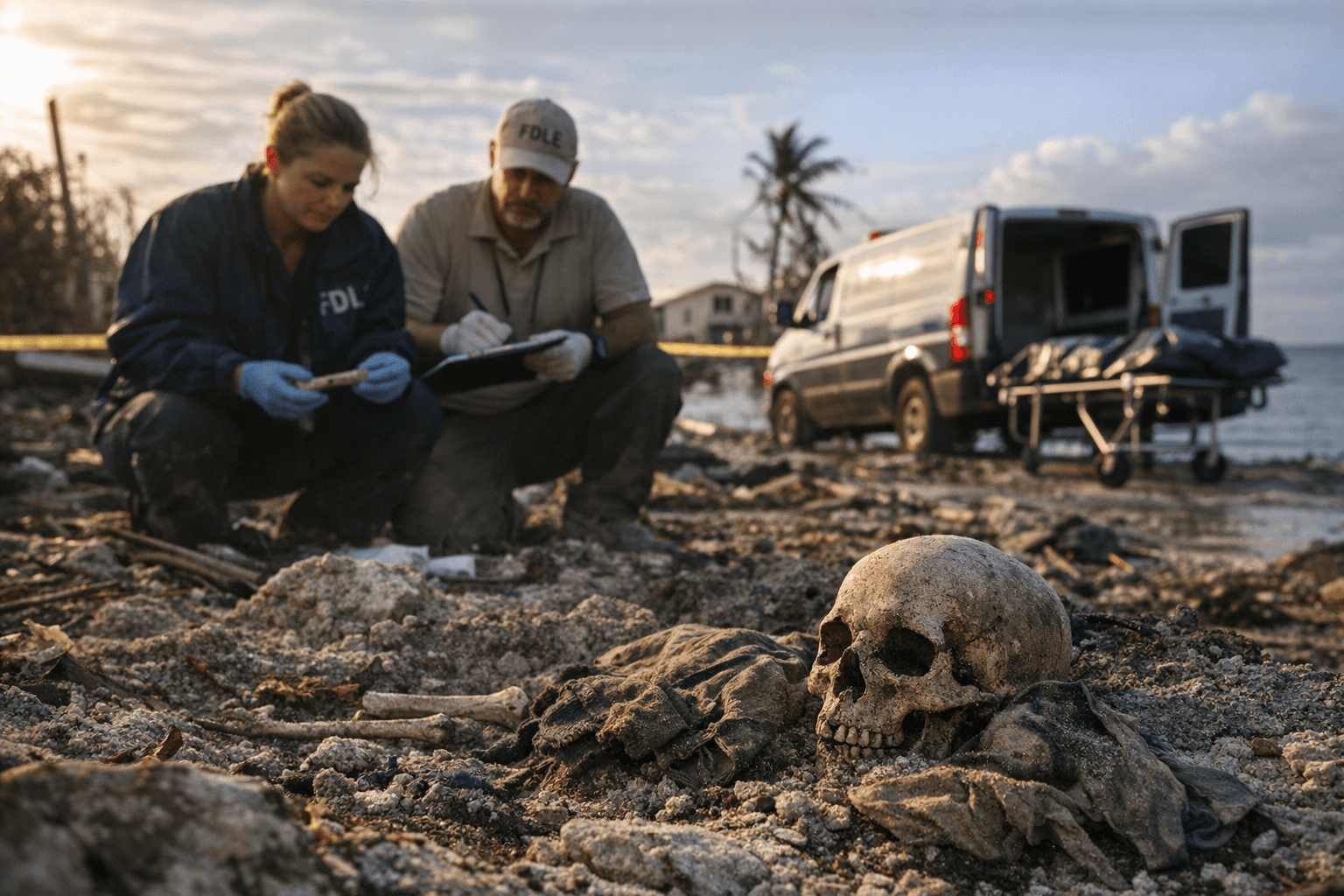
The published FDLE report frames the Schlake identification as a demonstration of how newer DNA sequencing and genealogy techniques are resolving long-unsolved identifications from storm and disaster recoveries. For Monroe County residents, the outcome underscores two practical realities: first, that technological advances can finally provide names and context for remains recovered in chaotic disaster responses; second, that targeted state funding can be decisive in resolving cold or undetermined cases stemming from major weather events.
The Monroe County Sheriff’s Office and the Monroe County Medical Examiner are direct beneficiaries of the grant-funded testing. That relationship highlights institutional issues local policymakers must weigh: allocation of limited forensic resources, transparent prioritization of cases for new technologies, and continued training or contracting for specialized DNA analysis. Voters and county officials deciding budgets for emergency preparedness and forensic capacity should consider whether one-off grants are sufficient or whether sustained investment is needed to address remaining unidentified recoveries from Irma and other storms.
For family members and neighbors in Key Largo and the lower Keys, the identification offers a measure of closure after years of uncertainty. For the broader community, the case may affect how officials document recoveries, communicate with next of kin, and plan for post-disaster identification workflows that involve interagency coordination with state forensic services and private laboratories.
The FDLE report places the Schlake case among examples of forensic genealogy resolving disaster-era unknowns, and it raises practical questions for Monroe County about continuing that work. Expect county officials to reassess forensic needs and grant opportunities, and for local policymakers to face decisions about funding and oversight as these powerful identification tools become more widely available.
This article was produced by Prism’s automated news system from verified source data, official records, and press releases, then run through automated quality and moderation checks before publishing. The system is built and supervised by the people who set the standards it runs under. Read our full AI policy.
Did this article answer your question?