First sea urchin release at Horseshoe Reef aims to boost coral recovery
101 long-spined sea urchins were released at Horseshoe Reef to clear algae and help coral recruits survive, protecting local fisheries, tourism and shoreline resilience.
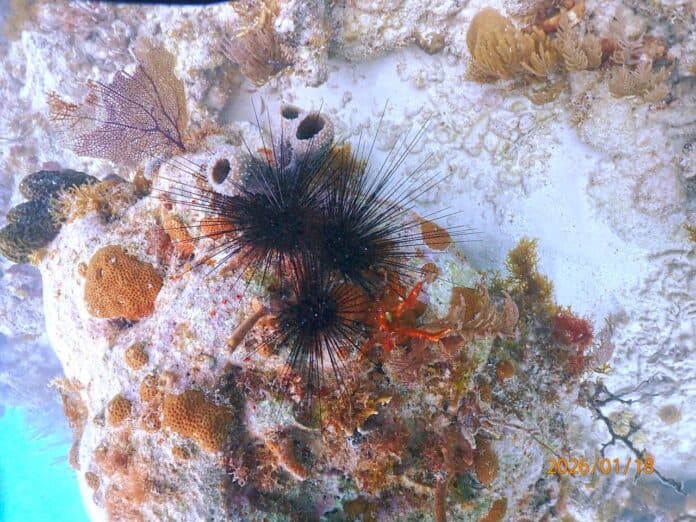
Sustainable Ocean and Reefs (SOAR) released 101 long-spined sea urchins, Diadema antillarum, onto Horseshoe Reef off Key Largo on Jan. 26, 2026, in a first-of-its-kind restocking at an Upper Keys Mission: Iconic Reefs site. The 1- and 2-year-old urchins were raised in a nursery off Tavernier and placed on modules made from both living and dead staghorn corals to help keep reef surfaces free of algae and improve conditions for new corals to settle.
Jim Brittsan, founder of SOAR, said it was the first time grazers - herbivorous fish and invertebrates - have been restocked at any of the seven Mission: Iconic Reefs locations. The release was carried out in partnership with the Florida Keys National Marine Sanctuary, Amoray Dive Resort, Reef Renewal USA, Mote Marine Laboratory and Junior Scientists in the Sea, and will be followed by monitoring to see whether urchins familiarized with reef structures remain in place longer than translocated animals.
Grazers like Diadema are central to reef recovery because they maintain a "clean floor" for coral larvae. When algae overgrow reef substrate, settling coral polyps face constant competition and higher mortality, undermining the reefs' ability to reproduce sexually and increase genetic diversity - a key factor in developing heat- and disease-resistant coral populations. The modules where the urchins were placed include staghorn coral pieces that died during the 2023 marine heat wave, reflecting the ongoing stress local reefs face.
Local implications extend beyond ecology. Healthy reefs support Monroe County’s dive economy, commercial and recreational fisheries, and shoreline protection that reduces storm surge impacts on homes and infrastructure. Reef recovery can therefore affect livelihoods, property risk and community well-being across Key Largo and neighboring Upper Keys neighborhoods. For smaller businesses such as Amoray Dive Resort and for seasonal workers, stronger reef habitat translates into more reliable dive seasons and catch for fishers who depend on reef-associated species.

There is also an equity dimension to restoration. Communities with fewer resources often face disproportionate impacts from coastal flooding and job losses tied to environmental decline. Investing in restoration that boosts ecosystem services can be part of a broader strategy to protect frontline neighborhoods and sustain local employment tied to the marine economy.
“The analogy I like to use is that the urchins are weeders in a garden,” said Brittsan. “If your fruits and vegetables are your corals, you’re weeding constantly around them to promote their growth.”
This initial release is both an experiment and a practical step. Researchers will track survival and grazing behavior to determine whether acclimated urchins improve reef recovery outcomes, and findings will guide possible future restocking at other Mission: Iconic Reefs sites. For Monroe County residents, the project offers a tangible sign that restoration work is underway and that science-driven interventions could help protect the reefs that undergird the Keys’ economy, culture and coastal safety.
This article was produced by Prism’s automated news system from verified source data, official records, and press releases, then run through automated quality and moderation checks before publishing. The system is built and supervised by the people who set the standards it runs under. Read our full AI policy.
Did this article answer your question?