Five Cyanotypes by Timothy Goldkin Installed Permanently at Marathon City Hall
Five large cyanotype prints by Maine-based artist Timothy Goldkin were installed permanently in Marathon City Hall, preserving and highlighting 1950s waterfront history for public viewing.
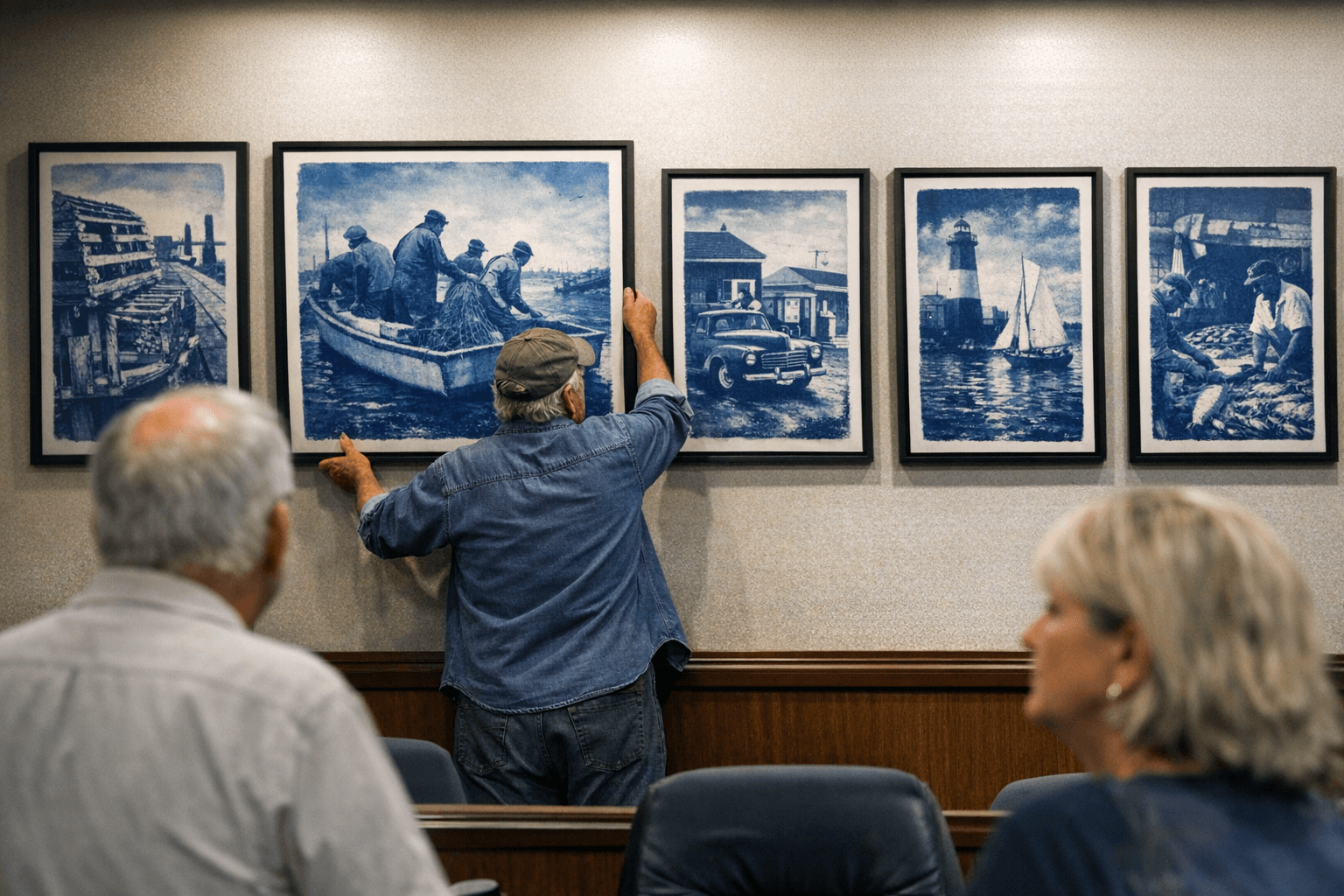
Five large cyanotype prints by Maine-based artist Timothy Goldkin now occupy the entrance corridor of Marathon City Hall, creating a permanent public archive that reconnects residents with the city’s midcentury working waterfront. The works, printed in deep blue, are based on digitized historic photographs from the Monroe County Public Library’s Florida Keys History Center and the Edwin Swift Collection and depict shrimp docks, railway scenes, and other 1950s-era maritime life.
Goldkin’s process translated archival negatives and prints into large-format cyanotypes, an early photographic technique that produces images in intense blue tones. The installation was placed in the city-hall entrance corridor and unveiled ahead of the Marathon City Council session on January 13; the pieces officially debuted to the public on January 23, 2026. The permanent display replaces a temporary exhibit approach with long-term public stewardship of local visual history.
The collaboration between the city and the Monroe County Public Library brings historical material out of archives and into everyday civic space, increasing access for residents who may not visit specialized collections. Placing images of shrimp docks and rail lines in a municipal building foregrounds the labor and industry that shaped Marathon’s economy and community identity. For older residents, the prints offer recognition of lived experience; for younger people, they provide a tangible link to local history and an entry point for intergenerational conversations.
Public art in civic settings also carries health and social equity implications. Accessible cultural displays contribute to mental well-being by fostering belonging and civic pride, and they can act as low-cost community health interventions by creating restorative environments in routine public spaces. The city’s decision to make these works permanent signals a municipal investment in cultural infrastructure that supports social determinants of health such as social cohesion, neighborhood identity, and access to educational resources.
The installation underscores the value of archives like the Florida Keys History Center and the Edwin Swift Collection as community assets. Digitization allowed Goldkin to work from fragile or otherwise inaccessible original materials, while the resulting cyanotypes create a new visual language that both preserves and reframes the photographs for contemporary audiences. The project models how small-city cultural partnerships can extend the reach of local collections without removing originals from safe storage.
For Marathon residents, the new gallery at city hall offers an opportunity to pause during civic errands and reflect on the city’s maritime past. As the prints become part of the building’s daily life, they may prompt further programming, educational partnerships, or additional public art commissions that center local histories and frontline labor. The installation is a reminder that municipal decisions about public space and culture have ripple effects on community memory, health, and equity.
This article was produced by Prism’s automated news system from verified source data, official records, and press releases, then run through automated quality and moderation checks before publishing. The system is built and supervised by the people who set the standards it runs under. Read our full AI policy.
Did this article answer your question?