Florida Allows Public to Collect Cold‑Stunned Iguanas Feb. 1-2 in Monroe County
Florida temporarily allowed residents to collect cold-stunned green iguanas Feb. 1-2, letting Monroe County residents turn them in at designated FWC sites for humane disposal or transfer.
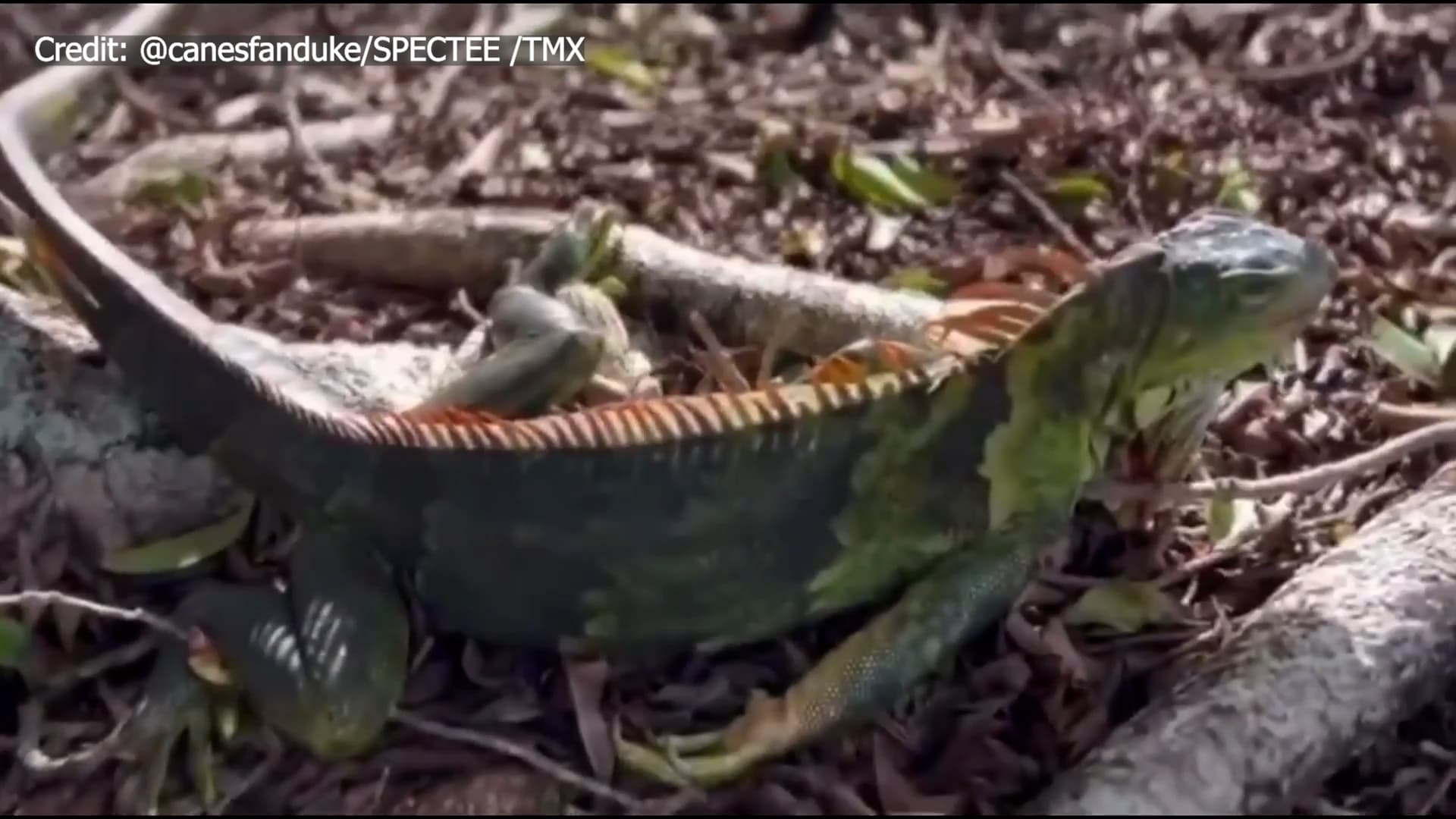
The Florida Fish and Wildlife Conservation Commission has temporarily authorized members of the public to remove and deliver live, cold-stunned green iguanas to designated FWC drop-off locations on Feb. 1 and Feb. 2 under Executive Order 26-03. The action responds to an extreme cold front expected to leave many invasive iguanas immobilized and falling from trees.
The executive order was issued Jan. 30 and permits people without a wildlife permit to be in temporary possession of prohibited green iguanas for the limited purpose of transporting them directly to FWC offices in the South and Southwest regions. The FWC said, “Green iguanas are an invasive species in Florida and have adverse impacts on the state’s environment and economy.” The agency’s release further states the EO “provides a unique opportunity for members of the public to remove green iguanas from their property during this unusual cold‑weather event and bring them to the FWC, no permit required, to be humanely killed or, in some cases, transferred to permittees for live animal sales.”
FWC staff will accept cold-stunned iguanas on Sunday, Feb. 1 from 9:00 a.m. to 12:00 p.m., and on Monday, Feb. 2 from 8:00 a.m. to 4:00 p.m. The commission indicated there are five designated drop-off locations in the South and Southwest regions. FWC locations with published addresses include the South Florida Regional Lab at 2796 Overseas Highway 119 in Marathon, an FWC office at 10052 NW 53rd St. in Sunrise, and the Tequesta Field Lab at 19100 SE Federal Highway (US-1) in Tequesta. The agency has not published the full list of all five addresses in the materials released to date.
The EO outlines strict handling and transport procedures intended to protect people, animals and the public. Collectors are advised to wear protective gloves, pants and long-sleeved shirts to avoid scratches. Primary containment must be a secure, escape-proof cloth sack or bag that remains sealed; the breathable cloth bag must then be placed inside a second locked transport container labeled “Prohibited Reptiles.” Bags must remain sealed until transferred to FWC staff, and collected iguanas should be taken to FWC immediately in case the animals recover mobility as temperatures moderate.
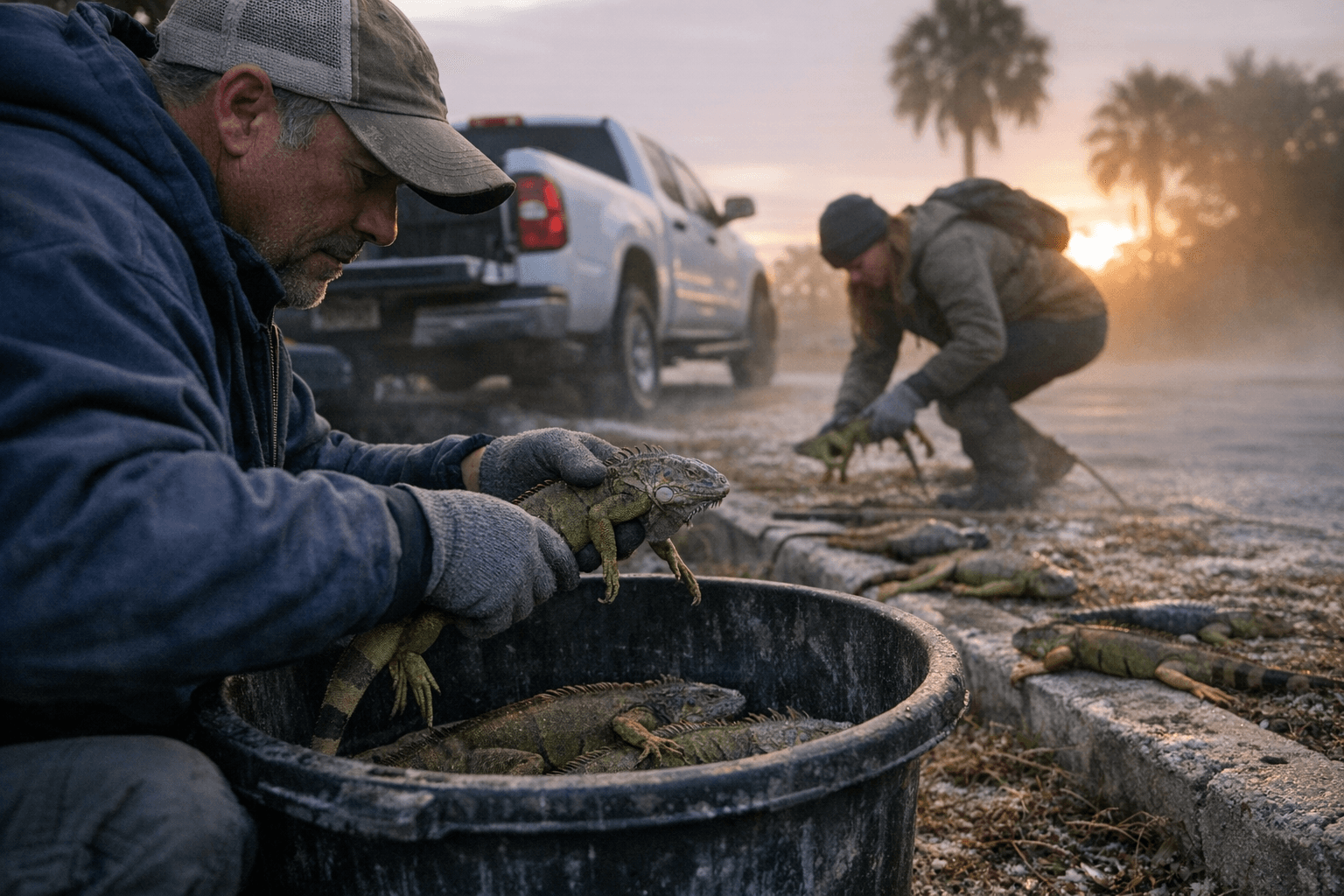
Legal status remains significant: green iguanas are a prohibited species in Florida and, outside the two-day exception, may not be possessed without a permit, including during transport. The commission notes that invasive iguanas are not protected beyond state anti-cruelty laws and that landowners may humanely kill iguanas on their property year‑round. Property owners or members of the public with landowner permission are authorized to remove cold-stunned animals during the EO window.
For Monroe County residents, the Marathon lab provides a local turn-in point within the island chain. The temporary measure creates a narrow window to reduce local populations without requiring permits, but it also places responsibility on residents to follow containment and safety rules. If you cannot safely collect a cold-stunned iguana, contact a professional wildlife control operator or reach FWC regional offices for guidance. Expect the FWC to post the full executive order and the complete list of designated drop-off sites; verify locations and hours before traveling.
This article was produced by Prism’s automated news system from verified source data, official records, and press releases, then run through automated quality and moderation checks before publishing. The system is built and supervised by the people who set the standards it runs under. Read our full AI policy.
Did this article answer your question?