FWC catches Key West trio with 50 illegal barracudas aboard
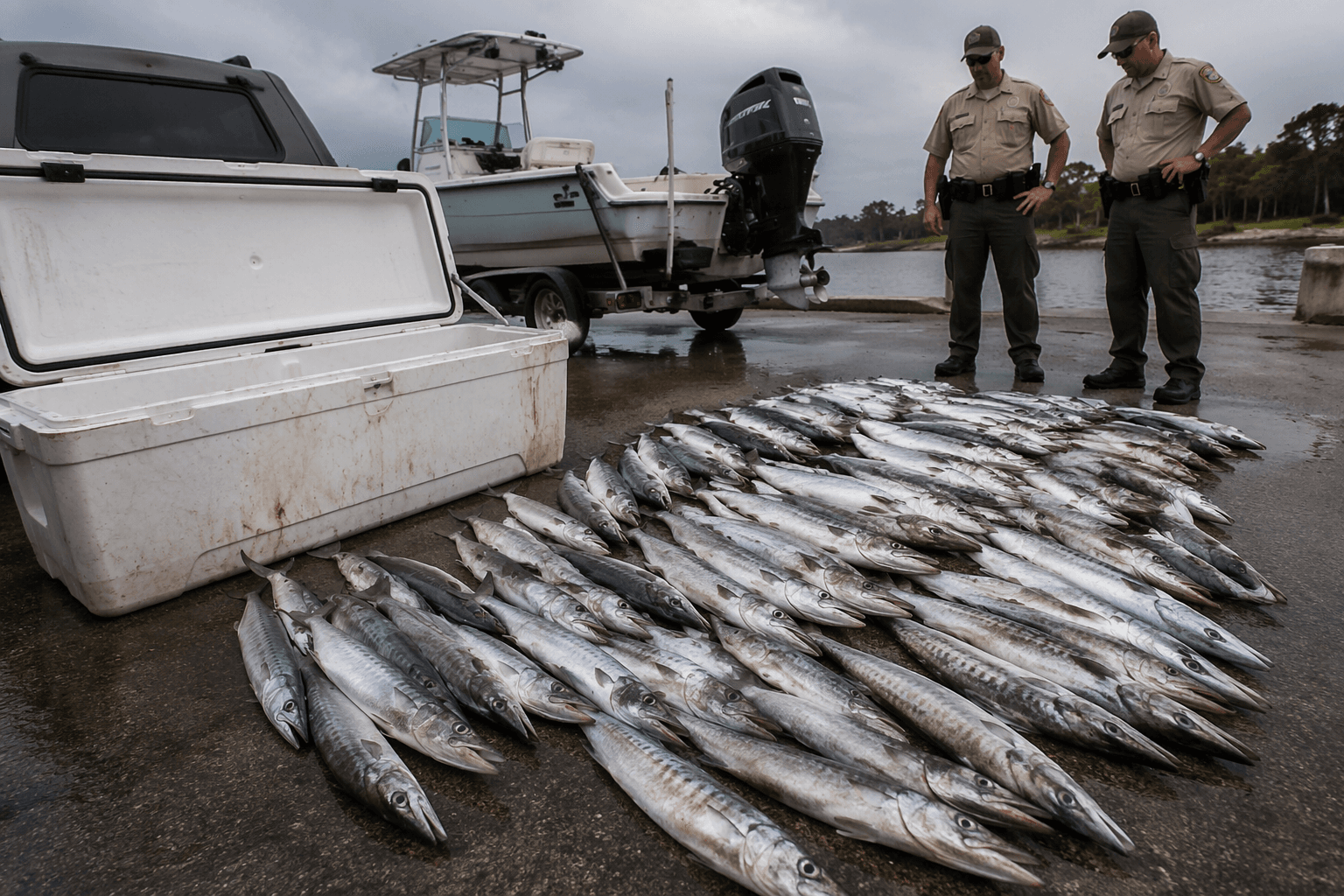
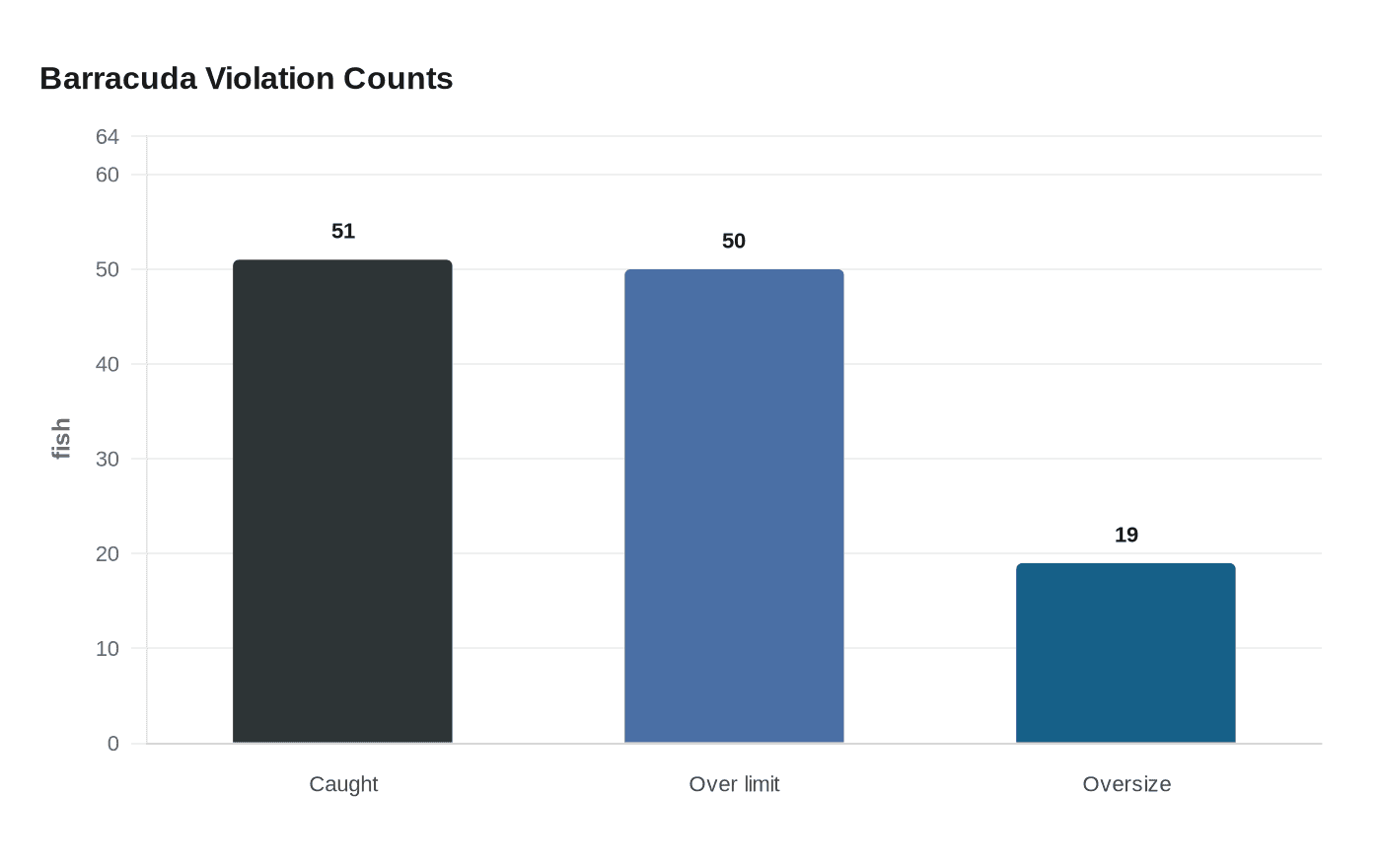
FWC officers found 51 great barracudas hidden in a cooler off Key West, a haul that was 50 fish over the legal limit and triggered felony and misdemeanor charges.
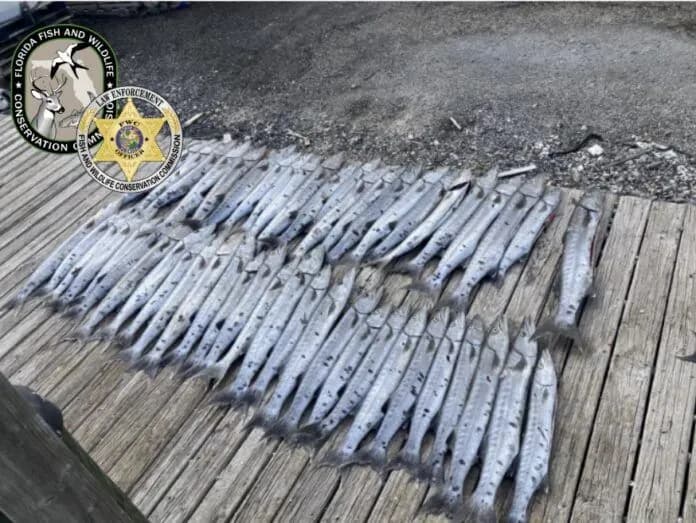
Florida Fish and Wildlife Conservation Commission officers pulled three Key West men over with 51 great barracudas packed in a cooler off the island, a haul that put them 50 fish over the legal limit and brought fishing charges that could carry real criminal consequences.
The arrests happened April 25, and one report identified the suspects as Aramis Valdes Chinique, 38, Ernesto Hernandez, 55, and Ernesto Leon Lopez, 37, all of Key West. Each was said to face one felony count and three misdemeanor counts tied to fishing violations after officers said 19 of the barracudas also exceeded the legal size limit.
In Monroe County, the rules for great barracuda are strict: anglers may keep two fish per person, or six fish per vessel per day. The fish must measure between 15 and 36 inches fork length, with only one fish over 36 inches allowed per person or vessel each day. The same regional regulations apply in adjacent state and federal waters off Collier, Monroe, Miami-Dade, Broward, Palm Beach and Martin counties.
That framework matters in the Keys, where barracuda are part of both the recreational fishing culture and the wider marine food web. FWC has said it set barracuda bag limits in South Florida in 2015 and later adopted slot limits to reduce harvest pressure and protect larger, highly reproductive fish. Taking fish far beyond those limits can undercut the conservation logic behind the rules and invite heavier enforcement.
FWC says it monitors barracuda through underwater surveys and by collecting recreational and commercial catch data, part of a broader effort to track how much pressure the species faces in South Florida waters. The Key West bust fits that pattern of enforcement, showing how quickly a routine patrol can turn into a major case when officers find a concealed cache of protected fish.
For Monroe County, where fishing is both pastime and livelihood, the case is a reminder that the state’s barracuda rules are not just technical details. They are a line between a legal catch and a poaching case that can ripple through local waters, local docks and the reputation of the Keys as a place where marine resources are closely watched and fiercely defended.
This article was produced by Prism’s automated news system from verified source data, official records, and press releases, then run through automated quality and moderation checks before publishing. The system is built and supervised by the people who set the standards it runs under. Read our full AI policy.
Know something we missed? Have a correction or additional information?
Submit a Tip