How Monroe County's mosquito control district keeps the Keys protected
Monroe County’s mosquito district is more than a nuisance crew: it is a voter-created island agency that inspects, sprays and tracks disease from Key Largo to Key West.
The first line of defense in the Keys is a special district created by Monroe County voters, run by a five-member board and staffed by about 75 people who know how to work an island chain. The Florida Keys Mosquito Control District covers the roughly 120-mile stretch from Key Largo to Key West, and its job is not just to swat down a bad mosquito day but to keep a county built on outdoor life usable year-round.
Why Monroe County built its own mosquito district
The district’s roots go back to 1949, when the Florida State Legislature approved House Bill 1127 and opened the door for local governments to create special taxing districts for needs that a regular county setup could not handle well. Monroe County voters overwhelmingly approved the required referendum in November 1950, and the Monroe County Anti-Mosquito District was officially declared operating on August 1, 1951. The district later took its current name in 1998, a reminder that the Keys solved a local problem with a local institution rather than a one-size-fits-all county agency.
That history matters because the Keys are not a typical Florida county. The district says it is one of about 15 independent mosquito control districts in Florida, which puts Monroe County in a small group of places that have chosen to fund and govern mosquito work separately. In a long, narrow island county where drainage, tides, backyards and mangroves can create breeding sites quickly, that structure gives residents a dedicated agency focused on local conditions instead of a general-purpose office stretching across a much broader landscape.
How the district works on the ground
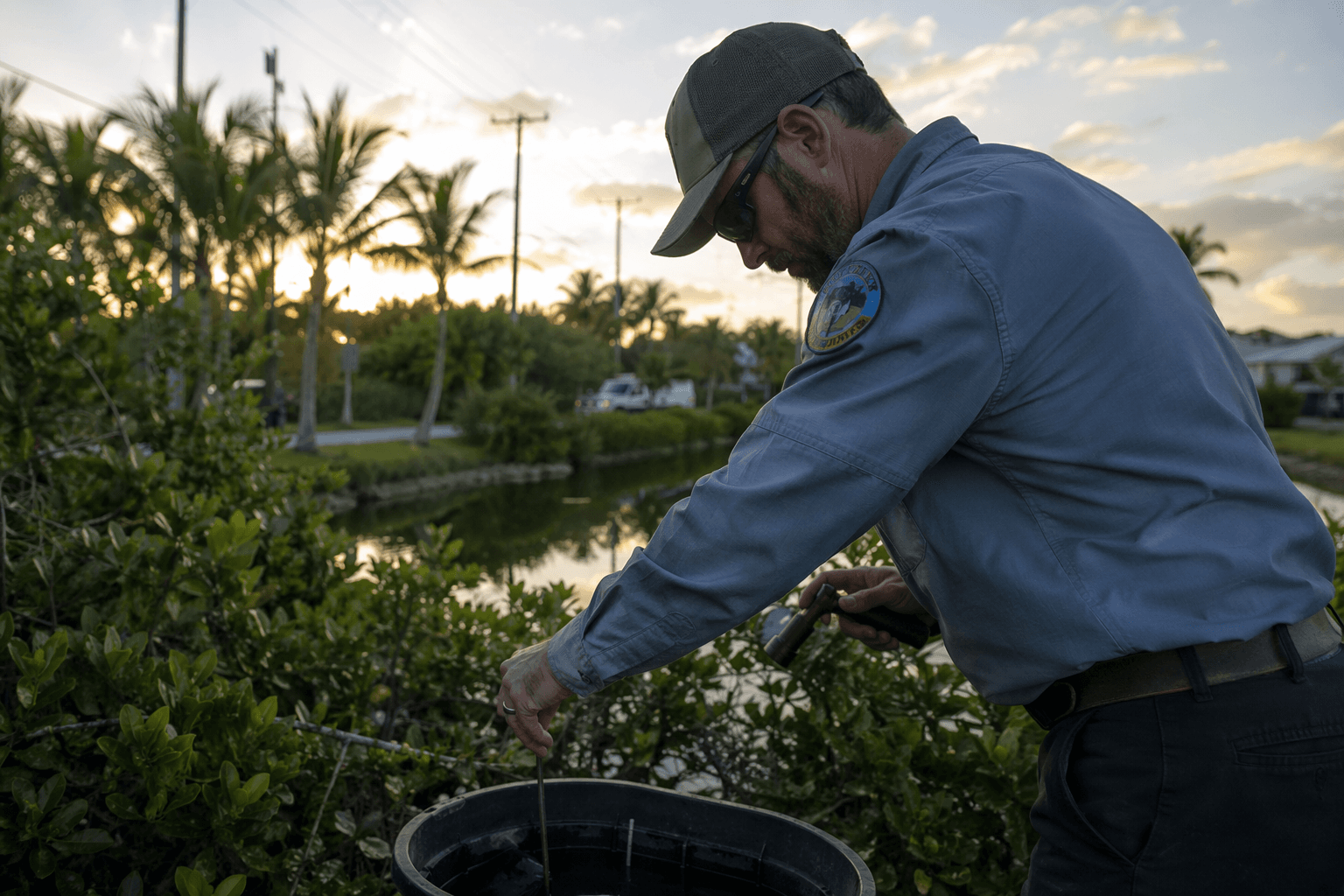
The district’s day-to-day work starts with people, not aircraft. More than half of its employees are trained and licensed mosquito control inspectors, and the district says it typically keeps about 75 staff members on payroll. Those inspectors work neighborhood-style beats across the Keys, which is important in a county made up of separate islands rather than one connected landmass.
Source elimination is one of the district’s core tools. That means finding and removing the standing water and other conditions that let mosquitoes multiply before a problem becomes a spray truck issue. The district also runs school outreach throughout Monroe County, teaching mosquito biology, habitats and prevention so children and families understand where mosquitoes breed and how to reduce those sites at home.
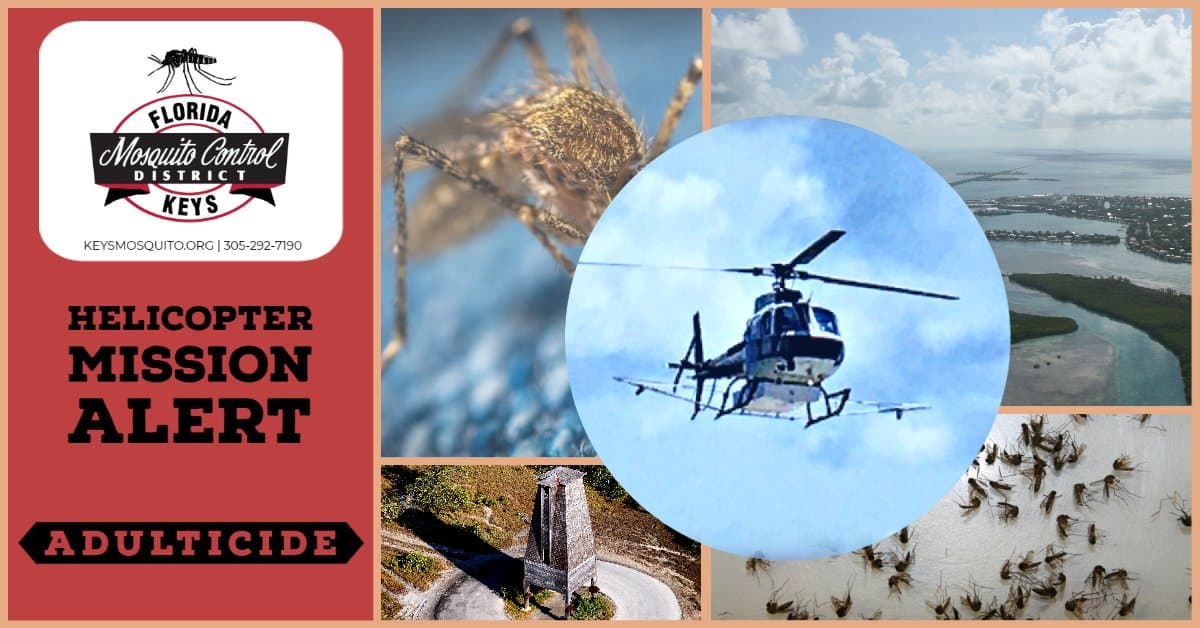
Aerial control is part of the district’s history as well. The agency says it began using aerial mosquito control in the early 1960s, and helicopter work became especially important in the 1970s and 1980s. That evolution reflects the geography of the Keys: some breeding areas are hard to reach by road, and a mosquito-control system for an island county has to be able to move fast across water, bridges and scattered neighborhoods.
What happens when illness appears
When mosquito-borne disease is a concern, Monroe County Emergency Management works with the Florida Department of Health in Monroe County and the mosquito district. That coordination is a crucial part of the county’s public-health safety net, because mosquito control in the Keys is not only about comfort. It is also about keeping local transmission from gaining a foothold.
The county and district warned residents about an unusually active early mosquito season in July 2023, a sign that mosquito pressure can rise before many people expect it to. In July 2024, the Florida Department of Health in Monroe County announced two confirmed locally acquired dengue cases. In response, the district said it activated its mosquito-borne disease response plan and increased operations in Key Largo and Upper Matecumbe Key.
That response is built around targeted field work. When alerted to a possible mosquito-borne disease case, the district said it carries out door-to-door inspections and treatments of residences and businesses. That kind of work is especially important in the Keys, where a case in one neighborhood can quickly become a countywide concern if mosquitoes are left to move through connected islands and densely used visitor areas.
What residents can actually use
For people trying to understand how to deal with mosquitoes at home, the district’s public guidance is straightforward. Drain standing water, empty birdbaths and pet bowls weekly, and use repellent on exposed skin. Those small steps matter because even a small backyard, porch, patio or dock can become part of the breeding cycle if water sits long enough.
The district also gives residents a formal place to watch how policy is made. It is governed by a five-member board elected by Monroe County voters, and board members serve four-year terms. Board meetings are generally held at 1:00 p.m. on the third Tuesday of the month in Marathon, which gives the public a regular window into how the district sets priorities, allocates resources and responds to changing mosquito conditions across the islands.
That local accountability is part of what makes the Keys model different from a typical county program. Monroe County’s mosquito district has its own tax base, its own elected commissioners and a staff built for island conditions, which means the response can be tailored to the realities of Key Largo, Marathon, Upper Matecumbe Key and Key West instead of treated as an afterthought. In a place where outdoor work, neighborhood life and visitor spending all depend on being able to stand outside without being swarmed, mosquito control is basic infrastructure.
This article was produced by Prism’s automated news system from verified source data, official records, and press releases, then run through automated quality and moderation checks before publishing. The system is built and supervised by the people who set the standards it runs under. Read our full AI policy.
Did this article answer your question?