Key West cooking show blends food, music and island storytelling
Jimmy Buffett’s “Cheeseburger in Paradise” still sells the Key West myth, and the Key West Cooking Show turns that nostalgia into meals, tickets and downtown foot traffic.
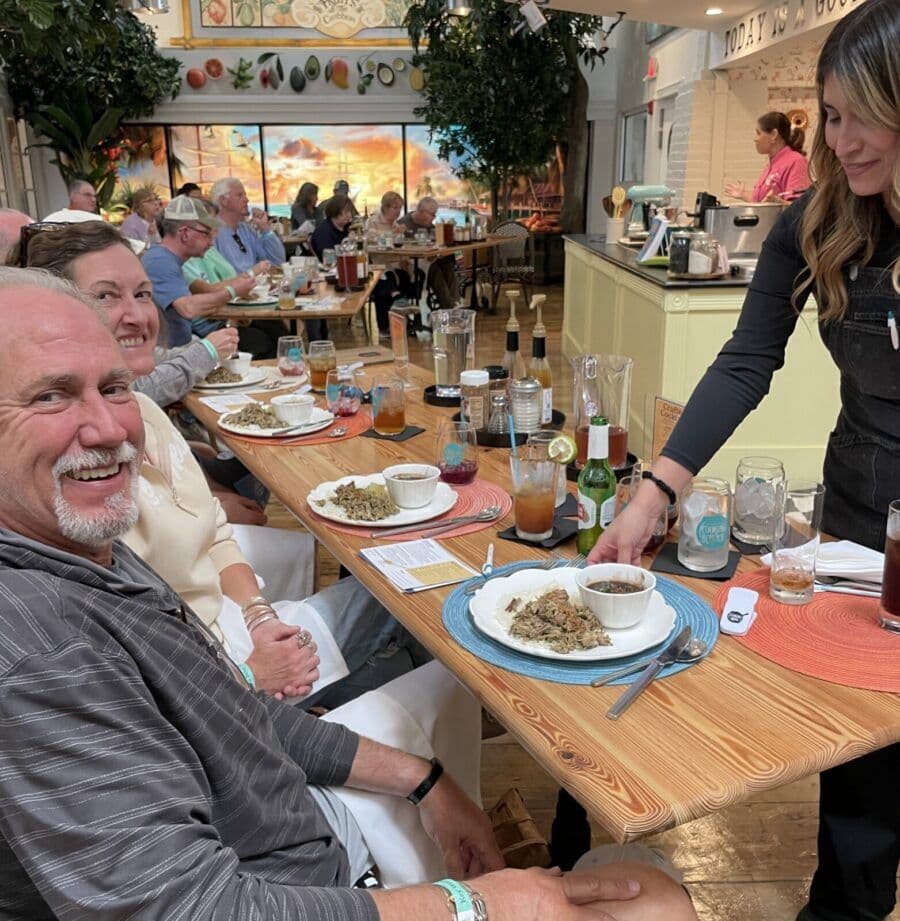
A cheeseburger in paradise is more than a Jimmy Buffett lyric in Key West. At 291 Front St., it is part of a business model built on memory, live storytelling and the island’s most marketable identity.
A songbook that tastes like the Keys
Carol Shaughnessy’s food-and-music tour starts with a simple idea: songs about food stick because they tap into memory as much as appetite. Hank Williams’ “Jambalaya” opens the door, and the playlist widens quickly through “Strawberry Fields Forever,” “Raspberry Beret,” “No Sugar Tonight,” “Brown Sugar,” “Sugar, Sugar” and “American Pie.” In Key West, that same instinct lands on Jimmy Buffett, whose “Cheeseburger in Paradise” became a shorthand for the island lifestyle.
The song appeared on Buffett’s 1978 album “Son of a Sailor” and later reached No. 32 on the Billboard Hot 100. That chart fact matters because it shows how a very specific Key West flavor escaped the island and became a national brand. Long after the song stopped being new, it still helps define what visitors think they are buying when they come here: not just dinner, but a feeling.
What happens inside 291 Front St.
The Key West Cooking Show turns that feeling into a guided experience. Set in a vintage demonstration kitchen at 291 Front St. in Old Town Key West, the attraction blends food, music and local storytelling into learn-and-dine sessions that feel part class, part performance and part supper club. The setting is not accidental. Tour listings place it inside Building One, the former U.S. Coast Guard Headquarters at the corner of Front and Whitehead streets, in one of Key West’s historic Navy buildings.
That location gives the experience a sense of place that is hard to fake. Guests are not sitting in a generic event room; they are inside a downtown building tied to the island’s layered past. Local tourism materials frame the site as a reflection of Key West’s history and note that the cuisine draws from Bahamian, Cuban, Spanish and New England influences, with other listings broadening that to Caribbean traditions as well. In a city built on trade, migration and reinvention, the menu becomes a compressed history lesson.
The meal is the message
One of the show’s most popular sessions centers on pork chops, and the details are the point. The dish is built with a savory spice blend and slow cooking, then served with a wedge salad, potato gratin and guava bread pudding. That combination tells you almost everything about the venue’s pitch: familiar enough for comfort, theatrical enough for tourism, and rooted in the tropical pantry that travelers expect from Key West.
The cooking format is immersive by design. Guests hear local culinary history while eating a plated meal that reflects the island’s blended foodways. Kelly Marshall has said the classes are aimed at enthusiastic home chefs, not professional culinary students, which helps explain the tone. The goal is not certification. It is engagement, theater and the feeling that you have been let in on a local story that comes with dessert.
Why the name change mattered
The venue did not always present itself this way. Keys Weekly reported in 2025 that it opened the previous spring as the Key West Cooking School and later changed its name to the Key West Cooking Show to better signal the experiential nature of the attraction. That shift is revealing. “School” suggests instruction; “show” promises an event. In a tourism economy, that distinction can affect who walks in the door, what they expect to pay and whether they see the visit as a lesson or a night out.
That branding choice also fits the broader Key West economy, where restaurants, bars and attractions compete by packaging authenticity. The island’s best-known businesses do not merely serve food or drinks. They sell atmosphere, memory and a version of Key West that visitors can carry home. A cooking show that leans on songs, local lore and a plated pork chop is speaking the same language as the rest of downtown commerce.
The business of personality
The payoff for that approach is practical. A recognizable food song, a celebrity name like Buffett and a historic setting at 291 Front St. create a built-in share hook for tourists deciding where to spend time and money. The experience also stretches beyond the dining room. Local tourism listings say the venue includes a public bar called Bar 1 and interactive cocktail classes, which widen the business beyond one meal and turn the site into a longer stop in the Old Town circuit.
Keys Weekly described the site’s culinary presentation as part of Key West’s roughly 200-year heritage, and that is the deeper commercial truth. Visitors are not only buying lunch or a class. They are buying an island narrative that has been refined over generations. The city’s recognizable flavor comes from the way it mixes Bahamian, Cuban, Spanish, New England and Caribbean influences into something that feels both rooted and exportable.
Bar 1 and the island’s story economy
Bar 1 extends that storytelling economy upstairs. A related Keys Weekly report tied the bar to Key West’s literary legacy and noted Ernest Hemingway’s nearly decade-long residence in the 1930s. That connection matters because it shows how the property works on multiple cultural registers at once. Music, food and literature each become part of the same tourism script, and each helps reinforce the idea that Key West is not just a destination but a narrative brand.
That brand is powerful because it is recognizable. Buffett’s island mythology, Hemingway’s ghost and the cooking show’s conch-cuisine performance all point in the same direction: Key West sells personality as much as product. In a county where many headlines are hard-edged, this softer kind of enterprise still carries weight. It supports jobs, pulls people into Old Town and turns a meal into a reason to linger.
What makes the Key West Cooking Show worth noticing is not only that it serves pork chops, guava bread pudding and a lesson in local food history. It is that the whole experience shows how Monroe County turns nostalgia into commerce and commerce into identity. In Key West, the story is often the product, and the product is what keeps the story alive.
This article was produced by Prism’s automated news system from verified source data, official records, and press releases, then run through automated quality and moderation checks before publishing. The system is built and supervised by the people who set the standards it runs under. Read our full AI policy.
Did this article answer your question?