Key West couple sues city over rainbow fence, selective enforcement claims
A Key West couple says the city singled out their rainbow fence while ignoring similar violations elsewhere, turning one protest into a First Amendment fight.
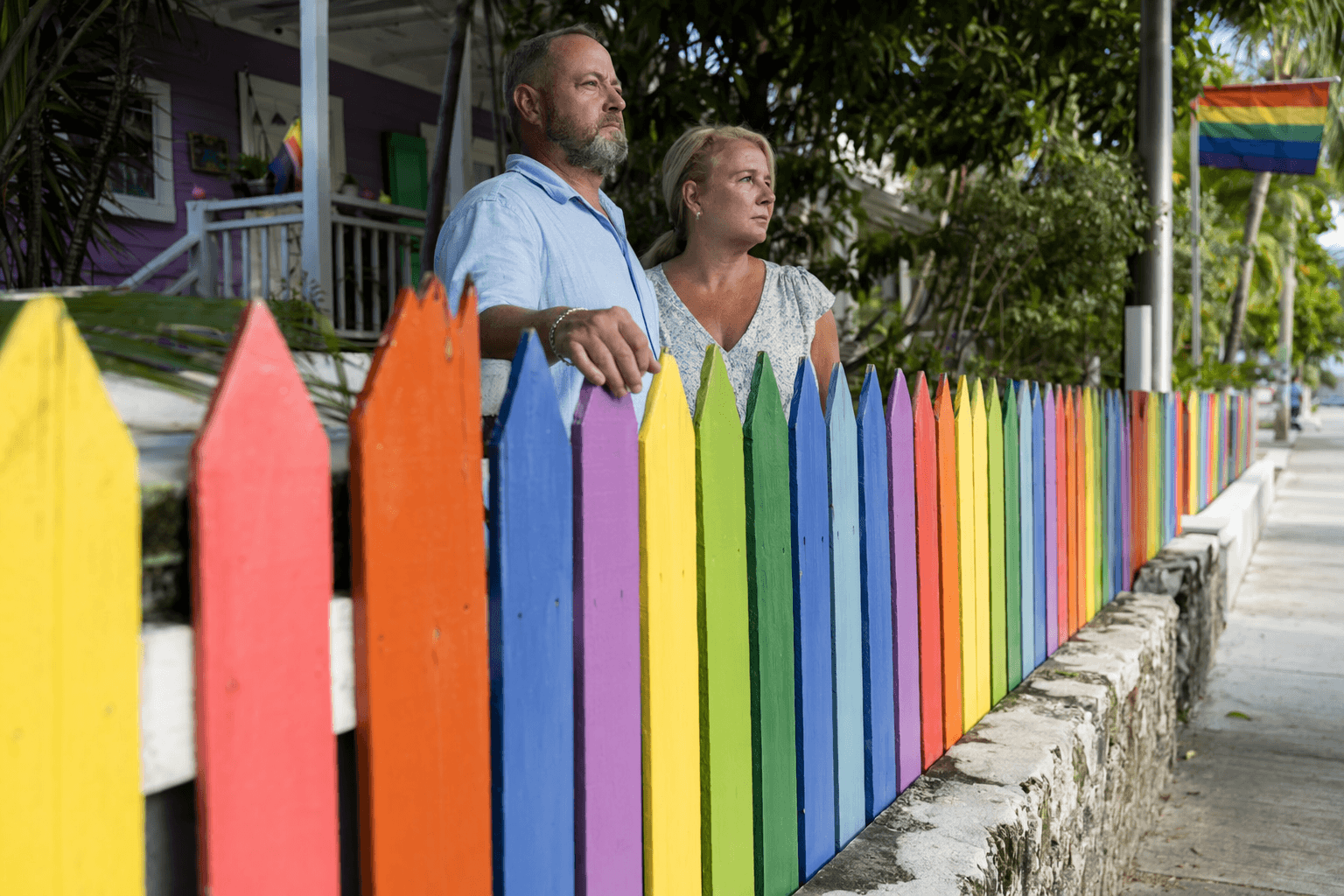
A rainbow-painted fence on an Old Town Key West home has become the newest flashpoint in the city’s fight over LGBTQ symbols in public view. Coley Sohn and Linda Bagley-Sohn, with help from the American Civil Liberties Union of Florida, sued the City of Key West after officials threatened fines unless they removed rainbow-colored pickets they painted on 12 slats of wood, six along a side fence and six on the front.
The couple says the fence was a protest against the city’s decision to paint over the rainbow crosswalks on Duval Street, a symbol that had long marked Key West’s Pink Triangle neighborhood, also known as the Gayborhood. Their lawsuit argues that the city enforced its fence rules against them because of the rainbow message, while leaving other homes alone despite similar violations. The ACLU’s position is that government cannot choose which viewpoints are allowed and which are suppressed.
The case lands in the middle of a broader state-local clash over public expression in Florida. The Florida Department of Transportation’s Engineering and Operations Memorandum No. 25-01, dated June 30, 2025, said pavement or surface art is prohibited on travel lanes, paved shoulders, intersections, crosswalks and sidewalks. The memo also said such art includes markings tied to social, political or ideological messages. That policy came after Gov. Ron DeSantis’ administration threatened to withhold road money from cities that did not remove rainbow and colorful crosswalks.
In Key West, the state pressure led to one of the city’s most visible identity markers disappearing. The rainbow crosswalks at Duval and Petronia streets were erased shortly before 3 a.m. on Sept. 9, 2025, after the city commission voted 4-2 on Sept. 3, 2025, not to pursue legal action against the state. Commissioners Sam Kaufman and Monica Haskell had pushed to hire attorney Howard DuBosar and seek an injunction, but the city chose not to fight FDOT.
The crosswalks had stood for about a decade and had become part of the streetscape in a neighborhood closely tied to Key West’s LGBTQ history. After they were removed, city officials said they were working with the Key West Business Guild on permanent public ways to designate the area. Commissioner Donie Lee, a former police chief who is gay, suggested the city should continue looking for other public pride markers even if it lost the street rainbows.
Now the Sohn-Bagley-Sohn lawsuit asks a different question: whether Key West can punish a private protest on a fence while overlooking similar conduct elsewhere. For a city long known for symbolic public art and open expression, the answer could shape how far officials can go the next time a resident turns a home, a wall or a corner lot into a political statement.
This article was produced by Prism’s automated news system from verified source data, official records, and press releases, then run through automated quality and moderation checks before publishing. The system is built and supervised by the people who set the standards it runs under. Read our full AI policy.
Did this article answer your question?