Key West Transit Upgrades Bus Bike Racks to Boost Multimodal Travel
Three-position racks replace two-bike racks on the Lower Keys Shuttle, adding room for fat-tire and e-bikes on the nearly 50-mile corridor from Marathon to Key West.
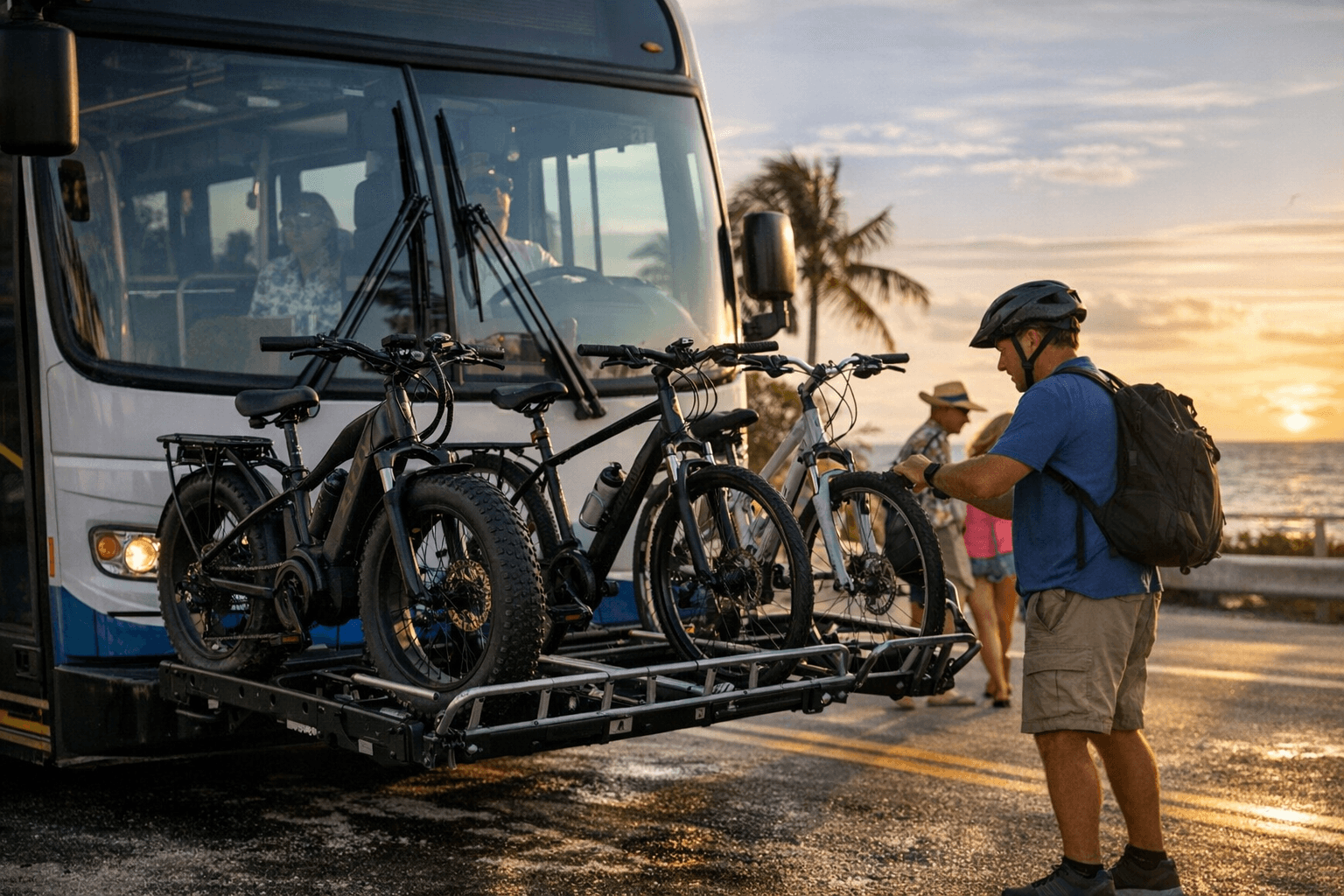
The Lower Keys Shuttle carried 97,522 riders through fiscal year 2025, running 10 times a day between Marathon and Key West along a route that stretches nearly 50 miles down U.S. 1. For the cyclists among them, the math was unforgiving: two bikes per bus, a 90- to 120-minute gap between departures, and no guarantee the rack wasn't already full at Big Pine Key.
Key West Transit began addressing that constraint in early April, swapping older two-position exterior racks for new three-position models on the Lower Keys Shuttle fleet. The retrofitted racks support bikes up to 75 pounds, including the fat-tire and cargo models that have become common in the Keys but rarely fit the older hardware reliably.
The upgraded hardware features redesigned wheel trays and support arms engineered to reduce bounce while the bus is moving, a mechanical problem that has historically concerned riders loading heavier bikes. Beyond carrying capacity, the new frame geometry improves the vehicle's turn radius and keeps headlights and turn signals unobstructed, a safety gain the city cited in its announcement.
"Looking ahead, this technology will also allow customers to plan smarter," transit director Rogelio Hernandez said. "In the near future, riders will be able to check current bike-rack availability through kwtransit.com, Passio GO, and other third-party applications."
That real-time availability feature is powered by VeloLink, a system pre-installed on each new rack that logs utilization by route, time of day, and service mode. Transit staff plan to use that historical data to determine which remaining routes receive rack upgrades after the Lower Keys Shuttle fleet is retrofitted.
Using the new racks follows a straightforward sequence. Squeeze and pull the silver latch to unfold the rack before loading. From the curbside, fit each wheel into the designated tray slot, then raise the support arm over the front tire until it rests firmly on the tire itself. Tell the bus operator before loading and again before departing, and exit through the front door. Folding bikes and folding electric scooters can be collapsed and carried aboard instead of using the rack.
The Lower Keys Shuttle serves stops from Mile Marker 53.5 in Marathon south through Big Pine Key and into Key West, making it the primary transit link for workers, students, and residents who rely on a bike for the final stretch of their commute. The city has framed the rack upgrade as part of a broader effort to reduce vehicle traffic and parking pressure in Old Town, alongside a completed $1.4 million grant-funded improvement program that added bike racks, fix-it stations, and posted maps at all 62 stops system-wide.
Transit advocates have pointed out that rack capacity alone does not shift travel behavior; safe bike access to stops and reliable scheduling matter equally. With the shuttle running every 90 to 120 minutes, a full rack at Big Pine Key can mean a two-hour wait. The added position on each bus reduces that risk but does not eliminate it.
Riders can check schedules and watch for retrofit notifications at kwtransit.com or through the Passio GO app.
This article was produced by Prism’s automated news system from verified source data, official records, and press releases, then run through automated quality and moderation checks before publishing. The system is built and supervised by the people who set the standards it runs under. Read our full AI policy.
Did this article answer your question?