Key West wastewater workers rescue exhausted heron from basin
A Key West wastewater operator spotted a great white heron in distress, and a crew used a lift to pull the bird from a 25-foot basin wall.
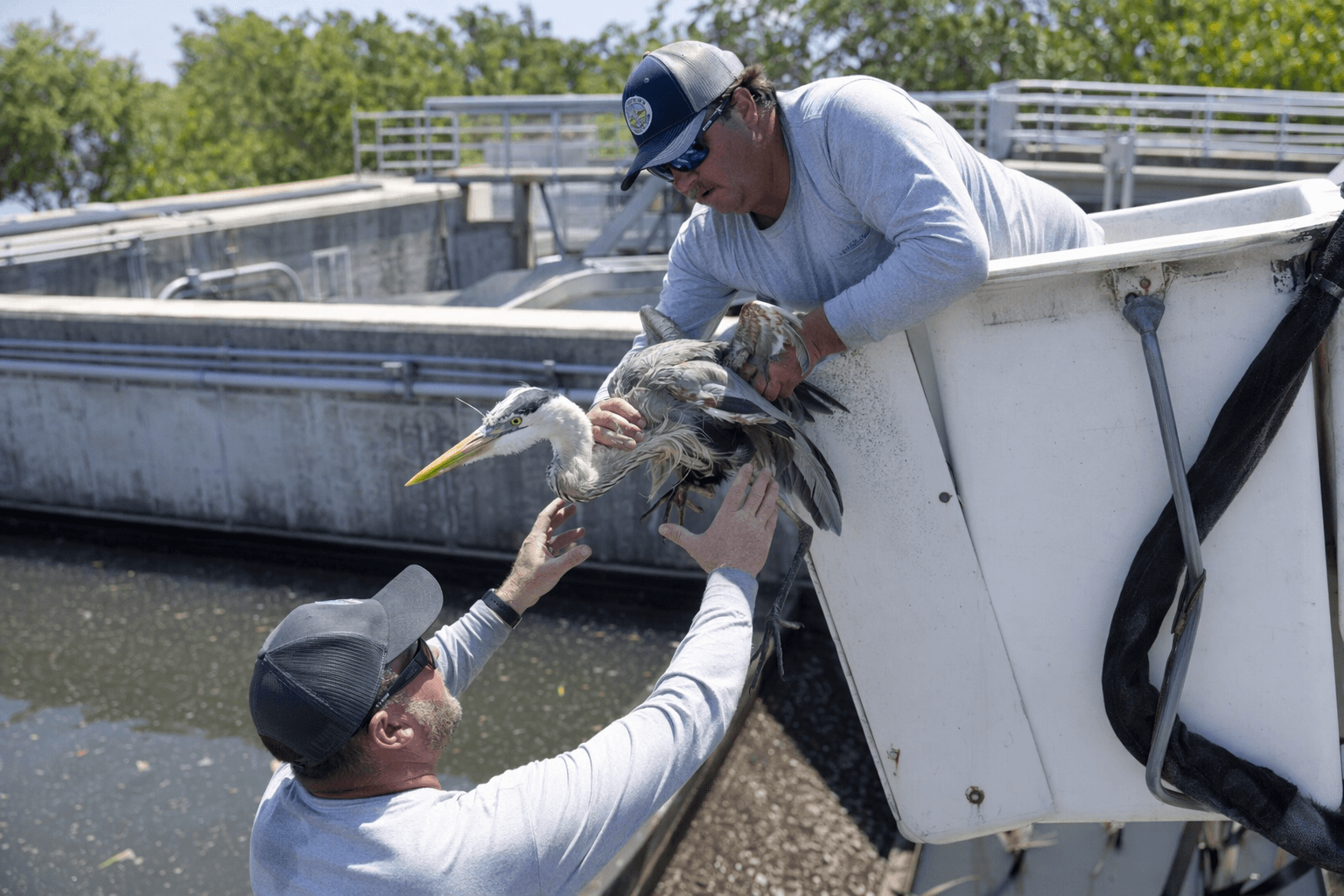
A wastewater operator’s quick eye helped save a great white heron from one of Key West’s aeration basins, turning a routine day at the plant into an unusual rescue that ended with the bird on its way to care.
Walt Lee noticed the heron struggling to stay afloat at the Richard A. Heyman Environmental Pollution Control Facility on April 24. The bird was exhausted and heavily soiled, worn down by the dirty water and unable to get itself clear of the basin.
Lee alerted his supervisor, Richard Guzman, and project manager Rick Cleaver, and the response grew fast. Because the basin walls stood about 25 feet high, the crew had to work carefully to reach the bird without making the situation worse. Guzman, Hector Clemente, Thomas Borrego, Rigoberto Macias and Cleaver used a lift to extend over the wall, then netted the heron and brought it to safety.
The city-owned plant is not a minor piece of infrastructure. The city says the facility was constructed in 1989, upgraded in 2001 to guarantee advanced treatment standards and designed and permitted for 10 million gallons per day. Average flows are about 4.5 million gallons per day, and the city says more than $67 million has been spent over the past five years on sewer capital improvements.
That larger public-works backdrop helps explain why the rescue resonated beyond a feel-good wildlife moment. Monroe County has long treated wastewater as a central environmental issue in the Keys. In 1999, Florida mandated advanced wastewater treatment systems across the island chain as nearshore water quality declined, part of a broader effort to eliminate tens of thousands of septic tanks and cesspits and meet tighter nutrient standards.
The bird itself carries local significance too. The Great White Heron National Wildlife Refuge was established in 1938 and stretches from north of Marathon to just north of Key West, a reminder that the species is closely tied to the shallow-water habitats of the Florida Keys. NOAA also identifies refuge and management areas in the backcountry as important protection for great white herons and other wading birds.
After the rescue, the workers rinsed the stressed heron and placed it in a box for transport to the Key West Wildlife Center on White Street. The center, located at 1801 White Street in Indigenous Park, says it provides 24-hour emergency rescue services in Key West and the lower Keys and rehabilitates more than 1,400 wild birds each year. For one exhausted heron, that chain of care began with a wastewater worker who noticed something was wrong and ended with a city crew that knew how to act fast.
This article was produced by Prism’s automated news system from verified source data, official records, and press releases, then run through automated quality and moderation checks before publishing. The system is built and supervised by the people who set the standards it runs under. Read our full AI policy.
Did this article answer your question?