Key West’s Cuban Missile Crisis history echoes in new security fears
Key West is again measuring Cuba-related tension as a local safety issue, with military readiness, interagency vigilance and old crisis memories all close to home.
Key West’s security lens
Cuba is not a distant headline in Key West. The island city sits closer to Havana than to Miami, and that geography still shapes how Monroe County reads every uptick in regional tension. Naval Air Station Key West remains part of the answer, along with Joint Interagency Task Force South and a sheriff’s office that says it is watching the situation closely.
That closeness gives the city a different kind of alertness than most of Florida. When the peninsula’s southern tip hears talk of Cuban drones, maritime movement, or a changing military posture in the Caribbean, the reaction is not nostalgia. It is a practical question of readiness, jurisdiction, and how quickly local, state, federal and military agencies can coordinate if the situation changes.
The crisis memory Key West never lost
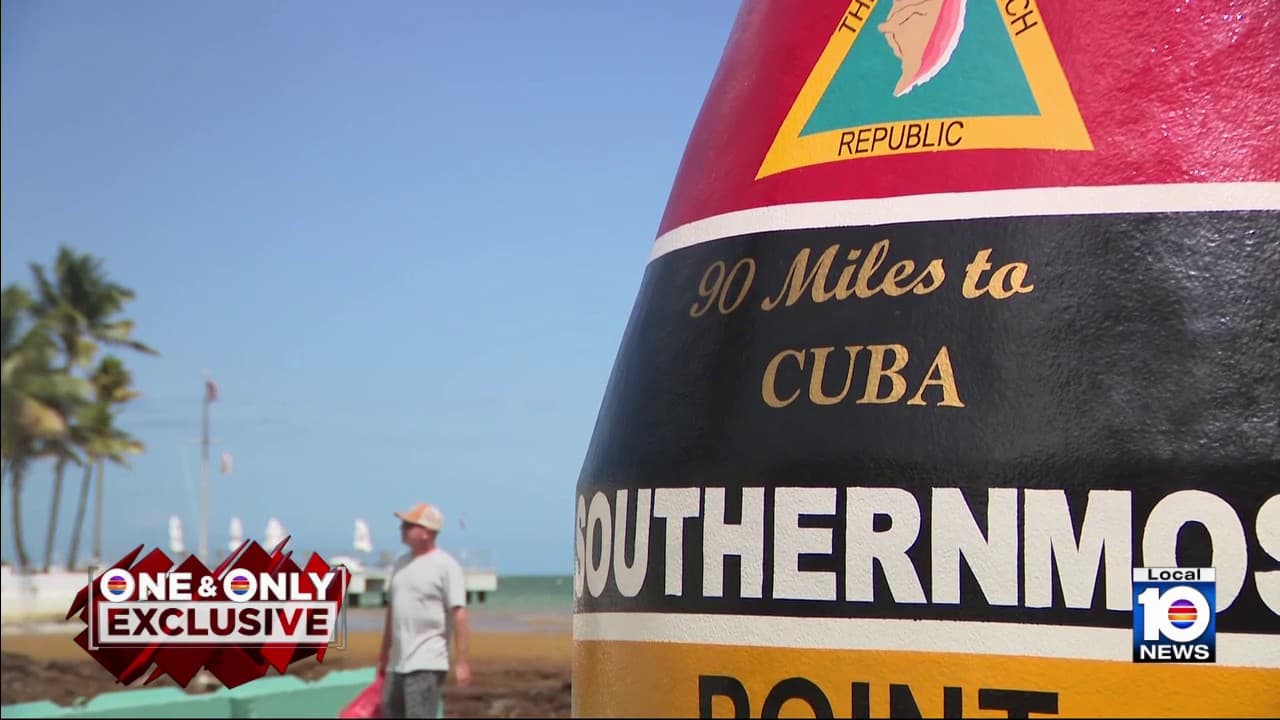
The Cuban Missile Crisis still hangs over that response because Key West lived through the edge of it. The National Archives says that for two weeks in October 1962, the world teetered on the brink of thermonuclear war after the Soviet Union secretly deployed a nuclear strike force in Cuba, just 90 miles from the United States. The U.S. Department of State’s Office of the Historian describes it as the moment the two superpowers came closest to nuclear conflict.
In Key West, that history is visible in the places people still pass every day. A city historical marker says Soviet missile installations in Cuba were discovered on October 15, 1962, and large numbers of troops and aircraft poured into the area. The military population jumped from about 3,000 to 12,000 in a matter of days, turning the island into a front-line outpost.
The physical footprint of that moment still survives in the local memory. Barbed wire lined the beaches, the Army took over the Casa Marina hotel and installed missiles directed at Cuba, and President John F. Kennedy came to Key West to inspect HAWK missile sites after the crisis. A 1962 Library of Congress photograph captures onlookers at George Smathers Beach watching the Army’s Hawk anti-aircraft missiles, a scene that shows how public life and military vigilance were intertwined in the same small city.
What the modern military footprint looks like now
The old crisis is not being relived in exactly the same form, but the modern posture is unmistakably active. The U.S. Navy’s annual FLEX exercise in Key West ran April 24-30, 2026, and Navy reporting says FLEX 2026 integrated commercially developed unmanned systems and artificial intelligence with traditional manned naval platforms. Another Navy posting says the exercise used unmanned aerial systems and surface vehicles to demonstrate a kill chain that found, tracked and engaged captured drug boats.
That matters in Monroe County because Key West is not just a symbolic outpost. Naval Air Station Key West says its national security mission supports the Department of Defense, the Department of Homeland Security, National Guard units, federal agencies and allied forces. Joint Interagency Task Force South is located at the base and conducts detection and monitoring operations to support interdiction of illicit trafficking, which puts the island directly into the machinery of regional security.
The wider Caribbean picture also matters. U.S. Southern Command has welcomed major naval assets into the region, a reminder that security planning in the Keys is linked to developments far beyond local waters. In practical terms, that means the island’s military institutions are not waiting for a crisis to appear before testing unmanned systems, refining detection tools and keeping the chain of command ready.
What Monroe County officials are watching now
County leaders are also treating Cuba-related developments as a public-safety issue, not a museum exhibit. Monroe County Sheriff Rick Ramsay said on May 18 that he was monitoring the situation, had not been contacted by any government agency and did not see a reason for concern at that point. That cautious stance reflects how local officials often handle uncertain threats in a place where the military, tourism, law enforcement and civilian life overlap.
The point is not that Key West expects a repeat of 1962. It is that the city’s history has trained it to recognize when outside events could spill quickly into local readiness needs. If regional tensions rise, Monroe County is the kind of community where residents would notice the effects through security posture, military activity and the rhythm of interagency coordination before they hear anything grandly diplomatic.
That is why the city’s Cuban Missile Crisis history still carries weight in 2026. The 90-mile gap between Key West and Cuba has always been more than a number. It is the distance between international confrontation and neighborhood reality, and in Monroe County, that reality still asks officials to stay ready.
This article was produced by Prism’s automated news system from verified source data, official records, and press releases, then run through automated quality and moderation checks before publishing. The system is built and supervised by the people who set the standards it runs under. Read our full AI policy.
Know something we missed? Have a correction or additional information?
Submit a Tip