Monroe County advances new artificial reef projects across the Keys
Monroe County is pushing 21 reef permits across 15 Keys sites after landing $10 million, with new habitat planned from the Upper Keys to Key West.
Monroe County is moving ahead with 21 permit applications for 15 artificial reef sites across the Upper, Middle and Lower Keys, a buildout that will decide where the county spends its new $10 million state award and where boaters, anglers and dive operators will see change next. The projects are split between Gulf-side and Atlantic-side waters, putting the county’s reef strategy squarely in the middle of the Keys’ long-running fight to expand fishing and diving access without adding pressure to fragile natural coral.
The county says the work is part habitat project, part tourism and fishing pressure valve. By placing approved material on the seafloor, Monroe County aims to create places where marine life can colonize and where visitors can fish and dive without relying so heavily on natural reefs that already carry heavy use. The county’s artificial reef materials say the effort is being carried out under a five-year implementation plan, with planning, construction, monitoring and maintenance all funded through the state award shared by Monroe County and the Florida Fish and Wildlife Conservation Commission.
That timetable matters because artificial reef permitting is slow. County officials say some proposals move through federal, state and sanctuary reviews one at a time, and the process can take 12 to 18 months before a project is ready for deployment. In practical terms, that means the newest wave of reef sites will not all appear at once. Instead, the benefits will likely arrive area by area, with the Upper Keys, Middle Keys and Lower Keys each seeing different schedules depending on the permits and water conditions tied to their specific sites.
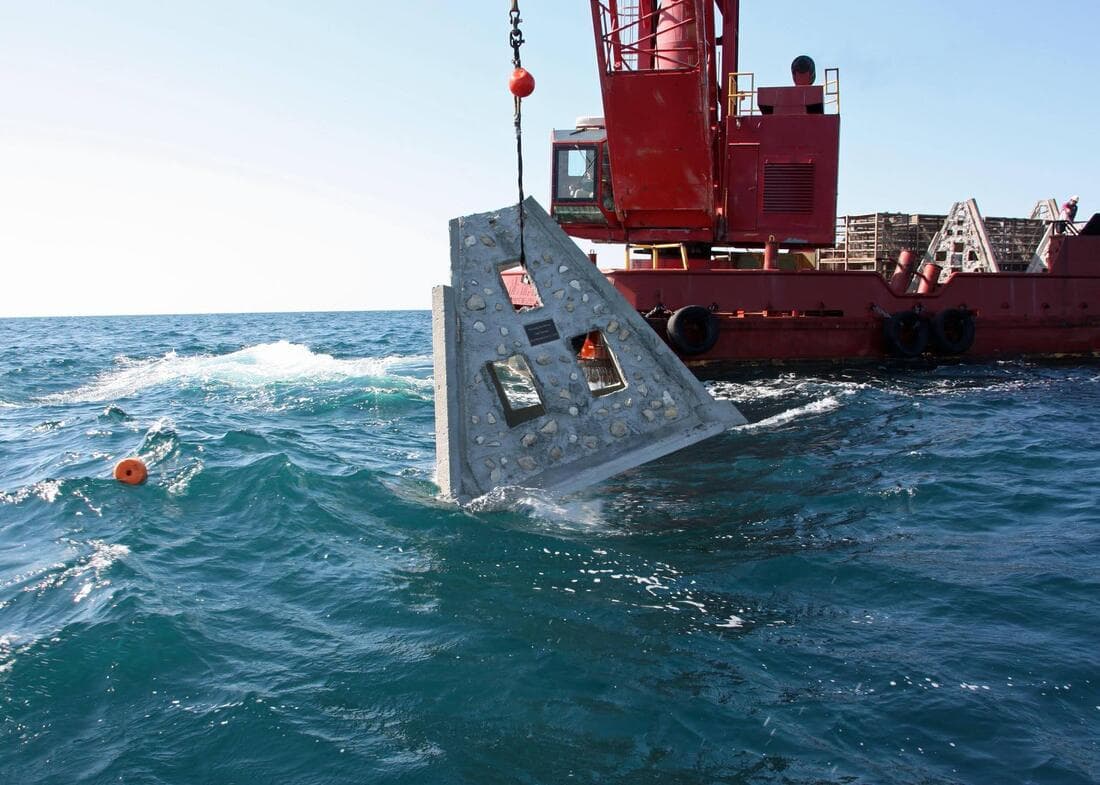
Monroe County already has proof that the approach can work. The county says recently deployed reef sites are showing marine growth, giving officials and reef advocates an early sign that the new program is beginning to produce habitat. The county’s first deployment under the new program came in November 2024, when 10 of 45 donated concrete power poles were placed about 16 nautical miles northeast of Key West in federal waters of the Gulf of Mexico. The full project was later completed in May 2025, and marine life was already appearing around the site.
Hanna Koch, PhD, who became Monroe County’s Artificial Reefs Director on April 1, 2024 after working at Mote Marine Laboratory, is leading the program through that next stage. The backdrop is large: Monroe County says the Florida Keys already have 62 artificial reefs, mostly installed between 1982 and 1989, while the Florida Fish and Wildlife Conservation Commission says more than 4,523 planned public artificial reefs have been placed in Florida waters since the 1940s. With NOAA saying anything placed on the seafloor inside Florida Keys National Marine Sanctuary boundaries requires a permit, the county’s next challenge is turning funding and paperwork into reefs that can be measured in fish, diving traffic and lasting habitat.
Know something we missed? Have a correction or additional information?
Submit a Tip