Monroe County Boating Safety Rules Shape Rescue Outcomes and Legal Responsibility
In 2024, Monroe County ranked No. 1 in Florida for boating accidents, with 69 reported incidents and 10 fatalities — the deadliest county in a state that already leads the nation.
No stretch of water in Florida carries higher stakes for getting the rules right than Monroe County's. In 2024, Monroe County ranked No. 1 in Florida for boating accidents, followed by Miami-Dade County. While Miami-Dade led the state with 76 reportable accidents resulting in 41 injuries and 8 deaths, Monroe County followed closely with 69 accidents and 10 fatalities, making it the deadliest region overall. The numbers carry a hard truth: in the Keys, where fishing, diving, lobstering, and recreational boating define everyday life, the distance between a safe afternoon on the water and a fatal incident is often measured in whether an operator knew the rules and followed them.
Why Monroe County's Waters Demand Extra Vigilance
Florida consistently records the highest number of boating accidents and fatalities in the country. Within that already dangerous landscape, Monroe County's combination of heavy vessel traffic, year-round boating season, and dense recreational diving activity creates compounding risk. Data from the FWC's annual boating incident reports for 2023 showed that July is when most crashes and water incidents occur in a state that leads the nation with over a million registered vessels, with 659 reportable accidents on state waters, and the majority of those incidents happening in Monroe and Miami-Dade Counties.
There were 81 boating fatalities in Florida in 2024, and FWC found that 65% of the boat operators involved in fatal accidents did not have any formal boater training. That statistic alone explains why education is not merely a suggestion in the Keys but a legal requirement for many operators, and why ignorance of local rules has proved fatal.
Who Must Be Licensed and Educated
Anyone born on or after January 1, 1988, must have a Boating Safety Education Identification Card to operate a motorboat with ten horsepower or more. This card is obtained by completing a National Association of State Boating Law Administrators (NASBLA)-approved boating safety course and is valid for life. After successfully passing an approved course, operators receive their Boating Safety Education ID Card, which must be carried at all times while on the water, along with a photo ID.
No one under the age of 14 may operate a personal watercraft on Florida waters at any time, even if they possess a Boating Safety Education ID Card. No one under 18 may rent or lease a PWC, and it is illegal for the owner of a PWC to knowingly allow a person under 14 years of age to operate one.
The local U.S. Coast Guard Auxiliary and Key West Power Squadron offer online and in-person classes regularly. The Florida Keys National Marine Sanctuary also offers a free online boater education course specific to the regulations governing Keys waters. Some insurance companies offer discounts for completing boating courses.
When You Must Report an Incident
Understanding exactly when reporting is legally required is one of the most consequential things any Keys boater can know. In Florida, boating accidents must be reported if they involve death, disappearance under suspicious circumstances, injury requiring medical treatment beyond first aid, or property damage exceeding $2,000.
Boat operators must report boating accidents to the authorities within a specific timeframe based on the severity of the accident. Generally, reports must be filed without delay, with a 48-hour maximum when death, disappearance, or serious injury is involved. When the accident causes no injuries but results in at least $2,000 in property damage, the accident must be reported within ten days.
The operator of a vessel involved in a boating accident where there is personal injury beyond immediate first-aid, death, disappearance of any person under circumstances indicating death or injury, or damage of at least $2,000, must by the quickest means possible give notice to one of the following: the Florida Fish and Wildlife Conservation Commission, the sheriff of the county in which the accident occurred, or the police chief of the municipality in which the accident occurred. In Monroe County, that means the Monroe County Sheriff's Office or the FWC, reachable at (888) 404-3922.
Under Florida law 327.30, it is a third-degree felony to flee the accident scene without first complying with requirements to report the accident, exchange information, and render first aid. Failure to stop and provide assistance may result in severe criminal penalties, including felony charges in cases involving serious injuries or fatalities.
Steps to Take Immediately After a Collision or Incident
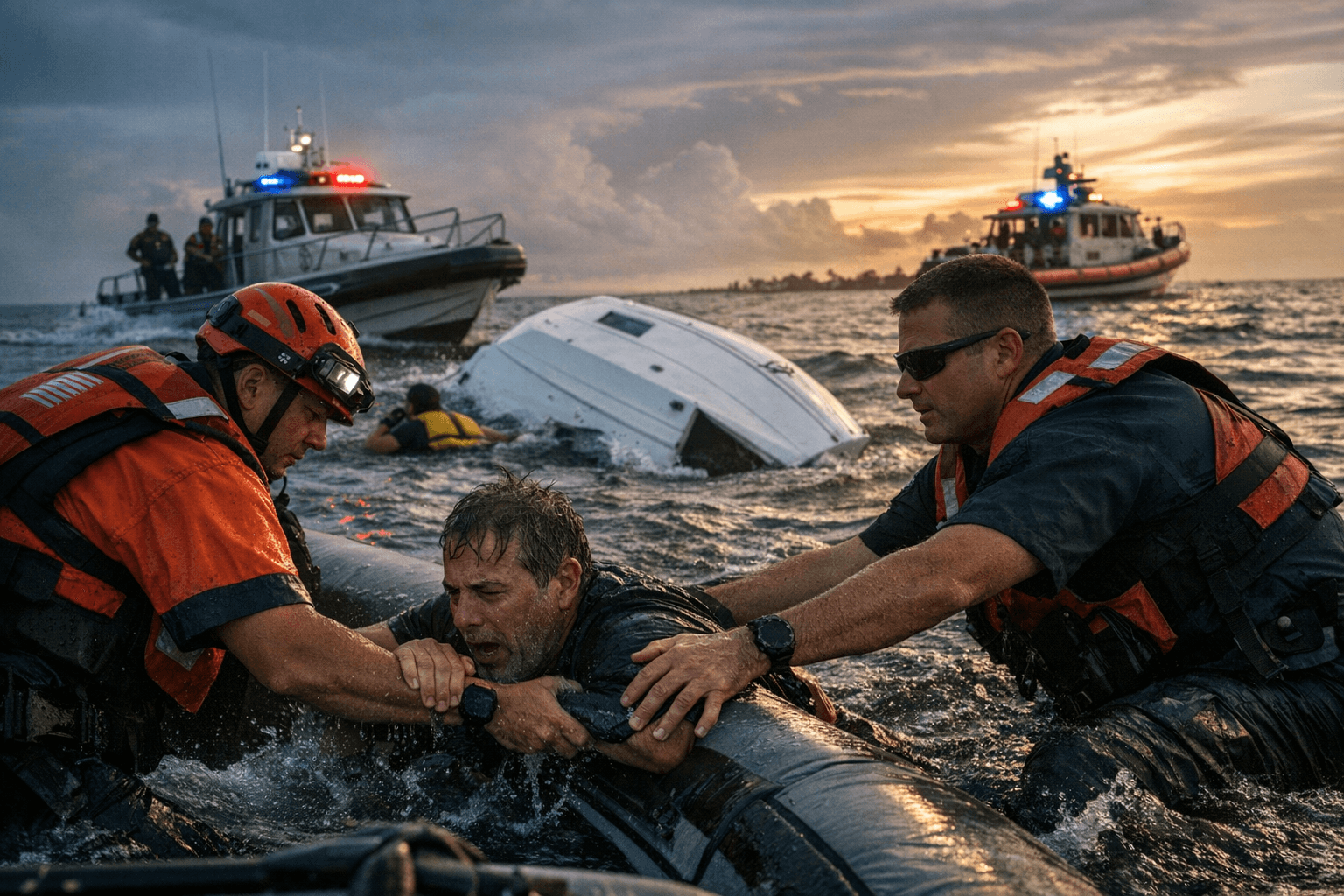
First and foremost, stop your vessel at the scene and render aid to anyone injured or in danger, as long as you can do so without risking your own safety. Once the immediate emergency is addressed:
1. Exchange information with the other parties involved, including your name, address, and vessel identification number.
2. Report the accident to the proper authorities promptly; timely reporting preserves your legal standing and helps authorities conduct a thorough investigation.
3. Document the scene: take photographs of the vessels, injuries, weather conditions, and any relevant details.
4. Even if injuries are not immediately apparent, seek medical evaluation to document any harm.
5. Be aware that the U.S. Coast Guard requires Form 2692 to be completed where there is substantial injury or vessel damage in an incident.
Legal Responsibility: Operators, Owners, and the Dangerous Instrumentality Doctrine
Liability in boat accidents is determined by establishing negligence, similar to auto accident cases. The person operating the vessel is most commonly held liable. Florida law requires boaters to operate their vessels safely and responsibly, and if an operator violates safety regulations, navigational rules, or fails to exercise reasonable care, they may be found negligent.
Ownership carries its own weight of responsibility. Even if the owner was not operating the vessel at the time of the accident, they may still bear liability. For example, if the owner knowingly allowed an unqualified or intoxicated person to operate the boat, or if the vessel was poorly maintained or lacked required safety equipment, Florida follows the "dangerous instrumentality doctrine," which can hold owners liable for negligent operation of their vessels by others.
Consider this scenario: you lend your boat to a friend for the afternoon, and they get into an accident. Even though you weren't on the water at the time, you could be held liable for the damages. Florida's strict liability laws mean that just by giving someone permission to use your boat, you share responsibility for any accidents that occur.
Boating Under the Influence
Operating a vessel under the influence of alcohol or drugs is a serious offense in Florida. The legal limit for blood alcohol concentration is 0.08 percent, mirroring the state's DUI laws for motor vehicles. Penalties for BUI can include hefty fines, jail time, and the suspension of boating privileges. Moreover, evidence of BUI can increase the likelihood of civil liability if intoxication contributed to the accident.
Boating while impaired due to the use of alcohol or drugs was alleged to have been a factor in just over 20% of boating deaths in 2023. In the Keys, where socializing and time on the water are intertwined, that figure is a serious warning.
Diver-Down Flag Rules: A Keys-Specific Priority
Nowhere in Florida are diver-down flag regulations more consequential than in Monroe County, where lobster season draws thousands of divers into the same channels used by high-speed vessels. Boaters must maintain a distance of at least 300 feet from diver-down flags on open waters and at least 100 feet from diver flags on rivers, inlets, or navigation channels.
These regulations apply whenever someone is wholly or partially submerged and using a face mask and snorkel or underwater breathing apparatus. A divers-down warning device may be a divers-down flag, buoy, or other similar warning device, designed to notify nearby boaters that divers are in the water. Violating these distances carries legal consequences: reckless operation, characterized by willful disregard for safety, is a first-degree misdemeanor, while careless operation, failing to operate a vessel prudently, is a non-criminal infraction.
The real-world cost of ignoring dive flags in Monroe County is well documented. Boaters operating within 300 feet of a diver-down flag in open water, or within 100 feet in inlets and navigational channels, are required to operate at idle speed. Failure to do so has led to deaths, criminal investigations, and multi-million-dollar civil verdicts in Keys waters.
Reckless vs. Careless Operation: Understanding the Distinction
Operators in Florida are responsible for operating their vessels in a reasonable and prudent manner, considering other vessel traffic, posted restrictions, divers-down flags, and other circumstances. The law draws a meaningful line between two levels of dangerous conduct:
- Reckless operation: Anyone who operates a vessel with willful disregard for the safety of persons or property will be cited for reckless operation, which is a first-degree misdemeanor.
- Careless operation: Failing to operate prudently without the element of willfulness is a non-criminal infraction, but still carries fines and mandatory re-education consequences.
Florida law requires individuals who have been convicted of two non-criminal boating safety infractions within a 12-month period to enroll in and complete a NASBLA/State of Florida-approved boater education course.
Required Equipment on Every Vessel
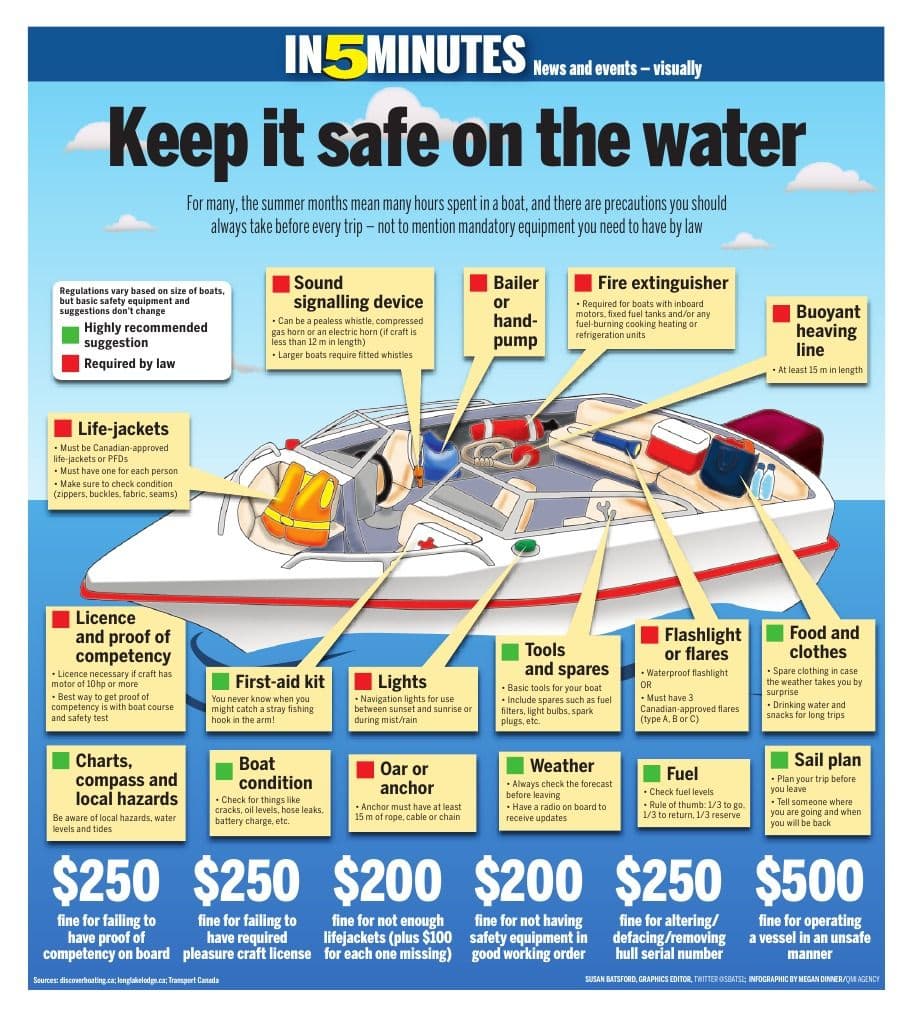
Every vessel on Monroe County waters must carry specific safety equipment. The core requirements under Florida law include:
- Fire extinguishers: depending on the size of the vessel, one or more must be on board, readily accessible and fully charged.
- Visual distress signals: vessels operating in coastal waters must have visual distress signals, such as flares, to signal for help in an emergency.
- Sound-producing devices: vessels must have a horn, whistle, or other sound-producing device to signal intentions and warn other boaters.
- While adults aren't legally required to wear life jackets at all times, it is strongly recommended; children under six must wear a life jacket when the vessel is underway.
- Recreational vessels are required to display navigation lights between sunset and sunrise and during periods of reduced visibility such as fog, rain, or haze.
Enforcement in Monroe County
Law enforcement officers of the Florida Fish and Wildlife Conservation Commission, sheriffs' deputies of the various counties, municipal police officers, and all other defined law enforcement officers have the authority to order the removal or relocation of vessels deemed to be an interference with navigation or a hazard to public safety, and to enforce all boating safety laws. Florida Fish and Wildlife and the Monroe County Sheriff's Office vessels actively patrol busy areas like the Islamorada sandbar, particularly during peak holiday weekends.
FWC officers may conduct safety inspections to ensure compliance with equipment and operational laws; however, with the Boater Freedom Act, random inspections without probable cause are now prohibited.
The data is consistent and the law is unambiguous: reporting boating accidents is crucial not only for legal compliance but also for the collection of important data that helps in understanding and improving boating safety, and boating accident statistics play a vital role in implementing measures to prevent similar incidents in the future and enhance the overall safety of Florida's waterways. In Monroe County, where the water is both livelihood and recreation, knowing these rules before casting off is the most important safety equipment any operator can carry.
This article was produced by Prism’s automated news system from verified source data, official records, and press releases, then run through automated quality and moderation checks before publishing. The system is built and supervised by the people who set the standards it runs under. Read our full AI policy.
Did this article answer your question?