Monroe County Maintains Artificial Reef Network, Protecting Fisheries and Tourism
Monroe County and federal and state partners maintain a coordinated network of artificial reefs in and near the Florida Keys to enhance habitat complexity, support local fisheries, and attract divers and anglers. The program uses approved materials and designated placements, and it matters to residents because it influences fish stocks, tourism revenue, and regulatory compliance in federal and state waters.
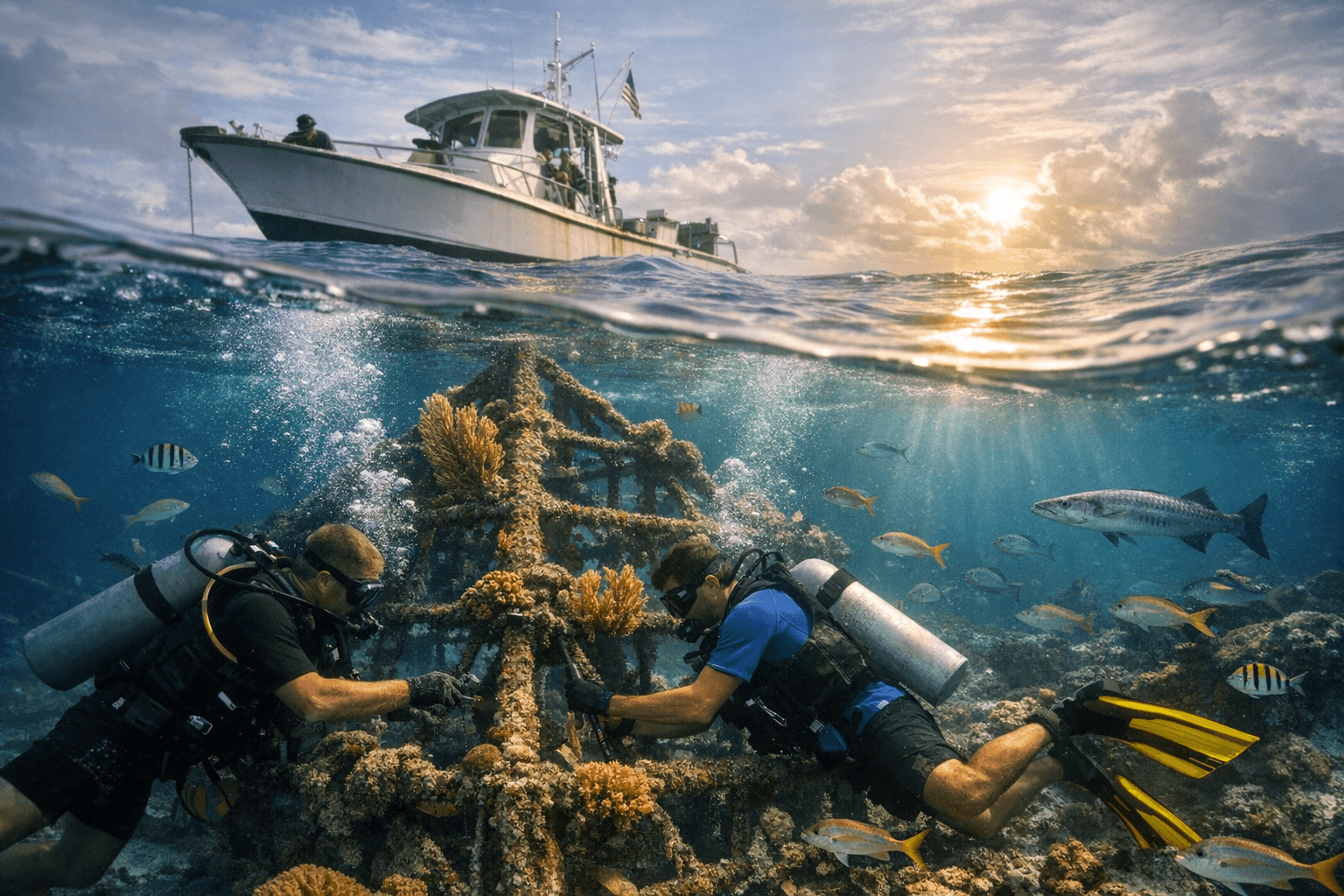
Monroe County, working with federal and state partners, oversees a network of artificial reefs placed in and near the Florida Keys to provide shelter, feeding and breeding sites for reef fish and invertebrates. The structures are built from approved materials that include concrete modules, reef balls, decommissioned vessels that have been specially prepared, and other purpose designed structures placed in designated locations to increase habitat complexity and support fisheries and recreation.
The reefs serve dual purposes. They create new habitat that can boost local fish populations and provide attractions that sustain dive and fishing tourism. That economic and ecological role places the program at the intersection of conservation management and local livelihoods, raising questions about how reef placement, monitoring, and permitting are prioritized and funded by county and partner agencies.
Regulatory complexity is a practical concern for residents and visitors. Some reef sites lie in federal waters and are subject to federal rules. Divers and anglers should consult official NOAA maps and Florida Keys regulations before visiting, because permit limits and protected area designations may apply. Responsible behavior on and near reef sites is essential. Artificial reefs complement natural reef protection efforts, but they are not substitutes. No touch diving and no anchoring on reefs help prevent damage and support long term ecosystem benefits.
Institutional oversight matters for accountability and effectiveness. The involvement of county, state and federal partners requires coordinated permitting, monitoring and public reporting to ensure reefs meet ecological objectives and do not create unintended impacts. Voters and stakeholders in Monroe County can assess budget decisions and management priorities through county meetings and public records to ensure funding and policies align with conservation and community needs.
For local fishers, dive operators and residents, the artificial reef network is a tangible public investment that affects catch rates, visitor traffic and shoreline stewardship. Continued transparency in site selection, material standards and enforcement of regulations will determine whether the reef program delivers sustained ecological benefits while protecting the natural reefs on which the Florida Keys economy depends.
This article was produced by Prism’s automated news system from verified source data, official records, and press releases, then run through automated quality and moderation checks before publishing. The system is built and supervised by the people who set the standards it runs under. Read our full AI policy.
Did this article answer your question?