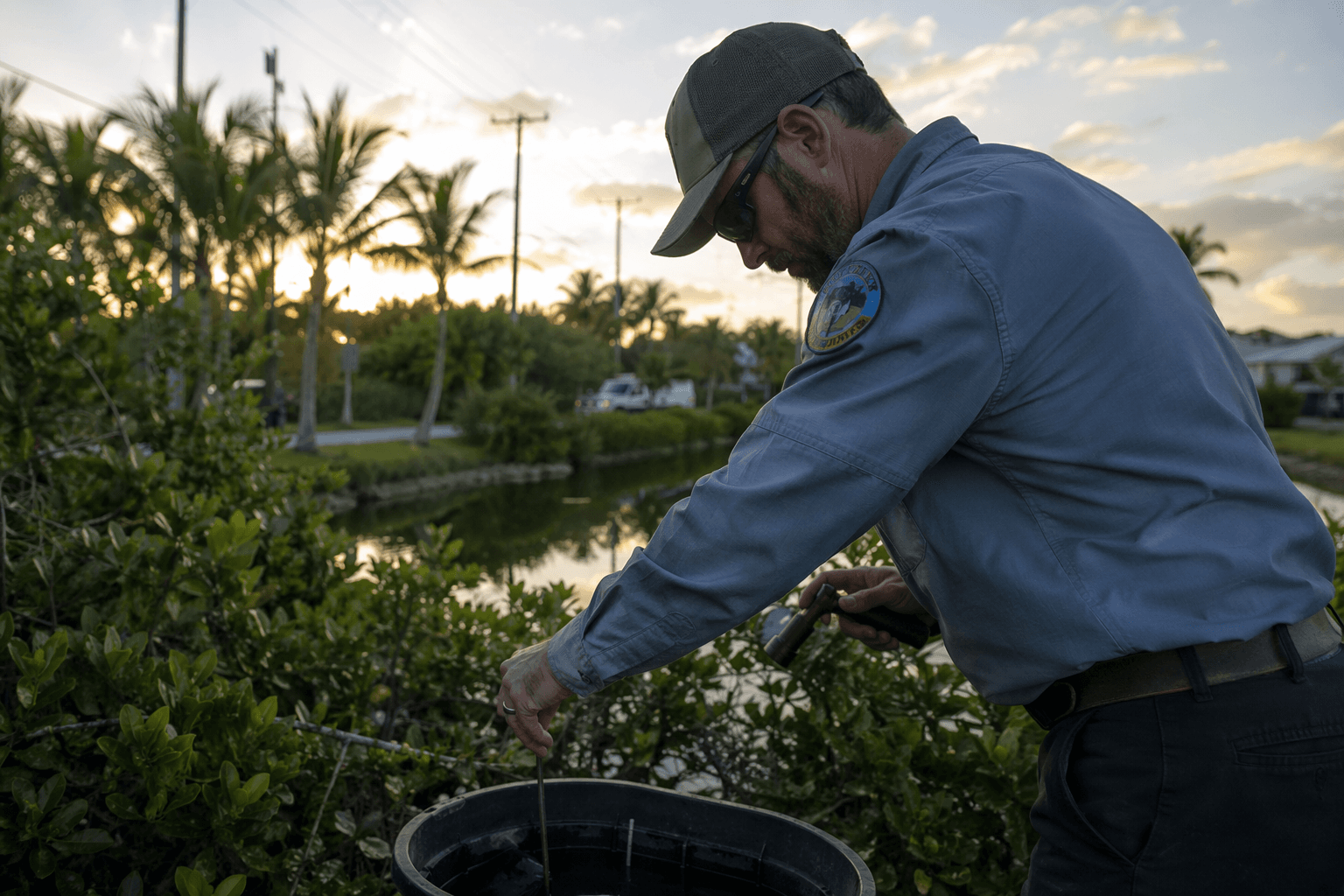
Monroe County Takes Delivery of First New Trauma Star Air Ambulance
Monroe County's Trauma Star program, one of the five busiest air ambulance services in the U.S., took delivery of its first Leonardo AW139 helicopter, replacing a fleet more than 20 years old.
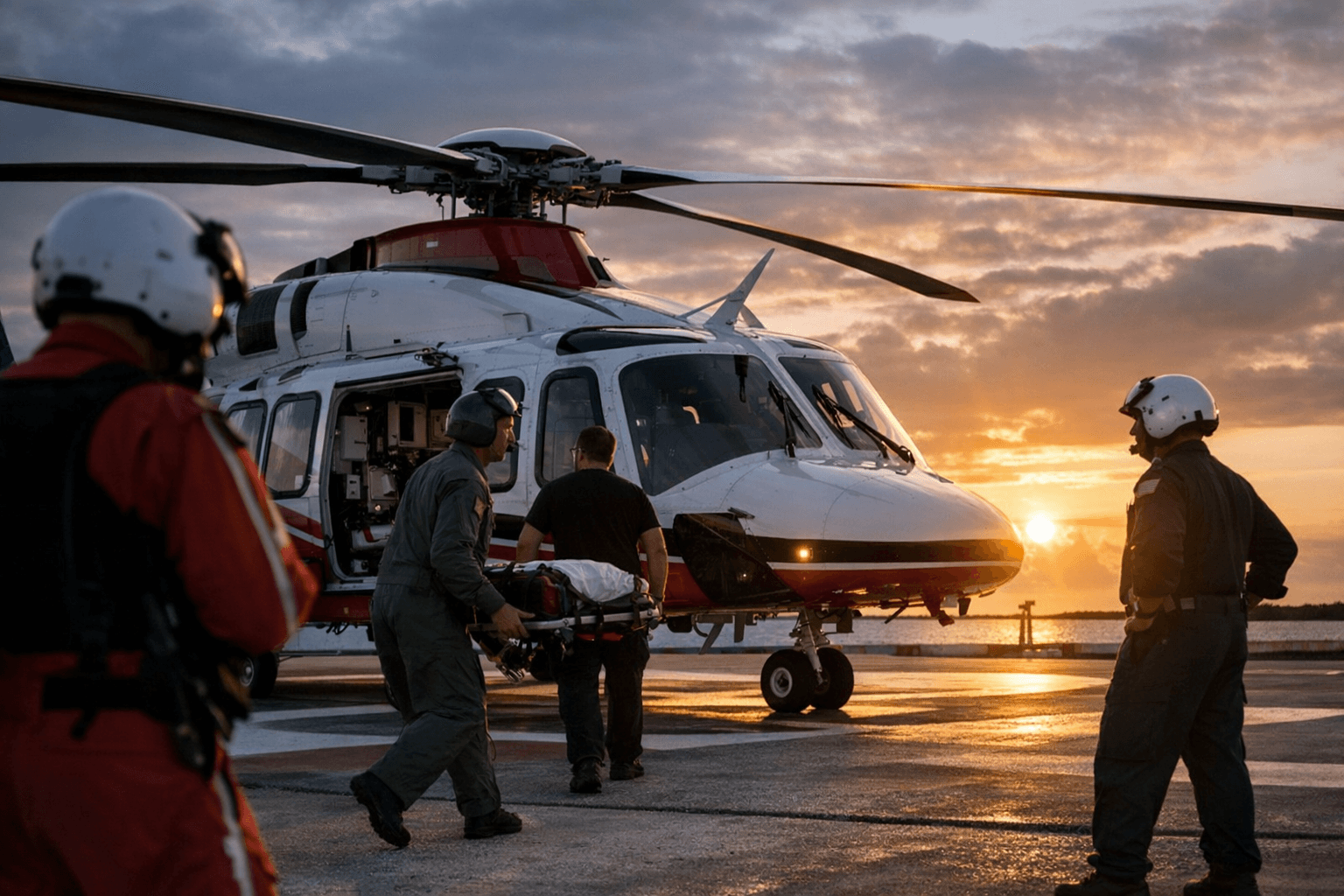
Monroe County Fire Rescue (MCFR) and the Monroe County Sheriff's Office (MCSO) made history at the Marathon hangar when they took delivery of the first of three new Leonardo AW139 Trauma Star air ambulances. The first of the three helicopters arrived on Monday, Aug. 25, in Marathon, having flown down from Philadelphia. It marks the beginning of a full fleet replacement for a program that has become a lifeline across the 100-mile-long island chain.
What Is Trauma Star and Who Runs It
The Trauma Star program is a partnership between the Monroe County Board of County Commissioners and the Monroe County Sheriff's Office, and its mission is to provide flights to mainland hospitals for critical patients in need of specialized care. It is the only air ambulance service in Monroe County. Trauma Star is staffed with highly trained flight nurses, flight firefighter/paramedics, and helicopter pilots, with hiring requirements that exceed industry standards and an exemplary safety record.
Trauma Star has bases in Marathon and Key West, both staffed around the clock to be ready for launch at a moment's notice. Trauma Star's response is initiated through the emergency 911 system, and the helicopter often lands at the accident scene to provide the quickest response to qualified medical facilities in South Florida.
The Scale of the Operation
The numbers behind Trauma Star are staggering for a county of Monroe's size. On average, Trauma Star provides nearly 1,400 flights annually, with three to four flights per day. Even though Monroe County has a fraction of the population of neighboring Miami-Dade, it averages the same number of air rescues: about 1,300 a year. For context, the national average for similar programs is 264 patients a year, according to the FAA and the Association of Air Medical Services, meaning the Trauma Star average is more than five times that amount.
According to Sheriff Rick Ramsay, Trauma Star is one of the top five busiest air ambulance programs in the United States. As Ramsay put it: "This community, more than any community, relies on these helicopters." Since the program began in 2001, Trauma Star has transported more than 5,000 patients to critical care not available in the Keys.
The New Leonardo AW139 Fleet
MCFR and MCSO took delivery of the first two of their new Trauma Star Leonardo AW139 air ambulances, with the first arriving Monday the 25th at their hangar at Florida Keys Marathon International Airport. The three new helicopters will replace the three in the fleet that are more than 20 years old and are no longer in production, making it difficult to find parts when needed. Specifically, the incoming medium twin-engine AW139s replace the Trauma Star emergency helicopter transportation program's Sikorsky S76 fleet.
The AW139 represents a significant upgrade in capability. As Sheriff Ramsay explained: "These new aircraft can fly two patients, medical equipment, medical staff and pilots comfortably from the Dry Tortugas to Miami without the need to refuel, and do it quickly at 190 mph, a vital point when lives are on the line." The new helicopter's range also enables emergency rescues in the Dry Tortugas National Park, almost 113 km west of Key West, allowing direct flights to Miami's critical care centers without the need to refuel. Additionally, the capacity allows for two adult patients to be flown in one helicopter at a time, something the current aircraft cannot achieve.
Speed improvements are also expected. The sheriff's office says the current fleet can get a patient from the Lower Keys to Jackson Memorial Hospital's Ryder Trauma Center in about 47 minutes, about 27 minutes from the Middle Keys, and 17 minutes from the Upper Keys, and pilots expect the new fleet to shave several minutes off those numbers.
Maintenance will be carried out at the Marathon hangar, where the team of mechanics handles all maintenance for the program. The third helicopter was expected to arrive in the coming weeks after initial delivery, with pilots and crew continuing training and the new helicopters expected to be in service starting in October.
How the New Helicopters Were Funded
The total cost for the three helicopters is $53,149,100, spread out over several years, according to Monroe County spokeswoman Kristen Livengood. The funding comes from the infrastructure penny sales tax, approved by a referendum, and is paid by Monroe County residents and visitors when buying items, not through property taxes.
The Monroe County Board of County Commissioners approved the approximately $52 million acquisition in March 2023 as part of the county's infrastructure fund, generated from a one cent sales tax. The partnership with Leonardo also comes with a long-term commitment to the program: Leonardo CEO Clyde Woltman stated, "We are honoured to begin our long-term partnership with Monroe County, and we are confident that the AW139 will provide Trauma Star with the capabilities it needs to safely and effectively rescue and transport patients in southern Florida."
Why Air Transport Is Critical in the Florida Keys
Geography defines Monroe County's medical reality in ways that have no parallel on the mainland. There are no trauma, therapeutic cardiac, or neurosurgical service centers within the Florida Keys. With no trauma hospitals in the Florida Keys, which continues to see an influx of people, the 100-mile-plus island chain relies on helicopters to get patients out quickly.
Monroe County Fire Rescue has a direct affiliation with the University of Miami Miller School of Medicine and the Army Trauma Training Department (ATTD), located at the Ryder Trauma Center. Trauma Star has earned several national firsts in this mission: it was the first air ambulance service to provide immediate access to the highest level of care for patients experiencing a heart attack, and the first air ambulance service in the United States to transport patients exhibiting signs of a stroke to a comprehensive stroke center for immediate interventions.
Safe, rapid air transport is critical in the "Golden Hour," the 60-minute window when the human body can compensate for injury; after that, the chances for recovery diminish significantly. In addition to its primary mission, Trauma Star also assists local hospitals by providing hospital-to-hospital transfers; if a patient at an area hospital requires a critical care interfacility transport, they or their representative can request Trauma Star through hospital staff, provided they meet the State of Florida interfacility transfer guidelines.
What the Keys' Hospitals and Urgent Care Can Handle
Monroe County does have hospital resources distributed along the archipelago. Baptist Health Fishermen's Community Hospital in Marathon is a modern, full-service facility that has served the Middle Keys community since 1962. After Hurricane Irma, Baptist Health rebuilt the hospital from the ground up, and it now features an Emergency Department with an on-site helipad for critical transport, along with surgical care and other services. For the Upper Keys, Mariners Hospital, part of Baptist Health South Florida, serves the upper island chain and offers emergency services, surgery, diagnostic imaging, cancer care, cardiology, and maternity care.
For conditions that don't require emergency intervention, Advanced Urgent Care of the Florida Keys operates locations in Key West, Marathon, and Key Largo, with experienced ER doctors and nurses treating a wide variety of illnesses, with CT scan, X-ray, COVID testing, ultrasound, and lab work on-site.
No Out-of-Pocket Cost for County Residents
One of the most consequential facts about Trauma Star is its cost structure for locals. There are no out-of-pocket costs for county residents who use the life-saving service. In the past, private air ambulances in the Keys have charged county residents tens of thousands of dollars in out-of-pocket costs for transport to mainland hospitals. Trauma Star's existence as a county-funded program eliminates that financial barrier entirely for Monroe County residents during their most vulnerable moments.
The arrival of the first Leonardo AW139 at the Marathon hangar is more than a procurement milestone. It signals a generational upgrade in Monroe County's capacity to keep residents and visitors alive across a geography that makes every minute of flight time count.
This article was produced by Prism’s automated news system from verified source data, official records, and press releases, then run through automated quality and moderation checks before publishing. The system is built and supervised by the people who set the standards it runs under. Read our full AI policy.
Did this article answer your question?