More than 40 Wounded Veterans Pedal Seven Mile Bridge on Adaptive Bikes
More than 40 wounded veterans pedaled across the Seven Mile Bridge on adaptive bikes, drawing local support and spotlighting veteran rehabilitation needs.
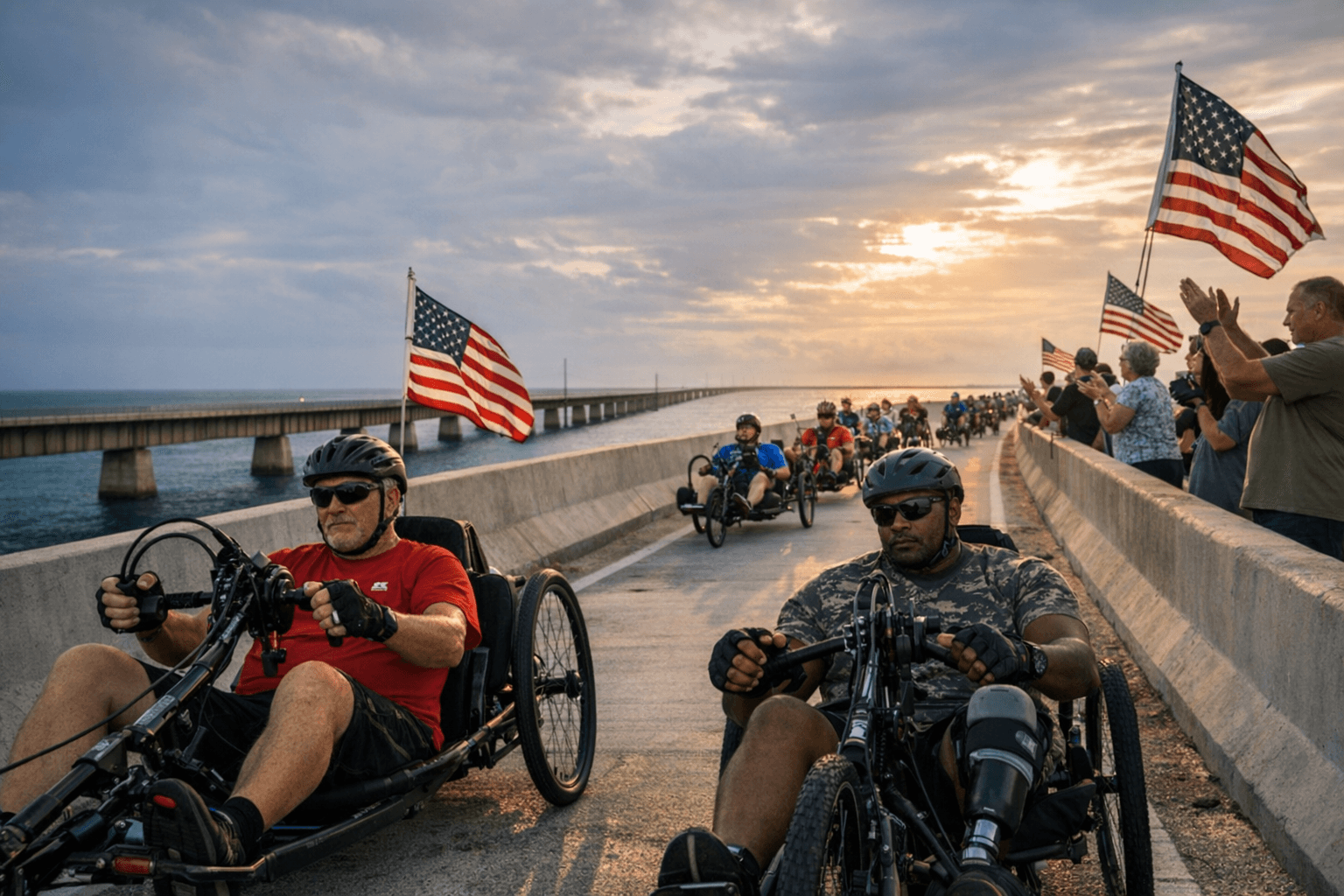
More than 40 wounded veterans rode adaptive bicycles across the Seven Mile Bridge and along the Overseas Highway, traveling through Key Largo, Islamorada and Marathon in an event that brought broad community support and attention to veteran rehabilitation. The Wounded Warrior Project Soldier Ride used specialized bikes to accommodate injuries and mobility limitations, turning a tourist corridor into a visible demonstration of recovery and resilience.
Riders started and finished at points along the island chain, with planned water stops, school cheers and community receptions that punctuated the route. An interactive dolphin session at the Dolphin Research Center gave participants a chance for calm engagement with local wildlife after the physical challenge. Organizers and local officials recognized participants during stops, and the Florida Keys News Bureau and Visit Florida Keys distributed photo and video assets documenting the ride for editorial use.
The event matters to Monroe County beyond a feel-good photo opportunity. Adaptive cycling offers measurable physical and mental health benefits for veterans recovering from traumatic injuries and post-traumatic stress. Local hospitals, rehabilitation therapists and veteran services see events like the Soldier Ride as extensions of clinical care that promote social reintegration, peer support and ongoing physical conditioning. For a county with limited specialty care, community-based rehabilitation activities reduce isolation and help veterans maintain mobility between clinic visits.
There are also public health and infrastructure implications. The ride underscored the need for safe, accessible routes on the Overseas Highway and in island towns so adaptive bicycles and mobility devices can move through the community without added risk. Emergency response planning and traffic management for large, slow-moving groups require coordination among county transportation, sheriffs and emergency medical services to protect participants and motorists alike.
Economically the ride brought modest boosts to Key Largo, Islamorada and Marathon as riders and support crews used restaurants, lodging and services along the route. School cheers and community receptions tied the event to local civic life, giving young residents direct exposure to veterans’ stories of injury and recovery and reinforcing community norms of support.
Social equity considerations are central. Adaptive equipment is costly and often out of reach for veterans without targeted funding. Local advocacy for increased grants, nonprofit support and county-level programming can lower barriers to participation in adaptive sports. Expanding these opportunities would address disparities in access to rehabilitation resources across Monroe County, especially for veterans living on lower incomes or far from mainland services.
The Soldier Ride left visible marks on the Keys and on community sentiment. For Monroe County residents, the event emphasized that recovery happens across public spaces as much as inside clinics and that sustained investment in accessible routes, adaptive equipment and veteran services is needed to turn community goodwill into lasting health equity.
This article was produced by Prism’s automated news system from verified source data, official records, and press releases, then run through automated quality and moderation checks before publishing. The system is built and supervised by the people who set the standards it runs under. Read our full AI policy.
Did this article answer your question?