NOAA Moving Forward With Restoration Blueprint in Federal Sanctuary Waters
One year after Gov. DeSantis vetoed the sanctuary plan, NOAA told its advisory council it will press ahead with the Restoration Blueprint in federal waters.
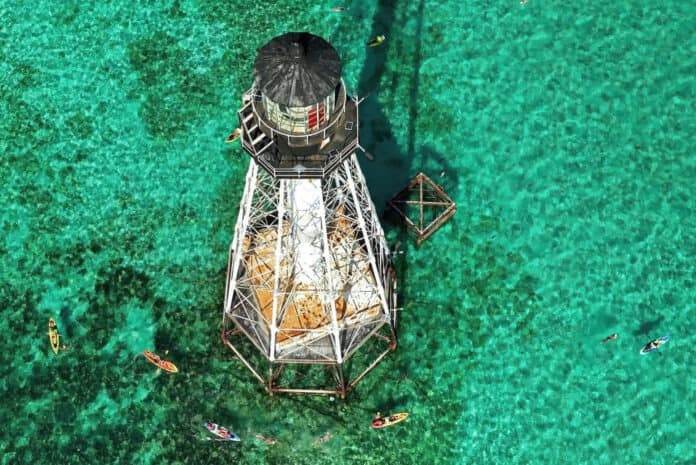
One year after Florida Gov. Ron DeSantis used what former Sanctuary Superintendent Sarah Fangman called "a sledgehammer instead of a scalpel" on a sweeping restoration plan for the Florida Keys National Marine Sanctuary, NOAA officials told the sanctuary's advisory council on March 10 that they intend to move forward with implementing the Restoration Blueprint in federal waters.
The unaltered Blueprint had already taken effect on March 5, 2025 in federal waters, which account for roughly 40% of the sanctuary. DeSantis exercised his veto authority last March during state review, blocking the plan from applying to state waters extending up to three nautical miles out on the Atlantic side of the Keys, or up to nine miles on the Gulf side.
The Blueprint has been in development since 2011. NOAA formally notified the governor's office by letter on January 14, 2025 that it would publish the final rule on January 17, and described it as the product of a "13 year collaboration among NOAA, the community-based sanctuary advisory council, Florida state agencies, federal partners, and interested members of the general public." Under that rulemaking, the sanctuary expands from 3,800 square miles to 4,539 square miles, adding 37 marine zones, including 20 wildlife management areas designed to protect seagrass, nesting birds, and sea turtles, and 15 zones specifically structured to facilitate coral reef restoration.
The governor's veto was closely tied to a November 2024 letter from Florida Fish and Wildlife Conservation Commission chairman Rodney Barreto that outlined 10 "essential" areas of disagreement between FWC and the sanctuary. The top concerns centered on support for artificial reefs within sanctuary boundaries and disputed regulatory authority over state fisheries.
Acting Sanctuary Superintendent Matt Stout framed the implementation as a turning point rather than a finish line. "I would say the end is in sight but it's really a new beginning," Stout said. "The Restoration Blueprint represents real solutions drawn from over a decade of research, technical expertise, consultations with partner agencies, and public input. It is the beginning of a comprehensive recovery effort that the sanctuary desperately needs."
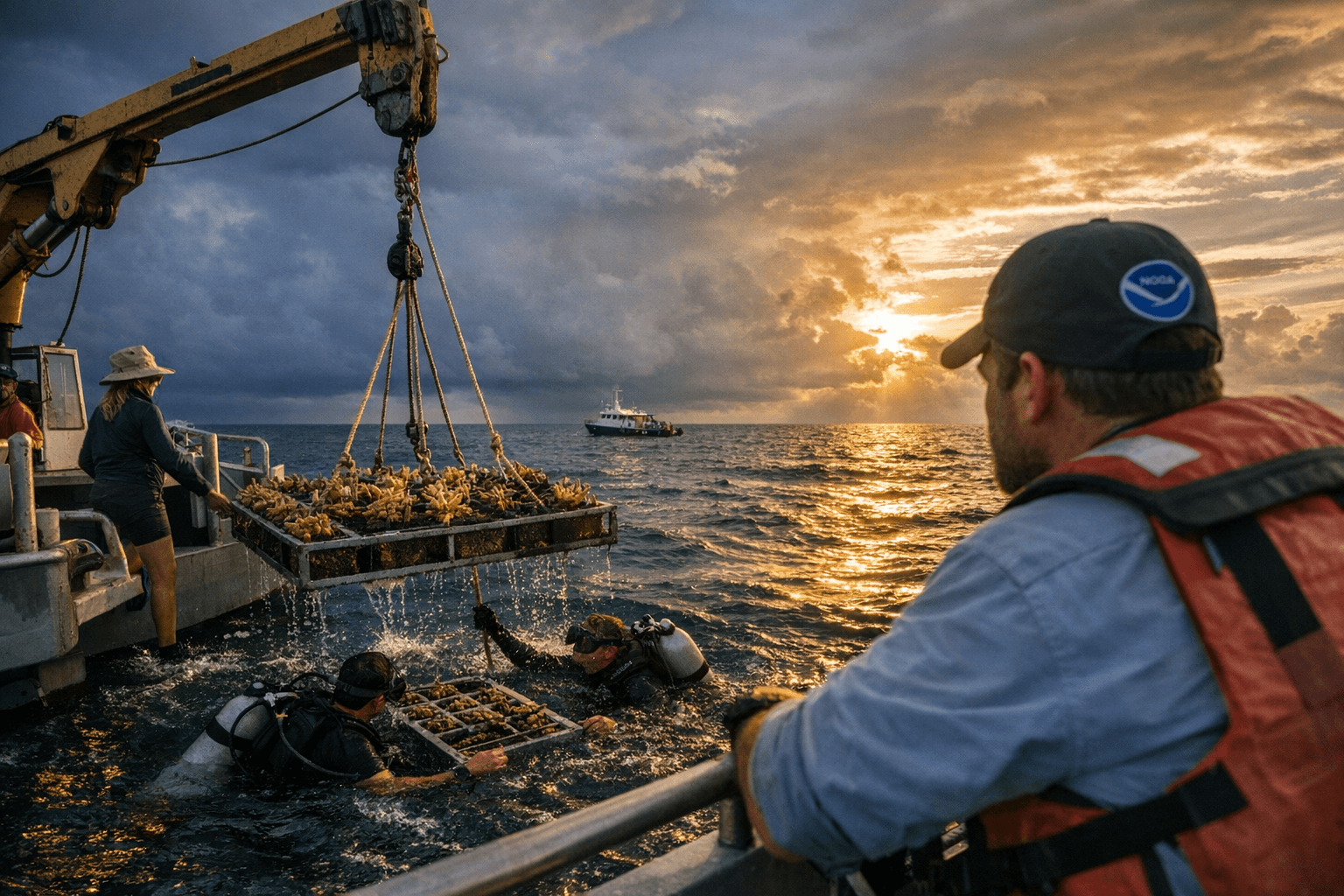
Among the practical changes coming under the Blueprint: mooring buoys will be required in all Sanctuary Preservation Areas, phased in over the next two years. The Sombrero Key Sanctuary Preservation Area off Marathon serves as one reference point for the new standard. The implementation plan also addresses derelict vessel removal through coordination with Monroe County's existing removal and pilot vessel turn-in program, explores technological alternatives for marking marine zones, including GPS-integrated electronic charts and smart buoys, and includes coordinated activities with Naval Air Station Key West for mission-critical defense exemptions under federal regulation.
The economic stakes for Monroe County are considerable. The sanctuary's tourism value to the local economy was estimated at $2.4 billion in 2018, according to Rockport Analytics, supporting 44% of jobs and employment countywide. County Commissioner Holly Raschein voiced her backing for the Blueprint shortly after assuming her role as mayor of Monroe County.
The partnership structure behind implementation spans more than a dozen agencies and organizations, from the U.S. Army Corps of Engineers and the National Park Service to local groups including the Coral Restoration Foundation, Bonefish Tarpon Trust, Key West Charter Boat Association, Florida Keys Commercial Fishermen's Association, and Blue Star dive operators and fishing guides.
With the federal waters component now moving forward, the division between federal and state jurisdiction leaves a significant portion of the sanctuary's waters outside the Blueprint's immediate reach. The two-year phasing window for several key provisions will determine how quickly the changes become visible on the water.
Know something we missed? Have a correction or additional information?
Submit a Tip