Pennekamp Coral Reef State Park anchors Keys tourism, conservation, recreation
Glass-bottom boats, snorkel trips and reef access make Pennekamp a year-round economic engine for Key Largo, where tourism spending and reef health rise and fall together.
A park that feeds the Upper Keys economy
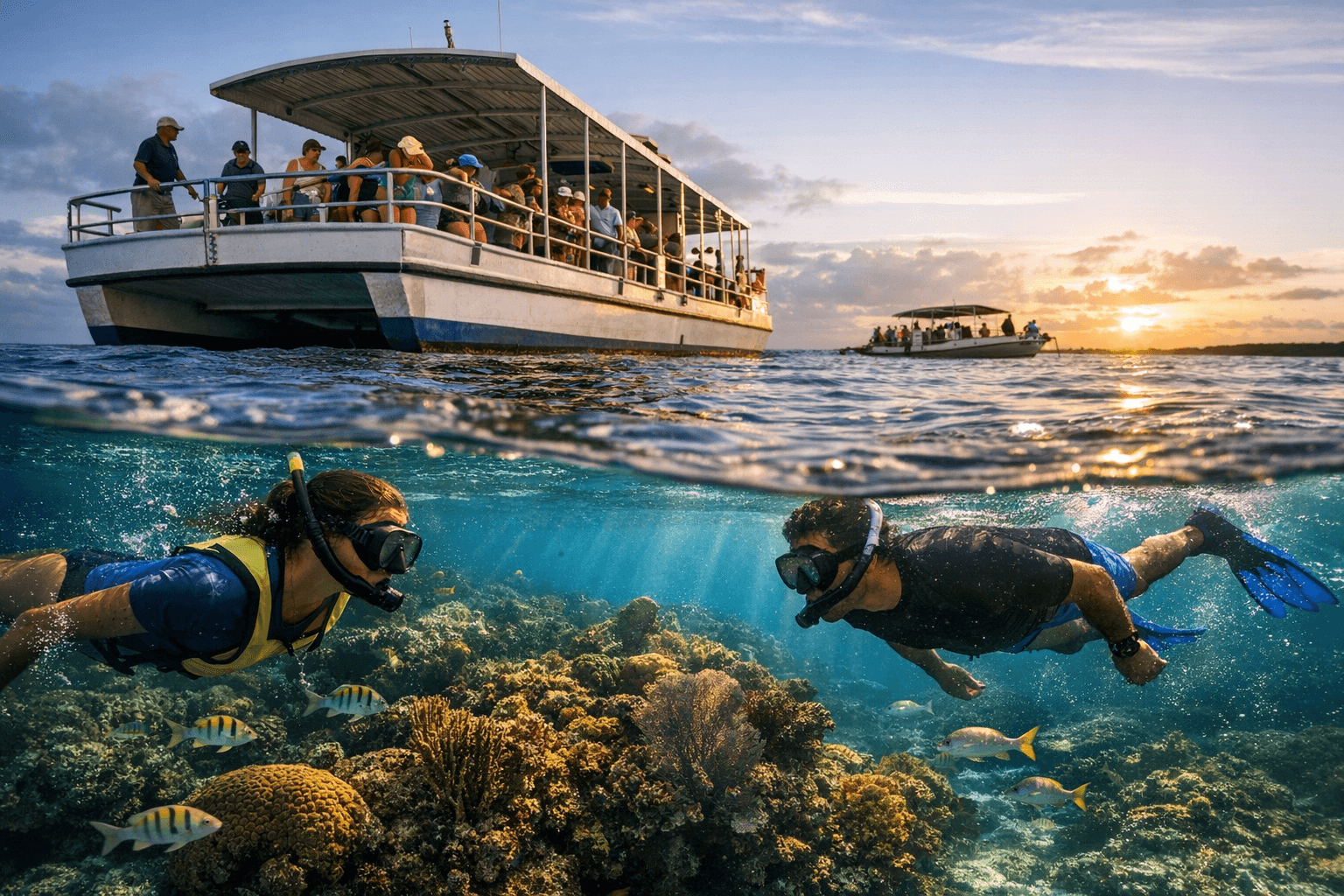
At John Pennekamp Coral Reef State Park in Key Largo, glass-bottom boats leave the docks three times a day, 365 days a year, weather permitting, carrying the visitors who fill tables, rooms and charter schedules across Monroe County. If reef health slips or visitation slows, the loss is felt far beyond the park gate, from dive operators and boat captains to nearby restaurants, hotels and outfitters that depend on a steady flow of day-trippers and repeat visitors.
That is why Pennekamp matters as more than a scenic stop. It is a year-round economic engine, one that gives the Upper Keys a reliable stream of recreation spending while also introducing visitors to the reef ecosystem that defines the local identity and supports much of the county’s tourism economy.
The Keys’ first undersea park still sets the tone
Pennekamp was formally named on Dec. 10, 1960, during dedication ceremonies when Florida Gov. LeRoy Collins announced that the country’s first undersea park would bear the name of John D. Pennekamp, the Miami Herald editor who backed reef preservation. The park opened to the public in 1963 and has remained one of the most recognizable gateways into the Florida Keys.
Today, the park encompasses about 70 nautical square miles, extends three miles into the Atlantic Ocean and sits adjacent to the Florida Keys National Marine Sanctuary. Its scale is part of the draw, but so is its accessibility. For travelers coming down U.S. 1, Pennekamp offers a straightforward way to see the Keys without advanced boating skills or specialized gear, which helps explain why it keeps attracting families, first-time visitors, snorkelers and paddlers as well as longtime regulars.
What visitors can actually do here
The park’s appeal rests on variety, and that variety supports local businesses that serve different kinds of travelers. Florida State Parks says Pennekamp offers four different types of boat tours, alongside shore-based and self-propelled ways to explore the water and mangroves.
- Take glass-bottom boat tours for a reef view without getting in the water
- Join snorkel boat trips, which depart four times a day
- Launch kayaks or paddleboards through mangrove channels
- Spend time on beaches, picnic areas and trails that highlight the coastal landscape
Visitors can:
The visitor center adds another layer. Official park materials say it includes a 30,000-gallon saltwater aquarium, nature exhibits and a theater showing nature videos. In Monroe County, that educational piece is not a side attraction. It helps visitors understand coral reef habitats, fisheries and mangroves, which matters in a county where tourism and environmental stewardship are tightly intertwined.
Why Pennekamp supports local livelihoods
Pennekamp helps spread tourism beyond Key West and into the Upper Keys, where businesses rely on the park’s steady foot traffic. Nearby restaurants, hotels, guide services and outfitters all benefit when visitors turn a reef trip into a full day, or a full weekend, in Key Largo.
That economic role fits squarely within the Monroe County Tourist Development Council’s mission, which is to promote long-term economic stability through visitor-related revenues while also improving environmental and community resources. The logic is simple: when tourism is healthy, local spending grows, and the county can lean less heavily on residents through property taxes. In a place where tourism is treated as the primary industry, the quality of the visitor experience matters just as much as the volume of visitors.
The numbers show how that balance is shifting. Monroe County’s 2024 visitor data showed total trips rose 4.76% compared with 2023, while visitor days fell 8.83%. That suggests more short stays and day visits, the kind of travel pattern that makes easy-access parks like Pennekamp especially important. A family that stops in Key Largo for a few hours may still buy lunch, book a snorkel outing, rent gear, or return later for a longer stay.
The reef system behind the business model
Pennekamp’s value is tied directly to the health of the surrounding waters. The Florida Keys National Marine Sanctuary was designated on Nov. 16, 1990, after a series of boat groundings and growing concern about reef decline. It now protects 4,539 square miles of waters around the Keys, including the only coral barrier reef in the continental United States and the largest documented contiguous seagrass community in the Northern Hemisphere.
Those protections are not abstract. NOAA said that in 2016, stony corals covered only 6.5% of reefs in the sanctuary, while soft corals covered 13.3%. That snapshot underscores how fragile the system remains, even in one of the world’s best-known reef destinations. Storm impacts, vessel groundings, disease, climate change, ocean acidification, pollution and heavy visitation have all added pressure over time.
Restoration efforts have grown in response. Coral reef restoration in the sanctuary has expanded from outplanting a few hundred corals a year to hundreds of thousands a year, a sign that the region is trying to protect the very resource that supports its economy. Pennekamp sits at the center of that equation, serving as both a vacation destination and a public entry point into the science and stakes of reef recovery.
Why Monroe County keeps coming back to Pennekamp
Pennekamp endures because it does two jobs at once. It gives visitors an easy, recognizable way to experience the Florida Keys, and it helps sustain the local businesses that depend on those visits year after year. The park’s open-water access, its boat tours, its visitor center and its place beside the sanctuary make it one of the county’s most dependable attractions.
In Monroe County, where tourism and conservation cannot be separated for long, Pennekamp is more than a park on the map. It is part of the economic plumbing of Key Largo, a classroom for reef protection and a reminder that the future of the local visitor economy still runs through healthy water, healthy coral and the people who make a living from both.
This article was produced by Prism’s automated news system from verified source data, official records, and press releases, then run through automated quality and moderation checks before publishing. The system is built and supervised by the people who set the standards it runs under. Read our full AI policy.
Did this article answer your question?