Pennekamp lecture highlights lionfish fight in Florida Keys reefs
Lionfish can crowd Florida reefs with more than 200 adults per acre, and Pennekamp’s April 27 talk showed how Keys divers are helping track them.
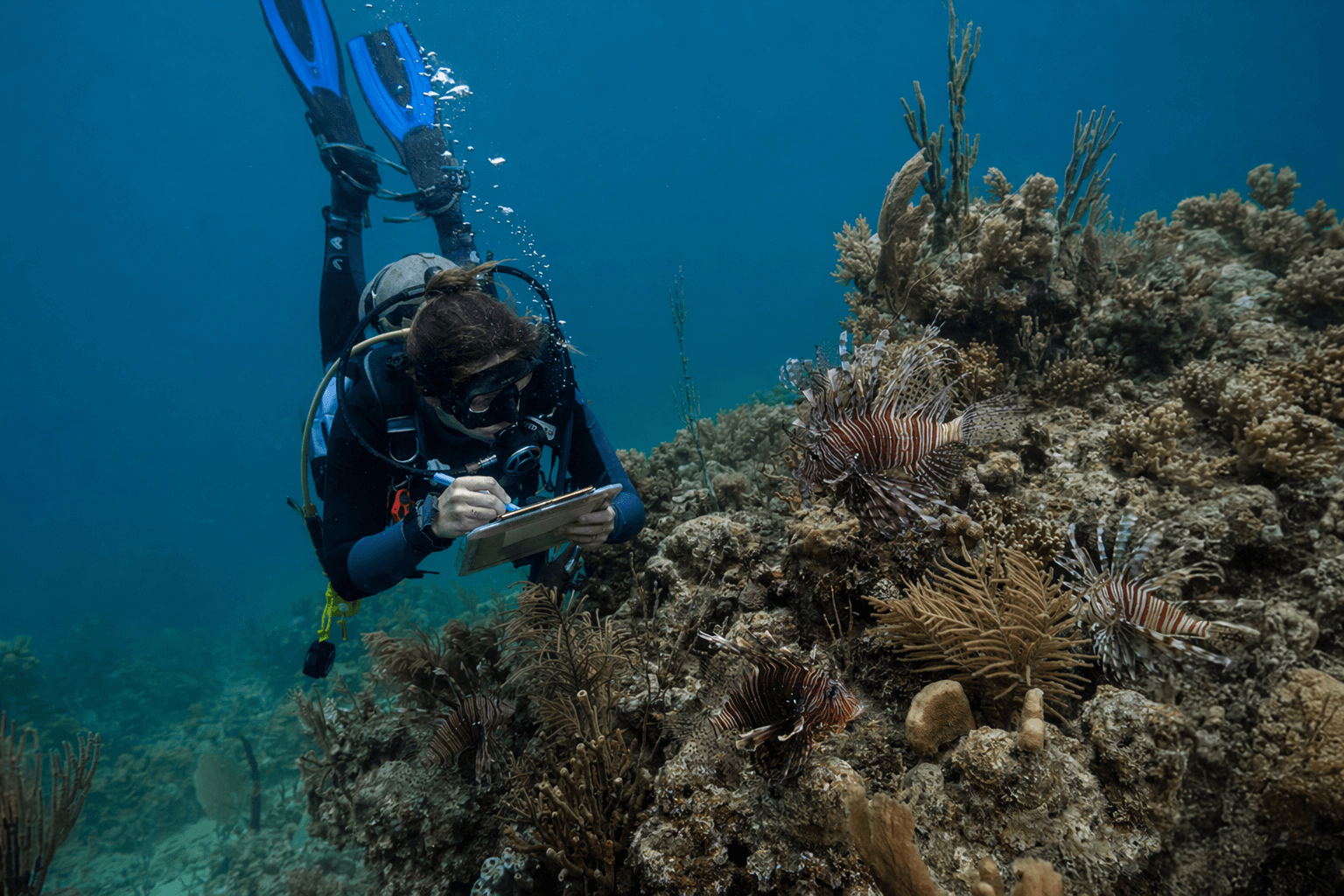
Lionfish remain one of the clearest invasive-species threats on Monroe County reefs because they do not just linger in the ecosystem, they can reshape it. In the Atlantic, Gulf of Mexico and Caribbean, the fish have few natural predators, can reproduce year-round in warm water and, according to Florida wildlife officials, can reach densities of more than 200 adults per acre.
That pressure on reef food webs made the April 27 lecture at John Pennekamp Coral Reef State Park more than a classroom talk. Held at the visitor center and aquarium building in Key Largo as part of the 35th annual Delicate Balance of Nature series, the program focused on the history of the lionfish invasion and the region’s response. Mead Krówka, Reef Environmental Education Foundation’s education coordinator, led the presentation, with the park series also offering live-stream and video-recorded access for people who could not attend in person.
The local stakes are high in the Keys, where diving, tourism and fisheries all depend on healthy reef systems. NOAA’s Florida Keys National Marine Sanctuary warns that lionfish impacts on reef food webs could be pervasive and severe because their prey base includes many fish and invertebrates. The first lionfish recorded in the Western Atlantic was captured near Dania, Florida, in 1985, and no other sightings were reported until 1992. Florida Fish and Wildlife says the species was first reported off Florida’s Atlantic coast near Dania Beach in 1985, with the aquarium trade widely identified as the likely source.
REEF has been working since 2006 with government agencies and regional partners to build lionfish response plans, train resource managers and diving operations in safe and effective collection methods. The group also feeds sightings and reports from its citizen-science programs into the U.S. Geological Survey’s Nonindigenous Aquatic Species database and lionfish range maps, giving divers and snorkelers a direct role in documenting where the invaders spread.
For Monroe County residents and visiting divers, the practical lesson is simple: lionfish are not a fringe issue, and they are not going away on their own. Pennekamp’s lecture placed the burden of awareness where it belongs, on the people who use these waters every day and on the public systems trying to keep the Keys’ reefs functional, resilient and worth visiting.
This article was produced by Prism’s automated news system from verified source data, official records, and press releases, then run through automated quality and moderation checks before publishing. The system is built and supervised by the people who set the standards it runs under. Read our full AI policy.
Did this article answer your question?