Pigeon Key's railroad legacy anchors Monroe County's historic preservation story
Pigeon Key shows how Monroe County was stitched together: a railroad camp, storm wreckage, highway rebirth and a preservation site visitors can still reach today.
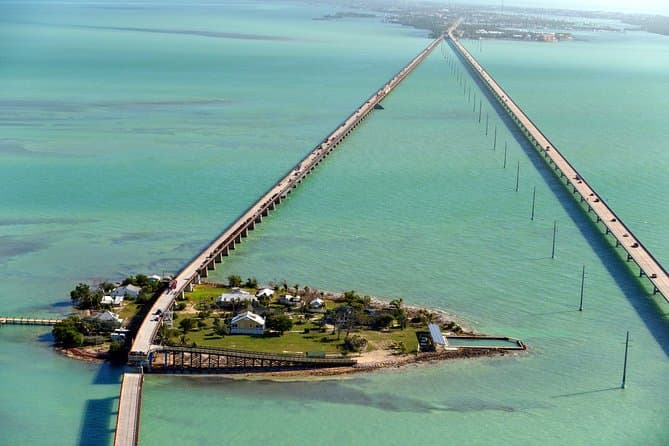
When the 1925 hurricane destroyed the Overseas Railway, Pigeon Key stopped being just a workers' island and became a command post for the Florida Road and Toll Bridge District. That shift is the key to Monroe County's transportation story, because the same small island in Marathon that helped build rail access to Key West now anchors preservation, public access and the long effort to keep the Keys connected.
A railroad camp built in the middle of the sea
Henry Flagler's Key West Extension of the Florida East Coast Railway began in 1905, with roughly 160 miles of line planned from Miami to Key West. About 128 of those miles ran over open ocean, and the project required 23 bridges before trains could reach the island city. The longest over-water stretch was 6.7 miles between Knights Key and Little Duck Key, a scale that still explains why the route became one of the most audacious transportation projects in Florida history.
Pigeon Key sat at the center of that buildout. Monroe County says more than 400 workers lived there during construction from 1908 to 1912, and the island supported the basics of daily life with a post office, commissary and one-room school. The Florida Historical Marker for the Old Seven Mile Bridge also identifies Pigeon Key as an FEC staging area during construction, which is part of why the island reads less like a static relic and more like the operating camp that made the railroad possible.
How a railroad island became a highway island
The rail line lasted 23 years before the Labor Day Hurricane of 1935 brought it down. After that, the State of Florida bought the abandoned right-of-way in 1936 for $640,000, and the old bridges were gradually converted for vehicle use between 1936 and 1938. The Overseas Highway opened to motorists on March 29, 1938, turning the corridor that had once carried trains into the road spine that still links the county.
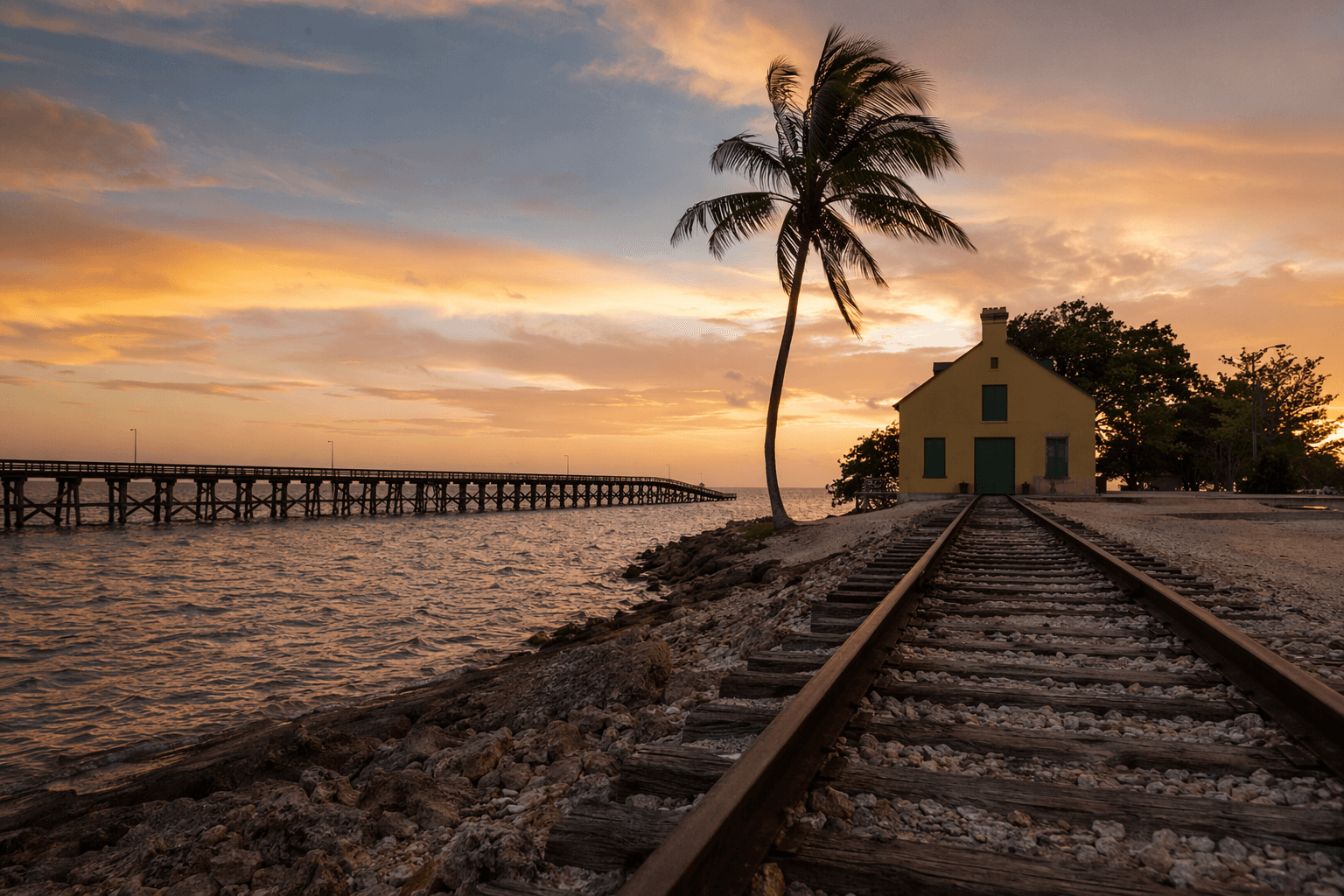
That history is not isolated to one bridge. The National Park Service's National Register entry for the Overseas Highway and Railway Bridges recognizes bridges on U.S. 1 between Long and Conch Key, Knight and Little Duck Key, and Bahia Honda and Spanish Key, with significant years including 1905, 1912 and 1936. The Old Seven Mile Bridge itself was listed on the National Register of Historic Places in 1979, underscoring that the road, rail and bridge system is a nationally significant transportation landscape, not just a local photo stop.
Why Monroe County still treats Pigeon Key as a working landmark
Pigeon Key is about 5.31 acres, and Monroe County designated it a Historical and Cultural Landmark on Dec. 21, 1993. That designation reflects more than nostalgia. From 1968 to 1988, the island served as an environmental field station for researchers studying tropical marine and island ecologies, and in 1993 the Pigeon Key Foundation began restoration work to turn it into a museum.
The island's newer history adds another layer of public purpose. Pigeon Key Foundation director Kelly McKinnon has described the site's power problem bluntly: "We've always been preaching environmentalism and sustainability, yet we were burning these diesel generators." The foundation later moved to solar and battery storage as part of a power-line project, a change that fits the island's industrial past with its present-day educational mission.
That matters in Monroe County because preservation here is not abstract. County records show continuing historic-district work on buildings such as the island's historic Building #1580, with an emphasis on refurbishing and preserving original fabric with like-for-like materials where possible. In practice, Pigeon Key is being managed as a living site with maintenance needs, visitor access, utility decisions and structural limits that affect how the island can function for another generation.
What you can see and do now
The public can still experience the Old Seven Mile Bridge and Pigeon Key in ways that make the history legible underfoot. The 2.2-mile span connecting Marathon and Pigeon Key reopened to the public in January 2022 after a roughly 4.25-year, $44 million rehabilitation. Monroe County, the City of Marathon, the Florida Department of Transportation, the Pigeon Key Foundation and Friends of Old Seven all had a role in that reopening, which turned the bridge into a linear park for walkers, bikers and tram riders.
The scale of the ongoing work is part of the story too. A broader 30-year restoration and maintenance program was reported at $77 million, with another $33 million earmarked for maintenance over three decades. That means the bridge and island are not frozen in the past, they are being actively managed so people can keep moving across them safely.
For anyone tracing the county's physical identity, the Florida Keys Scenic Highway ties the whole picture together. The byway runs 106.5 miles, takes about four hours to drive and follows the old Keys railroad bridges of U.S. 1 from Key Largo to Key West. Before that road network existed, travel in the Keys was by boat, and that fact helps explain why Pigeon Key still matters: it marks the moment Monroe County stopped being a string of disconnected islands and became a connected corridor.
Why this place still defines the Keys
Pigeon Key brings together the county's railroad origins, highway evolution, preservation work and environmental reinvention in one small footprint. Its workers built the Overseas Railway, its bridges helped give way to the Overseas Highway, and its restoration now shows how Monroe County can protect infrastructure without turning it into a sealed-off monument.
This article was produced by Prism’s automated news system from verified source data, official records, and press releases, then run through automated quality and moderation checks before publishing. The system is built and supervised by the people who set the standards it runs under. Read our full AI policy.
Know something we missed? Have a correction or additional information?
Submit a Tip