Rehabilitated osprey returns to wild, Key Largo students watch release
A juvenile osprey that fell into distress at Buttonwood Sound flew free again in Key Largo, with students from Ocean Studies Charter School watching the release.
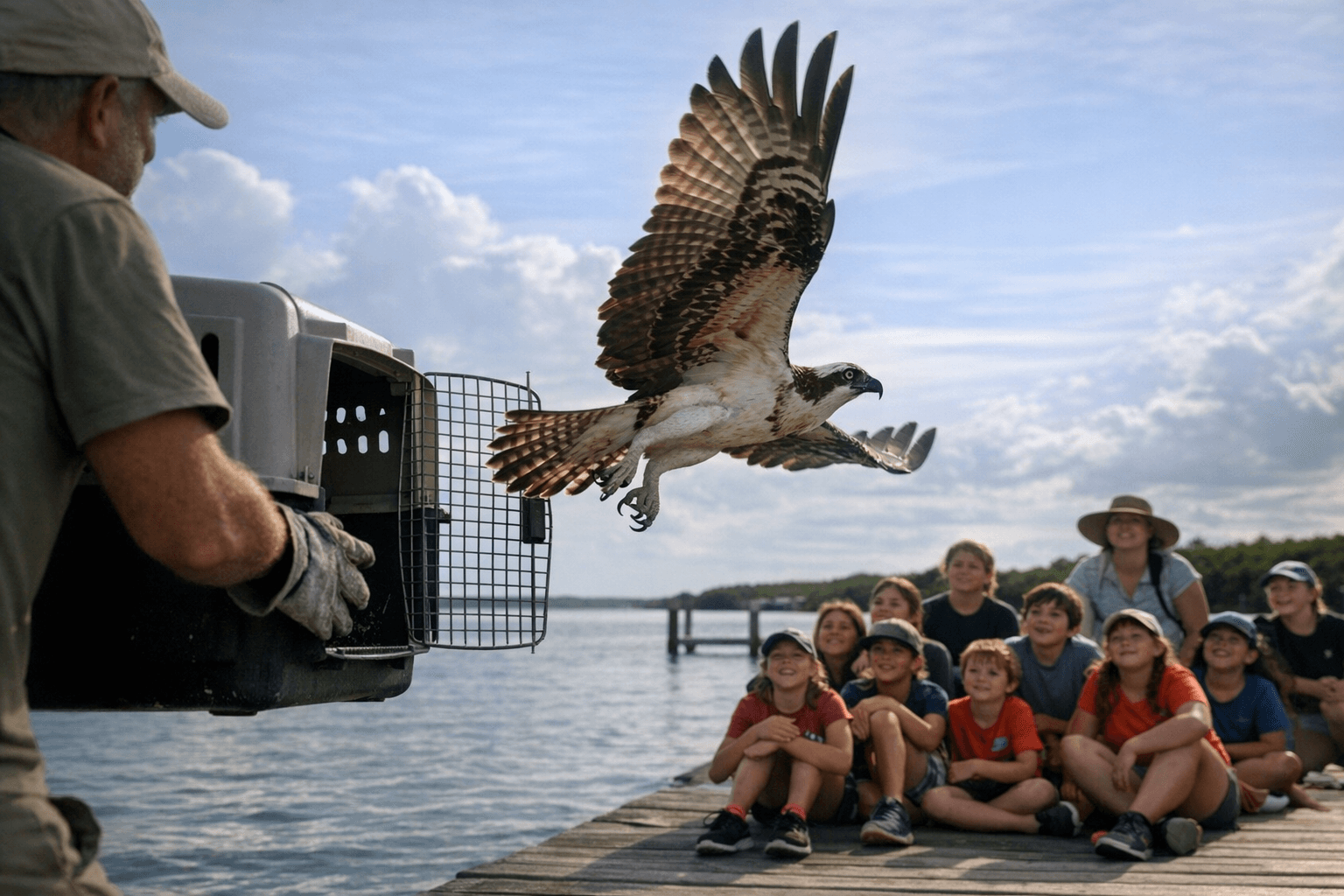
The juvenile osprey that turned up weak and unsteady beneath its nest at the Upper Keys Sailing Club in Key Largo on March 27 was back in the wild, and a roomful of Ocean Studies Charter School students got to watch the finish line.
The Florida Keys Wild Bird Center released the bird into open air in Key Largo after days of care and recovery. Bayleigh MacHaffie, the center’s operations director, walked students through the release and explained that the goal is always the same: get injured birds healthy enough to return to their natural habitat.
The osprey had been found about 5 to 6 weeks old, lethargic, with a wound on its head. Rescuers believed it may have fallen from its nest at the site along Buttonwood Sound. By the following day, the young bird and a sibling appeared to be back in the nest with the parents still nearby, a promising sign that the family remained intact.
The release offered a visible ending to a rescue that started with a call for help and moved through the hands of local wildlife specialists. The Florida Keys Wild Bird Center has been saving birds since 1988, and the organization says it rescues, rehabilitates and releases almost 1,000 birds a year while also caring for more than 90 permanent resident birds at its sanctuary.
That work mattered in the moment because ospreys are part of the Keys’ daily landscape. Florida Fish and Wildlife Conservation Commission materials say the birds remain year-round in Florida, and that shoreline development and declining water quality continue to threaten food and nest sites. In Monroe County, osprey are classified as a Species of Special Concern.
MacHaffie also used the release to give students a lesson in why rehabilitation is temporary. Osprey young stay with their parents for a long time because adults teach them how to fish, she told the class, which is one reason captivity is not the end goal when a bird can safely go back outside.
Florida Fish and Wildlife Conservation Commission Officer Jason Rafter, who said he has worked with the Wild Bird Center for 20 years, also credited the center’s staff and volunteers as crucial to protecting wild birds in the Upper Keys. About 30 minutes after the release, Rafter reported seeing a parent nearby, suggesting the reunion the students watched may have been underway.
For Ocean Studies Charter School, the moment matched the school’s marine science mission and gave K-8 students an up-close look at conservation in action. For Key Largo, it was a small but unmistakable win: one juvenile osprey back where it belonged, with the people who helped it there standing close enough to see it fly.
This article was produced by Prism’s automated news system from verified source data, official records, and press releases, then run through automated quality and moderation checks before publishing. The system is built and supervised by the people who set the standards it runs under. Read our full AI policy.
Did this article answer your question?