Storms Bring Heavy Rain, Lightning, and Gusty Winds to Upper Keys
Slow-moving storms battered bayside Key Largo and Islamorada Tuesday with heavy rain, lightning, and gusty winds, and the National Weather Service warned of more through Thursday.
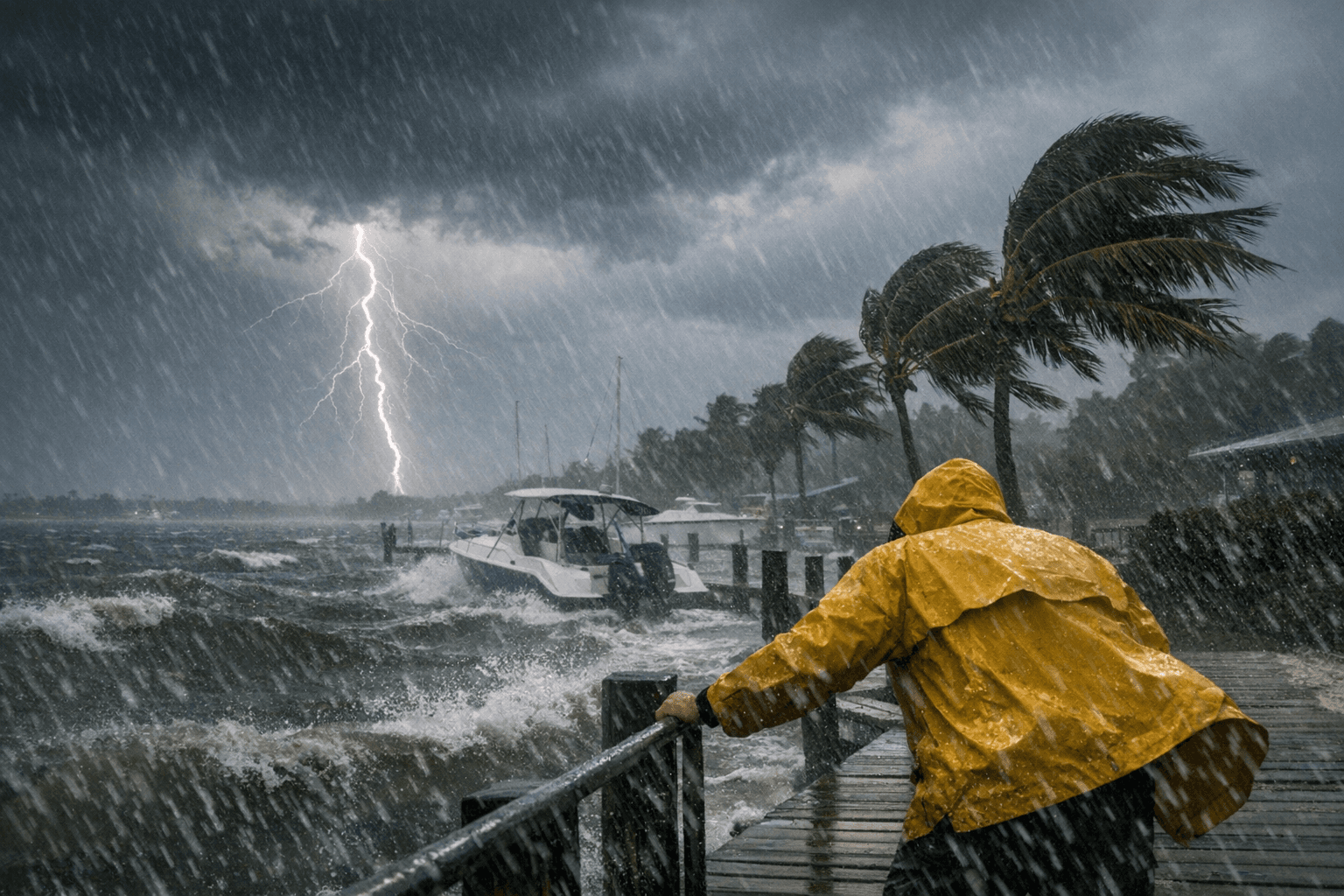
Slow-moving storms rolled across the bayside communities stretching from Key Largo to Islamorada on Tuesday, bringing heavy rain, frequent lightning, and gusty winds in a system the National Weather Service in Key West warned could keep the Upper Keys wet and unsettled through Thursday. The culprit: a weak frontal boundary stalling north of the Florida Keys, preventing the storm pattern from pushing through and clearing out.
The storms developed over Florida Bay before pushing onshore, a track that puts bayside neighborhoods at the sharpest risk. In Key Largo, Stillwright Point at Mile Marker 105 and the Twin Lakes subdivision are among the most flood-prone spots in the Upper Keys, where streets take on standing water quickly and drain slowly. That is not a coincidence of geography: Florida Bay's shape acts as a funnel, pushing water toward bayside shores, and the bay's shallow basin holds it there long after the rain stops. North Blackwater Lane inside Stillwright Point has a documented history of going under during storm events. In 2019, king tide flooding covered Stillwright Point roads for 94 consecutive days, a stretch that rattled the neighborhood and set off years of debate over a fix that has yet to fully materialize.
In Islamorada, bayside and Gulf-side streets between roughly Mile Marker 72 and Mile Marker 90 face the same slow-draining pattern. When storm bands stall rather than track through, totals climb faster than drainage infrastructure can handle, particularly in low-lying subdivisions built close to the water's edge.
US-1 generally stays passable through these events, but the side streets feeding into bayside neighborhoods can become impassable without much warning. Anyone with afternoon school or daycare pickups should leave extra time: a road that looks clear in the morning can change quickly as bands cycle back through.
Boat owners along the bayside should check lines and fenders before additional rounds arrive. Any vessel sitting in an exposed slip should be moved to a more sheltered location if possible. Generator owners should verify fuel levels now, before conditions deteriorate again.
Lightning should be treated as a serious and immediate threat any time storms develop over the Keys. The warm, shallow waters surrounding the islands are also prime conditions for waterspout formation, and a waterspout moving onshore requires the same response as a tornado: move away from windows, get to an interior room, and wait for the all-clear. Do not wait to see whether it weakens before it reaches land.
The National Weather Service issued multiple updates through Tuesday as the system evolved. Residents should monitor the latest guidance before the afternoon commute and again Wednesday morning, when additional heavy bands remain possible depending on how long the frontal boundary stalls.
This article was produced by Prism’s automated news system from verified source data, official records, and press releases, then run through automated quality and moderation checks before publishing. The system is built and supervised by the people who set the standards it runs under. Read our full AI policy.
Did this article answer your question?