How Morgan County maps property parcels to local tax bills
A Morgan County tax bill starts with a parcel map, then runs through assessment, exemptions and appeal deadlines. The amount a family pays depends on whether the value is right.

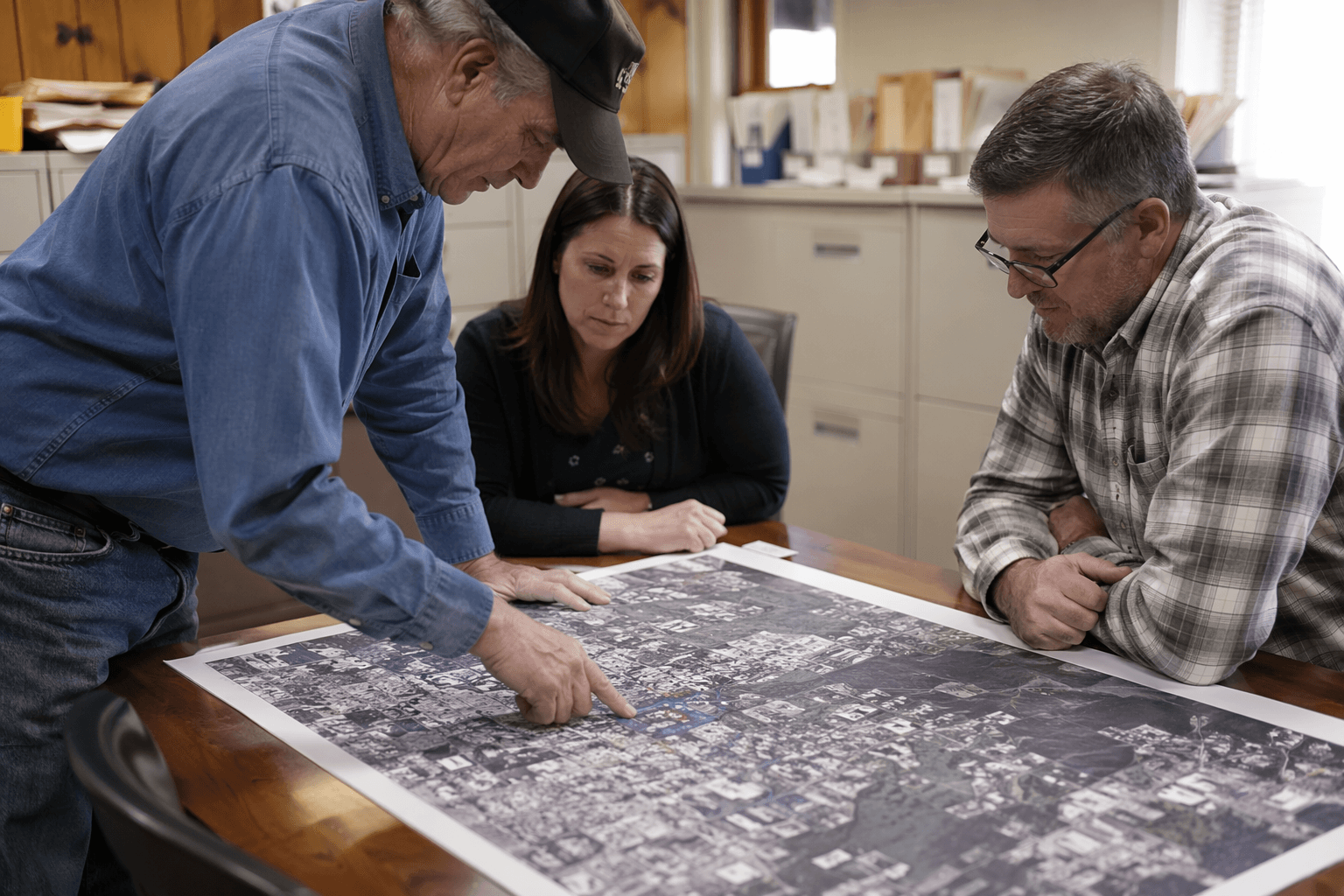
A parcel on Morgan County’s GIS map is where a tax bill begins. That mapping system tracks tax parcels, taxing districts, roads, soil types and emergency response zones, and it also feeds emergency routing, 911 dispatching, police crash reporting and Jacksonville zoning and permitting software. By the time a homeowner sees the bill, the figure has already passed through a chain of local decisions that begins with mapping and ends with assessed value, exemptions and the current tax rate.
How the map becomes a bill
Morgan County GIS grew out of the County Assessor’s office, where digitized tax maps became the county’s base layer for property records. The public can reach county data through a mapping portal, and a parcel boundary, a zoning line or a soil classification can influence how a property is described long before the tax bill is printed.
A Jacksonville homeowner checking a parcel in the GIS system is looking at the same data the county uses to route emergency calls, support 911 dispatchers and help police report crashes. When the map is wrong, the tax record can be wrong with it.
What the assessor is actually measuring
Morgan County assesses property at 33.33 percent of market value, with farmland and farm buildings treated under separate rules. The Supervisor of Assessments office works under Illinois statutes and Illinois Department of Revenue guidelines, so the number on a tax notice begins as an appraisal-style valuation, then moves into the county’s equalization process.
In the county’s 2024 and 2025 publication lists, farmland assessments rise by 10 percent of the preceding year’s median soil productivity index, as certified by the Department of Revenue. The publication lists also show township equalization multipliers varying by assessment district, one reason two properties that look similar to a casual viewer can land on different tax paths.
Illinois’ property-tax system is built locally. Property taxes are levied, collected and spent locally, the appeal process begins at the local level, and the county clerk multiplies the corrected, equalized assessed value by the state-certified equalization factor as part of the final bill calculation. Illinois has 102 counties, and most are township counties, so county-level paperwork still drives the final amount many households pay.
What evidence can move an appeal
The Board of Review in Morgan County reviews assessed valuation, not the tax bill amount or the tax rates. An appeal has to show that the assessed value itself is wrong.
A homeowner can challenge that value with a recent sale of the property, sales of comparable properties, a recent appraisal or comparable property assessments. Morgan County reviews the property record card for accuracy and can adjust errors. For residential properties, the county uses sales studies by both the county and the state; commercial and industrial properties are measured using square footage and the Marshall & Swift Commercial Valuation manual.
If a Jacksonville home is mapped correctly but its record card misses a finished room, an extra outbuilding or the correct lot information, the assessor’s office may need to fix the card before the valuation makes sense. If a nearby sale points to a lower market value, or a recent appraisal supports that number, that evidence is more useful than arguing the tax rate itself.
Appeals start at the local level for taxpayers outside Cook County. If the case later goes to the Illinois Property Tax Appeal Board, the appeal generally must be filed within 30 days of the county decision notice. Morgan County’s 2025 complaint deadline was 30 days from publication, listed as January 30, 2026. The clock starts running once the county publishes its figures.

Where exemptions lower the taxable value
Exemptions can reduce what a family owes before the tax rate is applied. Morgan County offers a $6,000 general homestead exemption, a $5,000 senior homestead exemption, a senior assessment-freeze exemption for qualifying homeowners age 65 or older with household income at or below $65,000, a $2,000 disabled person’s homestead exemption and multiple disabled-veteran exemptions, including a full exemption for some veterans with 70 percent disability or more.
Final equalized assessed value minus exemptions, then multiplied by the current tax rate. That is why a family with the right exemption on file can owe less on the same house than a neighbor with the same assessed value but no exemption applied.
Who handles the bill once the value is set
Morgan County’s clerk handles tax extensions and delinquent taxes, while the treasurer mails and collects the property-tax bills. County property taxes are not a city function: they are handled by the county Supervisor of Assessments and paid to the Morgan County Treasurer.
Morgan County’s three-member commission acts as the executive of local government and deals with taxes, courts, public health oversight, property registration, building code enforcement and public works such as road maintenance. The county also has a single-county Regional Planning Commission, and its land use, mapping and development decisions use the same parcel data that starts the tax process.
This article was produced by Prism’s automated news system from verified source data, official records, and press releases, then run through automated quality and moderation checks before publishing. The system is built and supervised by the people who set the standards it runs under. Read our full AI policy.
Know something we missed? Have a correction or additional information?
Submit a Tip