How to keep snakes away from yards and gardens this summer
Snakes in Morgan County yards are usually a habitat problem, not a crisis. The safest first move is distance, then cleanup, sealing gaps, and careful ID.

A snake crossing a Morgan County garden bed or sliding out of a window well is usually a warning about shelter nearby, not a reason to panic. The first move is simple: back away, keep children and pets clear, and leave the snake alone if you cannot identify it with confidence. Christopher Enroth of University of Illinois Extension says summer is when he most often encounters snakes in day-to-day work, which is why this season calls for calm habits, not fear.
What you are most likely seeing
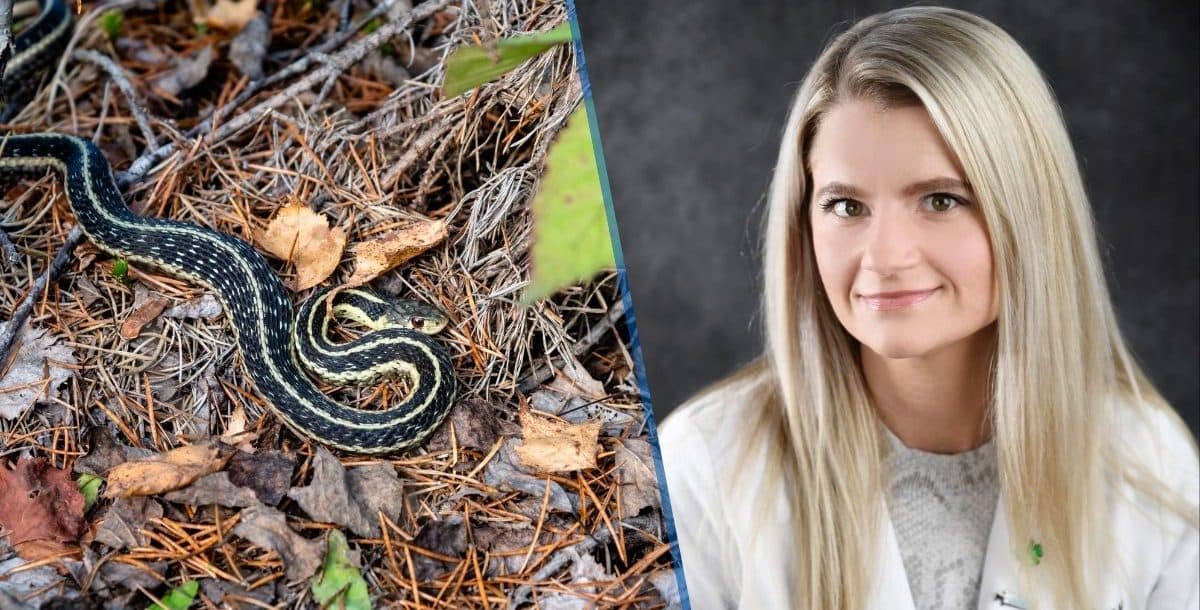
Most yard snakes in Illinois are useful, not destructive. They feed on insects, mollusks, worms, and rodents, so they often help with pest control instead of causing property damage. Illinois Country Living identifies three common snakes in gardens across the state as DeKay’s brownsnake, Eastern garter snake, and gray ratsnake, all species that Morgan County homeowners are far more likely to bump into than the more notorious reptiles people worry about.
Enroth’s own field examples make that point clear. He describes relocating a five-foot black snake only to see it back an hour later, a reminder that a yard can be part of a snake’s territory long before anyone notices it. He also recalls finding a garter snake in a window well with a toad halfway in its mouth, proof that these encounters are part of the local wildlife cycle, not an invasion aimed at people.
The first five minutes after spotting one
If a snake appears near a porch, shed, fence line, or window well, the safest response is to stop and create space. Snakes usually avoid people and bite only when threatened or handled, so the goal is to make the encounter as uneventful as possible. If you cannot confidently identify it, do not try to pick it up, corner it, or kill it.
A good first-minute response looks like this:
- Keep your distance and move children and pets away.
- Watch where the snake goes, especially if it heads toward a basement opening, shed, or window well.
- Do not put your hands into brush piles, under boards, or into rock walls where it may be hiding.
- If the snake is unknown, leave it alone and focus on reducing the cover around it later.
That approach matters because many snakes in yards are harmless, and even non-venomous bites are usually minor. The risk rises when people try to handle a snake they do not recognize.
Why snakes settle in yards, gardens, and outbuildings
Snakes do not chew through plants or create holes on their own. They use what is already there. That distinction is important for Morgan County homeowners because it shifts the job from emergency response to prevention, especially around older structures, brushy edges, and places where debris has piled up.
The Internet Center for Wildlife Damage Management says snakes are especially attracted to cool, damp, dark areas around outbuildings and basements. That includes window wells, stacked firewood, loose stone, brush piles, and clutter around sheds or crawl spaces. The same guidance says snakes can enter through openings as small as 1/8 inch, which means a gap that looks too small to matter may still be enough for a snake to slip through.
That is why a clean, closed, well-maintained yard matters more than scare tactics. If a snake is showing up around a house, it is often finding exactly the kind of hiding place it wants.
How to make a yard less inviting
Habitat cleanup is the most effective control. The Extension advice stresses that making the yard less attractive is the real solution, not trying to chase snakes away after they arrive. In practical terms, that means removing the shelter they use between hunts and avoiding the clutter that gives them cover.
Focus on these changes around yards and gardens:
- Keep grass and weeds short.
- Remove piles of rocks, bricks, brush, wood, and other debris.
- Replace loose rock walls that create hiding spots.
- Keep areas around sheds, basement entries, and window wells clear and visible.
- Pay special attention to cool, damp corners near foundations and outbuildings.
Sharp lava rock is one of the few surfaces that can sometimes discourage basking, but it is not a cure-all. It may help in a narrow spot where snakes like to warm themselves, yet it works best as part of a larger cleanup effort. The bigger lesson is that fewer hiding places mean fewer snake encounters.
What not to waste money on
The Internet Center for Wildlife Damage Management says repellents have not shown strong real-world effectiveness, which is why mothballs and spray products should not be counted on to solve the problem. It also says most snake-control methods are inexpensive except for snake-proof fences, so homeowners should be careful about spending heavily on products that do not perform well.
That same guidance notes that spending money to control non-venomous snakes is seldom justified. Larger snakes often feed on rodents such as rats, mice, and chipmunks, which means they can be part of a broader control system around a property. In other words, a snake in the yard is often a sign of a food source or hiding place nearby, not a creature damaging the landscape on its own.
Harmless snakes and the ones that deserve caution
Most snakes people see in Morgan County yards are not dangerous. Still, Illinois does have venomous species, and the state’s four are the copperhead, cottonmouth, massasauga, and timber rattlesnake. That is why identification matters, especially if the snake is in a place where a person or pet could stumble onto it.
One common mistake is relying only on head shape. A broad, triangular head is not a foolproof test, because some harmless snakes flatten their heads when threatened and can resemble venomous species. If the snake is out in the open and you cannot identify it safely, the best choice is to leave it alone and let distance do the work.
A practical summer habit for Morgan County yards
For homeowners around Morgan County, the safest snake strategy is not dramatic. It is steady: clear the brush, shorten the grass, close openings, and keep sheds, basements, and window wells from becoming hiding places. That approach protects people, pets, and gardens while avoiding the mistakes that come from fear.
Snakes are part of the local landscape, especially as summer begins and wildlife becomes more active around fields, older buildings, and yard edges. The homes that see the fewest problems are usually the ones that make it hardest for snakes to find shade, cover, and a way inside.
This article was produced by Prism’s automated news system from verified source data, official records, and press releases, then run through automated quality and moderation checks before publishing. The system is built and supervised by the people who set the standards it runs under. Read our full AI policy.
Know something we missed? Have a correction or additional information?
Submit a Tip