Jacksonville bicentennial project seeks 200 reasons residents love the city
Jacksonville’s 200th birthday is becoming a community scrapbook, with residents invited to name the places, memories and habits that make the city feel like home.
1. Lake Jacksonville.
The 500-acre lake just south of town gives Jacksonville a wide-open place to breathe.
2. County-seat pride.
Jacksonville anchors Morgan County’s government and daily civic life.
3. Bicentennial year.
A 200th birthday gives the city a reason to look inward and celebrate itself.
4. Downtown Jacksonville.
The city’s core still serves as a shared gathering point.
5. Familiar faces.
In a city of 17,616, neighbors are still likely to know one another.
6. Illinois College.
The 1829 campus adds an enduring academic presence to the city.
7. First platted in 1825.
Jacksonville’s origins are clear, dated and easy to honor.
8. Andrew Jackson namesake.
The city’s name carries a piece of early American history.
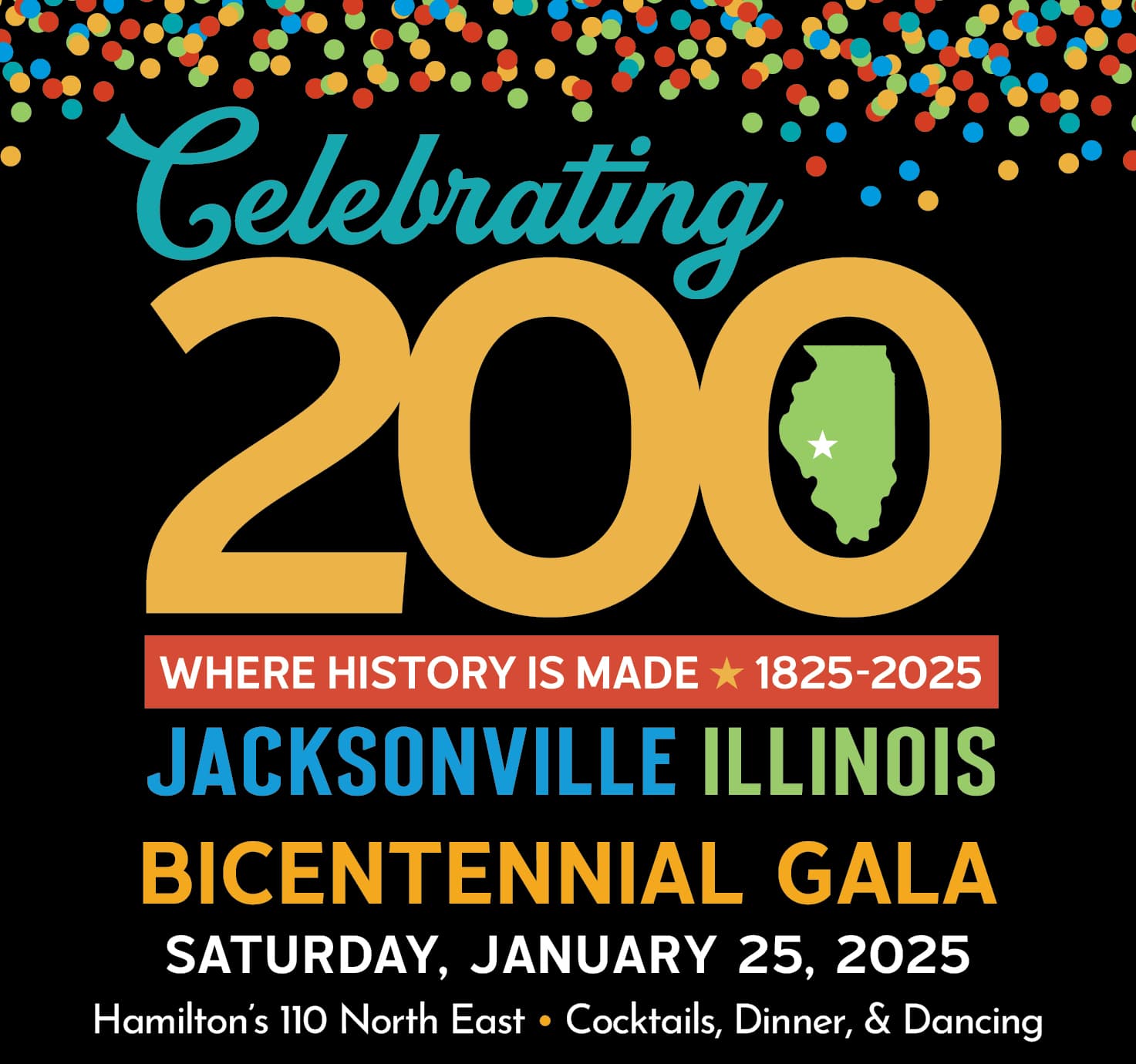
9. January gala.
The bicentennial celebration opened with a formal public milestone at Hamilton’s 110 North East.
10. October finale.
The anniversary closes with a downtown celebration that puts the whole city in view.
11. Year-long observance.
Jacksonville’s bicentennial is not a one-day event, but a sustained civic moment.
12. Shared participation.
Residents are not just watching the celebration, they are helping shape it.
13. Submitted favorites.
The project grows from the reasons people send in themselves.
14. Public memory.
The list becomes a record of what locals value enough to name.
15. Civic storytelling.
Jacksonville is being described by the people who live inside it.
16. Local identity.
The bicentennial asks what it means to belong here.
17. Personal meaning.
What one resident loves about Jacksonville may be completely different from another.
18. No single answer.
The city’s appeal is broad enough to hold many truths at once.
19. Community scrapbook.
The project turns memories into a shared document.
20. Historical continuity.
The celebration links present-day residents to two centuries of city life.
21. Lake views.
The water south of town gives the city a recognizable edge.
22. Easy access.
A major local landmark sits just a short drive away.
23. Open space.
The lake keeps Jacksonville from feeling boxed in.
24. Outdoor breathing room.
Residents have a place that feels larger than daily routines.
25. City parks.
Jacksonville’s parks help define how the community uses its public spaces.
26. Park identity.
Green space is part of the city’s everyday image.
27. Weekend routines.
The lake and parks offer a local rhythm that many families know well.
28. South of town.
The geography itself is part of the city’s character.
29. A familiar drive.
The road to the lake is one many residents know by heart.
30. Everyday scenery.
Jacksonville’s landscape becomes part of local memory.
31. Homegrown landmark.
The lake is one of the city’s most recognizable places.
32. Simple geography.
Jacksonville’s best-known spaces are easy to find and hard to forget.
33. Family outings.
Local places matter because they hold family time.
34. Repeat visits.
A favorite place becomes stronger every time it is revisited.
35. Shared reference point.
Many residents can picture the same landmark at once.
36. A place to point to.
Some parts of town become shorthand for the city itself.
37. Familiar edge of town.
The lake marks where city life meets open ground.
38. Relaxed pace.
Jacksonville’s scale lets people slow down without leaving town.
39. Everyday pride.
The city’s beauty often shows up in ordinary routines.
40. Local scenery.
The best-loved places are the ones people pass again and again.
41. County-seat history.
Being Morgan County’s seat gives Jacksonville lasting importance.
42. Civic concentration.
Courts, offices and local institutions cluster around the city.
43. Regional role.
Jacksonville matters beyond its own city limits.
44. Central place.
The city has long served as a point of connection for the county.
45. Government identity.
Civic responsibility is part of Jacksonville’s character.
46. Shared administration.
The city’s role helps shape countywide decision-making.
47. Institutional memory.
County-seat status ties the present to older traditions.
48. Public life.
Jacksonville has always been a place where civic matters come first.
49. A working city.
Government presence keeps the city active and relevant.
50. Local responsibility.
The county seat is where public business becomes personal.
51. 1825 roots.
A city first platted in 1825 has a long story to tell.
52. Two centuries.
Few places get to count their history in 200-year arcs.
53. City founding.
The bicentennial gives residents a way to mark the beginning.
54. Early planning.
Jacksonville’s original layout still shapes how people remember it.
55. Historical depth.
Age gives the city more than nostalgia, it gives it context.
56. Long memory.
Two centuries of change leave a place with perspective.
57. Bicentennial meaning.
The anniversary is about more than cake and banners.
58. Past and present.
Jacksonville’s current life is built on older foundations.
59. Anniversary focus.
The city has a rare chance to celebrate itself in public.
60. A civic milestone.
Two hundred years makes the city’s story hard to ignore.
61. Illinois College campus.
The campus adds energy, history and continuity to Jacksonville.
62. Founded in 1829.
The college has been part of the city almost from the start.
63. Academic presence.
Higher education helps define Jacksonville’s identity.
64. Student life.
The college keeps the city connected to younger generations.
65. Campus tradition.
The college adds another layer to Jacksonville’s shared memory.
66. Learning hub.
The city’s intellectual life has deep roots.
67. Old institutions.
Jacksonville’s strength comes from places that have lasted.
68. College-town texture.
The campus gives the city a distinct feel.
69. Nearby history.
The college is woven into Jacksonville’s early years.
70. Enduring presence.
Illinois College remains part of the city’s daily landscape.
71. Abolitionist ties.
Jacksonville’s history includes a moral tradition worth remembering.
72. Underground Railroad heritage.
The city’s past reaches into the struggle for freedom.
73. Historic conscience.
Jacksonville’s story includes more than growth and architecture.
74. Moral seriousness.
The city’s heritage carries weight.
75. Freedom history.
Local memory includes people who resisted injustice.
76. National connection.
Jacksonville’s past links to larger American struggles.
77. Heritage depth.
The city’s history is not flat or simple.
78. Civic character.
Places are shaped by what they choose to remember.
79. Proud legacy.
Jacksonville’s historical ties remain part of how it is promoted today.
80. Story worth preserving.
The city’s past still has something to teach.
81. Downtown finale.
A celebration in the heart of town pulls people together.
82. Public gathering.
Downtown events make the bicentennial visible to everyone.
83. Shared streets.
When downtown fills up, the whole city feels present.
84. Civic stage.
Downtown is where Jacksonville often tells its biggest stories.
85. Main-place energy.
The center of town still matters.
86. Local visibility.
A downtown event is hard for residents to miss.
87. Public celebration.
The anniversary becomes something experienced in person.
88. Common ground.
Downtown gives different parts of the community one place to meet.
89. City center.
A strong downtown helps a city feel coherent.
90. Anniversary backdrop.
The bicentennial gives downtown a special role.
91. Hamilton’s 110 North East.
The gala venue shows Jacksonville can mark milestones in style.
92. Formal celebration.
The January gala gave the bicentennial a memorable opening.
93. Shared occasion.
Public events help turn history into community.
94. Year-opening moment.
The gala set the tone for the anniversary year.
95. Local gathering space.
A named place makes the celebration feel rooted.
96. Residents together.
Bicentennial events work because people show up.
97. Public memory in action.
Celebrations become part of the record themselves.
98. Civic ceremony.
Formal events help a city honor its own timeline.
99. Local spotlight.
The gala put Jacksonville’s history on center stage.
100. Community milestone. Public celebration gives residents a reason to look around and take stock.
101. 17,616 people. The 2020 census shows a city large enough to matter, small enough to know.
102. Human scale. Jacksonville is big enough for variety and small enough for familiarity.
103. Recognizable community. That population size keeps the city personal.
104. Neighborly pace. Residents still encounter one another in everyday life.
105. Shared streets. A smaller city makes public life feel closer.
106. Less anonymity. Jacksonville’s size keeps community identity visible.
107. Local connection. People matter more when they are easy to recognize.
108. Manageable scale. The city feels legible to the people who live there.
109. Close network. Residents often move through the same public spaces.
110. Civic intimacy. Jacksonville still feels like a place where people notice one another.
111. Local roots. Longtime residents can trace their lives through the same streets and places.
112. Family memory. Many stories in Jacksonville are passed down at home.
113. Generational continuity. The bicentennial invites families to compare past and present.
114. Shared households. A city becomes home through repeated family routines.
115. Passed-down pride. Loving Jacksonville often begins with someone older showing you why.
116. Memory and place. A city is remembered through where families gathered.
117. Everyday inheritance. Some local love comes from what parents and grandparents taught.
118. Home stories. The strongest civic memories often begin in kitchens and living rooms.
119. Familiar rituals. A place becomes part of family life when routines repeat.
120. Local belonging. Jacksonville’s appeal is tied to who has loved it before you.
121. Community familiarity. In Jacksonville, many people still know the same names.
122. Shared recognition. Familiar faces help turn a city into a community.
123. Small-town confidence. The city’s scale makes daily life less anonymous.
124. Personal connection. Residents can still feel seen here.
125. Ordinary kindness. Familiarity often shows up in small acts.
126. Neighborly rhythm. The city works best when people know each other’s routines.
127. Everyday trust. A place feels stronger when it is full of known people.
128. Local memory bank. Residents carry the city’s stories with them.
129. Interwoven lives. Many Jacksonville stories are connected by shared people and places.
130. Social texture. The city’s personality comes from repeated encounters.
131. Country roads. The roads around Jacksonville are part of its identity.
132. Town and county. The city feels connected to the wider landscape of Morgan County.
133. Rural edge. Jacksonville’s setting keeps it grounded in place.
134. Familiar drives. Getting around the city is part of living here.
135. Route to home. The road network helps define how residents think about their city.
136. County geography. Jacksonville sits in a landscape people know well.
137. Local access. The city is close enough to feel central, not remote.
138. Roadside memory. Everyday travel becomes part of local identity.
139. Shared direction. People often use the same roads for the same reasons.
140. Sense of place. Geography matters when residents can picture it instantly.
141. Public record. The bicentennial list creates a record of what people value now.
142. Written memory. A community keeps itself alive by writing things down.
143. Collective voice. The project lets many residents speak at once.
144. Resident-led history. The city’s story is not being written from afar.
145. Local authorship. Jacksonville’s own people are shaping the celebration.
146. Crowd-sourced pride. The list grows from thousands of small attachments.
147. Shared authorship. A city feels stronger when it tells its own story.
148. Named favorites. The act of naming what you love is its own civic act.
149. Living archive. The bicentennial project becomes a memory bank for the future.
150. Public acknowledgment. Some places matter because people say so out loud.
151. Tradition matters. Jacksonville’s habits are part of its history.
152. Routine as heritage. Repeated everyday life can become a local tradition.
153. Familiar landmarks. A city’s best-known spaces keep its identity stable.
154. Everyday habits. Even simple routines can feel distinctly local.
155. Local rhythms. The city’s pace is part of what residents protect.
156. Shared customs. Communities are built through repetition.
157. Stable identity. Jacksonville’s character comes from things that endure.
158. Built memory. The city’s traditions are made by the people who keep returning.
159. Place-based pride. Residents love a city when it feels unmistakably theirs.
160. Continued belonging. The bicentennial reminds people that home is an ongoing choice.
161. March toward the future. A 200-year milestone also asks what comes next.
162. Living history. Jacksonville’s past still shapes its present decisions.
163. Public reflection. Anniversaries make communities stop and look around.
164. Ongoing story. The city’s next chapter begins with remembering the last one.
165. Shared future. A civic celebration can point residents in the same direction.
166. Local stewardship. Naming what matters helps protect it.
167. Community investment. People care more when they see themselves in the city.
168. City pride. The bicentennial gives residents permission to say what they love.
169. Mutual recognition. One person’s favorite place may become another’s new favorite.
170. Stronger ties. Sharing memories can deepen belonging.
171. Invitation to contribute. The project works because every resident can add something.
172. Open-ended list. There is room for landmarks, routines and personal stories alike.
173. Inclusive memory. The city’s best qualities are not limited to one neighborhood or group.
174. Shared ballot. Many small choices build one larger portrait.
175. Local voice. Residents know the city in ways outsiders never will.
176. Public participation. The bicentennial becomes real when people help fill it in.
177. Community ownership. Jacksonville’s story belongs to the people who live it.
178. Collective pride. A city feels strongest when its residents recognize one another’s love for it.
179. Common cause. The bicentennial gives the community one easy thing to do together.
180. Memory with purpose. The list is more than nostalgia, it is a record of value.
181. A city worth naming. People do not need a crisis to explain why home matters.
182. Everyday gratitude. The reasons residents love Jacksonville are often the simplest ones.
183. Lasting attachment. Two centuries of history can still feel personal.
184. Shared celebration. The anniversary makes private affection public.
185. Local continuity. The same places keep holding new memories.
186. Civic confidence. A city that knows its past can speak plainly about itself.
187. Familiar ground. Jacksonville’s landmarks give residents a sense of stability.
188. Renewed attention. The bicentennial encourages people to notice what they may take for granted.
189. Homecoming feeling. Even ordinary places can feel meaningful when people look again.
190. Public affection. A city becomes memorable when residents say why they love it.
191. Durable identity. Jacksonville has lasted because its people have kept naming it home.
192. Shared milestone. The bicentennial turns a calendar date into community reflection.
193. Local pride in action. The best civic traditions invite participation, not just observation.
194. Another generation. The city’s story keeps going because new residents add their own reasons.
195. A place remembered. Jacksonville is being defined by memory as much as geography.
196. A place celebrated. The bicentennial gives the city a clear moment of recognition.
197. A place known. Familiarity is one of the strongest forms of belonging.
198. A place chosen. Residents keep choosing Jacksonville, year after year.
199. A place worth sharing. The city’s best qualities become stronger when they are named.
200. A place called home. After 200 years, that may be Jacksonville’s strongest reason of all.
This article was produced by Prism’s automated news system from verified source data, official records, and press releases, then run through automated quality and moderation checks before publishing. The system is built and supervised by the people who set the standards it runs under. Read our full AI policy.
Did this article answer your question?