Jacksonville electric aggregation rate rises to 13.19 cents per kilowatt-hour
Jacksonville households on the city aggregation plan face a 13.19-cent rate, about $15 more a month on 800 kWh than Ameren’s summer supply benchmark.
A Jacksonville home using 800 kilowatt-hours a month would pay about $105.52 for electric supply under the city’s new aggregation rate, roughly $14.91 more than Ameren Illinois’ 11.326-cent summer benchmark. That gap puts a real-dollar cost on the city’s latest power update and shows why the rate matters to monthly household budgets, not just to utility paperwork.
The higher rate applies to customers enrolled in Jacksonville’s municipal electric aggregation program, the city-run supply contract that the city says is meant to protect residents from rising electrical supply rates. Jacksonville’s current supplier is Homefield Energy, and the posted term runs from June 2026 through May 2027. The city posted a municipal aggregation program update on June 2.
The issue for residents is straightforward: the aggregation rate is fixed for the contract term, but it is now above Ameren’s summer price-to-compare. The Citizens Utility Board lists Ameren Illinois’ summer residential benchmark at 11.326 cents per kilowatt-hour for June 1 through Sept. 30, while city clerk Angela Salyer told residents Ameren’s summer supply rate is a little more than 11 cents and runs through October. That means some households may see lower supply costs with Ameren for the next several months, even as the city’s aggregation deal offers price protection through next spring.
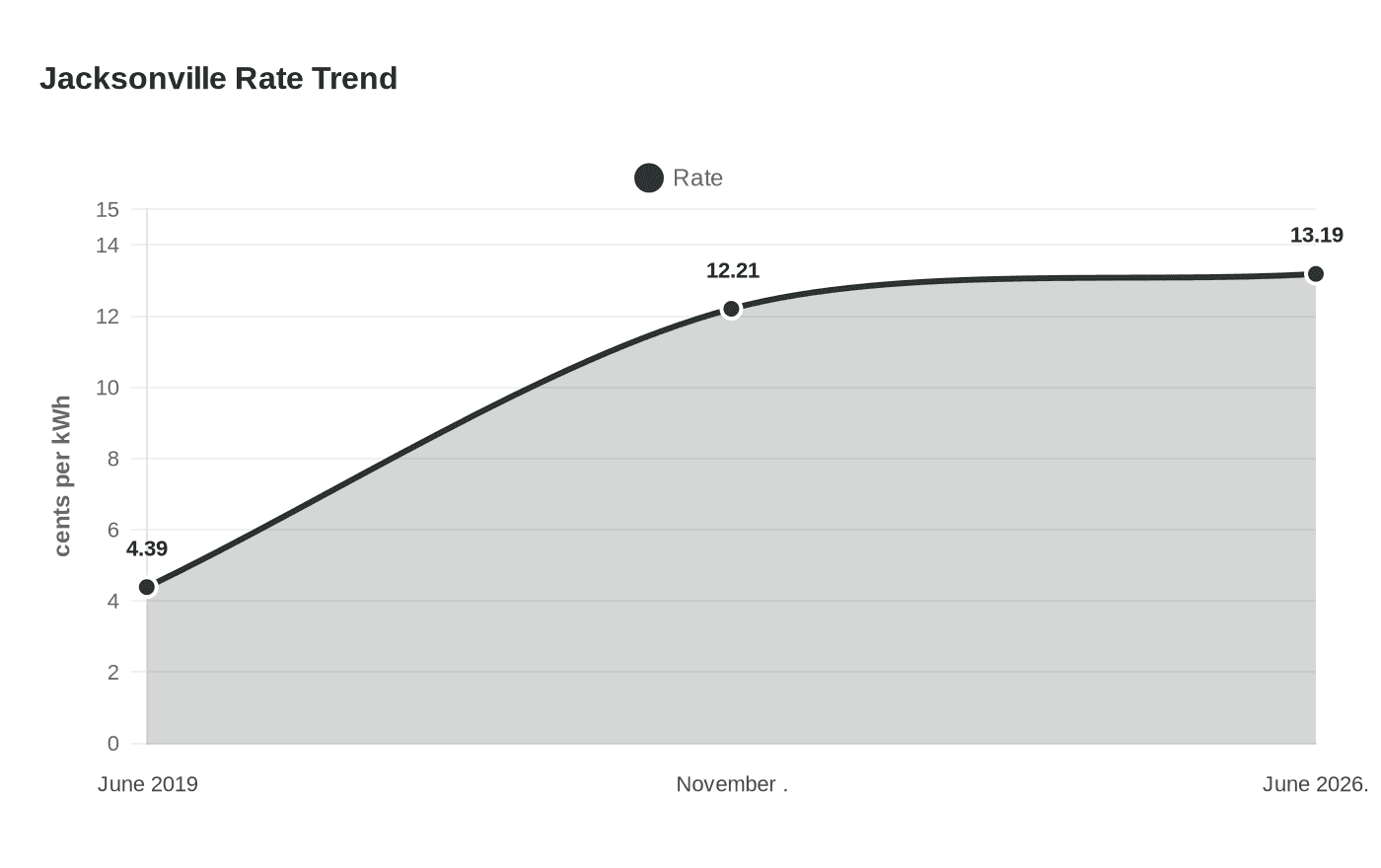
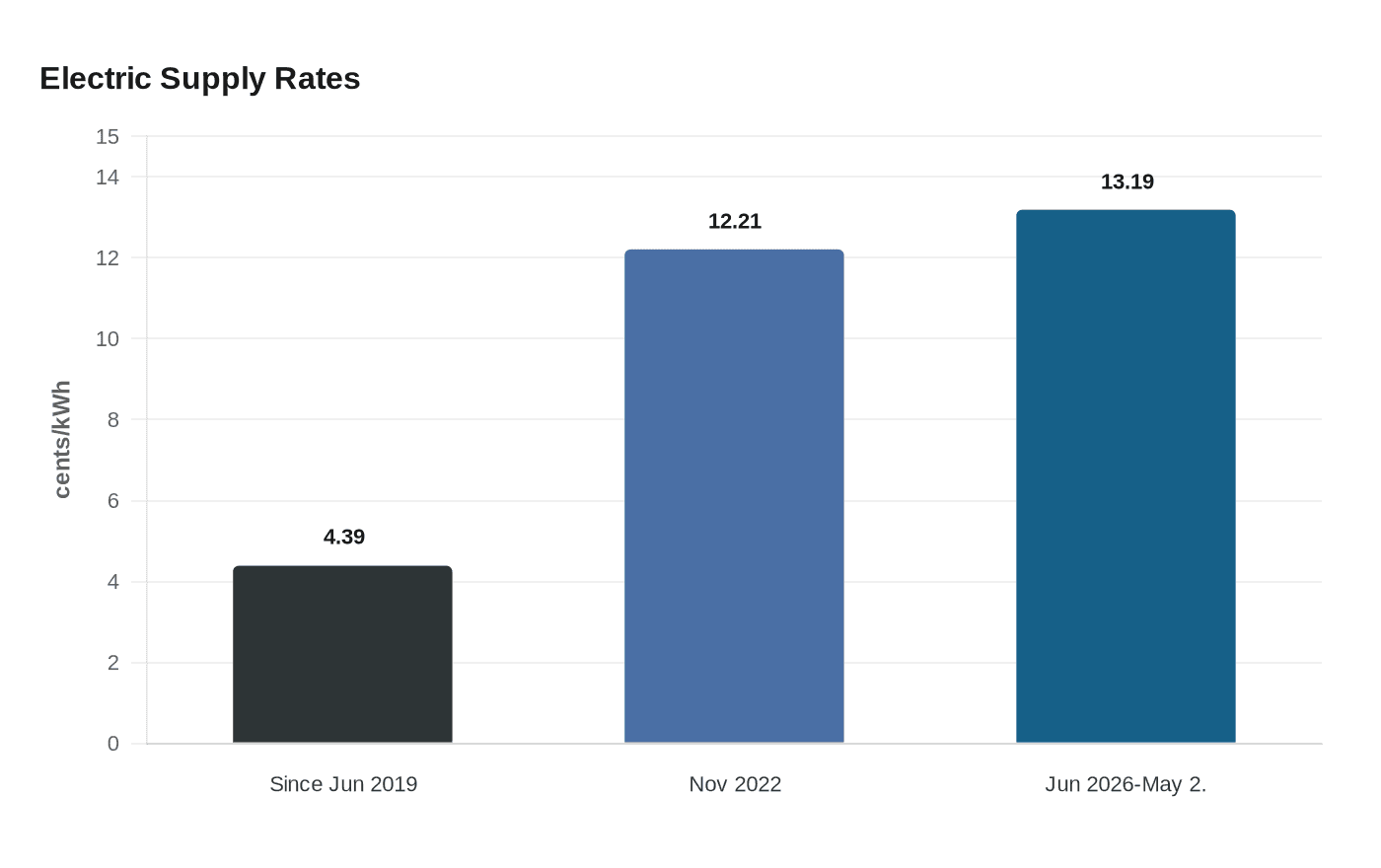
Jacksonville has used aggregation as a hedge against supply volatility for years. A city document from November 2022 said the city renewed its aggregation program with Constellation NewEnergy at 12.21 cents per kilowatt-hour for 22 months through December 2024, after residents and small businesses had been receiving a fixed 4.39-cent rate since June 2019 under an earlier agreement. The current 13.19-cent rate continues that pattern of fixed-term contracts, but it also shows how quickly the market can move.
The city’s website says Jacksonville is an Ameren Illinois community participating in the Municipal Electric Aggregation Program, and Good Energy serves as the city’s energy consultant. Residents can opt out of the city program at any time, which makes the decision less about a permanent switch than a month-to-month comparison between Ameren’s shorter summer price and Homefield’s longer contract. For Jacksonville households already bracing for summer cooling costs, the real question is whether the added stability through May 2027 is worth paying more now.
This article was produced by Prism’s automated news system from verified source data, official records, and press releases, then run through automated quality and moderation checks before publishing. The system is built and supervised by the people who set the standards it runs under. Read our full AI policy.
Know something we missed? Have a correction or additional information?
Submit a Tip

