Local Church Holds Blue Christmas Service to Support Grieving Residents
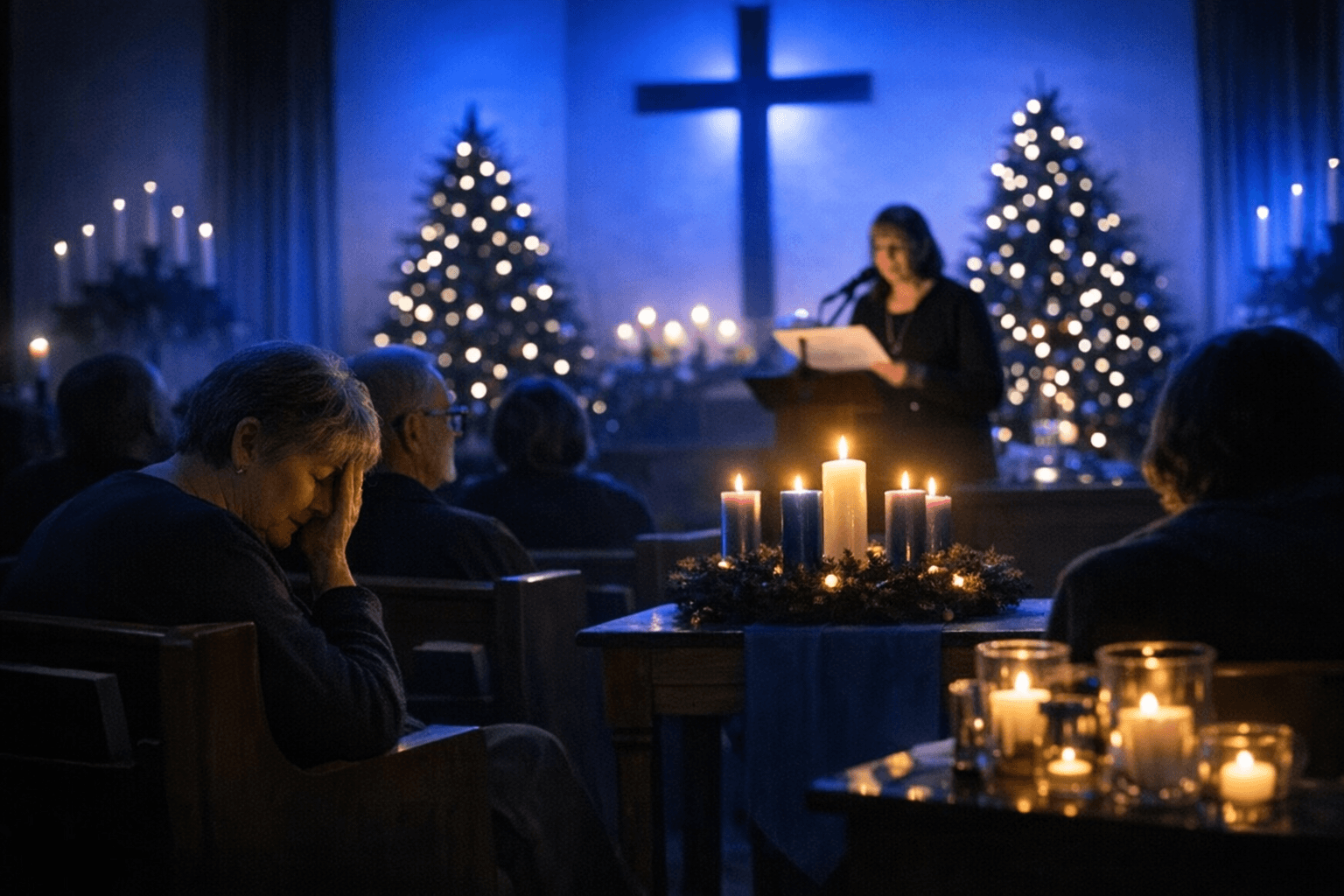
Centenary United Methodist Church held a Blue Christmas service on Dec. 18 to comfort people in Morgan County who are facing loss or hardship during the holidays. The gathering provided a quiet, inclusive space and highlighted how community organizations are stepping in to meet mental health needs when residents are most vulnerable.

Centenary United Methodist Church invited the public to a Blue Christmas service at 6:30 p.m. on Dec. 18 at 331 E. State St. The service was intended to comfort and uplift people who are grappling with a recent loss or otherwise facing a difficult time during the holiday season. By opening its doors to anyone in need, the church offered an alternative to more festive seasonal events that can intensify feelings of isolation and grief.
For many residents of Morgan County the holidays can exacerbate stress, loneliness, and bereavement. Community rituals that acknowledge sorrow alongside hope can reduce stigma, create social connection, and serve as immediate, low barrier support for people who might not seek formal mental health care. Local faith based organizations like Centenary United Methodist Church frequently act as first responders in emotional crises, filling gaps left by limited access to behavioral health services in rural and small town settings.
The service also underscores larger public health and policy questions. When hospitals, clinics, and social services are stretched thin, community institutions can provide continuity of care and informal counseling. That informal support matters not only emotionally, but also for physical health outcomes tied to chronic stress and untreated depression. Ensuring equitable access to mental health resources requires coordinated investment from county and state agencies, sustainable funding for community services, and partnerships that integrate faith based leaders, primary care providers, and public health professionals.
For Morgan County residents the Blue Christmas service was more than a single evening. It was a reminder that neighbor to neighbor care remains essential during times of loss, and that public health depends on networks of support that include churches, civic groups, and health systems. As policy makers consider how to allocate mental health resources, the experiences of people who attend services like this one point to the need for accessible, culturally appropriate options across the county.
Sources:
Know something we missed? Have a correction or additional information?
Submit a Tip