Meredosia refuge preserves Morgan County wetlands and wildlife habitat
Meredosia National Wildlife Refuge offers free access to rare river habitat on the Illinois River. Seasonal trails, boat access, and wildlife viewing make it an easy Morgan County day trip.
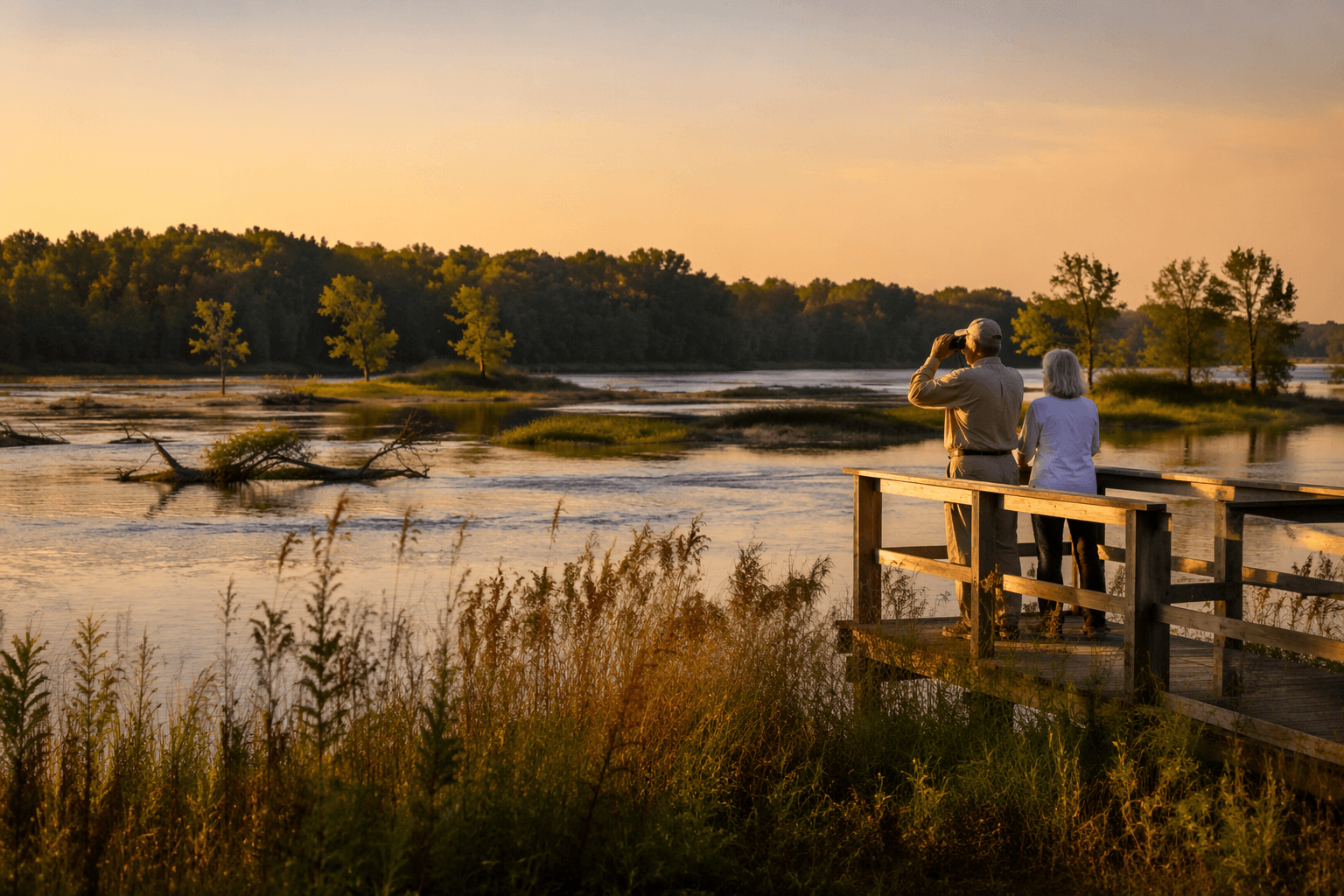
Meredosia National Wildlife Refuge gives Morgan County a free, close-to-home stretch of Illinois River country where wetlands, forests, prairies, and backwater marshes still hold their shape. Set on 3,645 acres near Meredosia, the refuge is built for short visits, seasonal changes, and the kind of low-cost outdoor time that fits a family schedule or a quick day trip.
A refuge shaped by a donation and a river corridor
The refuge began with a donation to the U.S. Fish and Wildlife Service through the estate of James Anderson on May 9, 1973. A Service document says the land was first placed under the control of the Illinois Chapter of The Nature Conservancy before it became a national wildlife refuge, a detail that helps explain why this stretch of river land entered federal protection with its habitat value already recognized.
Its location matters just as much as its origin. Meredosia National Wildlife Refuge sits along the east side of the Illinois River in Morgan and Cass counties, in a river corridor that still feels separate from the harder-edged landscape around it. The refuge also sits within the traditional homeland of the Illinois people, linking present-day public access to a deeper history that predates the modern county map.
What survives on the ground
The refuge is not a single kind of habitat. It includes seasonal wetlands, bottomland forest, upland forest, prairie, and permanent marsh, which means the scenery and the wildlife viewing change as water levels and seasons shift. That mix gives the refuge its value as a functioning floodplain, not just a scenic overlook.
The Service says many areas were spared the drastic human-caused changes that altered so much of the Illinois River valley. Wetlands on Meredosia Islands remain undrained, small remnant prairies still exist, and some forested areas look much as they did in the late 1800s. That intact habitat supports rare, threatened, and endangered plants and animals, and it keeps a piece of river ecology visible in a part of the state where so much land has been reshaped.
How to plan a visit
The refuge charges no fee for public visitation, which makes it one of the most accessible outdoor outings in the region. It does not have public restrooms, so the practical side of the trip needs a little planning before you leave home or town.
A one-quarter-mile accessible nature trail offers the easiest on-foot introduction to the refuge. The trail ends at a boardwalk overlooking Carver Lake, giving visitors a short, manageable route that still reaches water, habitat, and open views. For a quick stop, the Service suggests a 15-minute visit at Evan’s Prairie, about an hour in the Shearl-Skinner Unit, or a half-day or longer at the Kloker Unit along the bluff of the Illinois River.
- Evan’s Prairie works well for a brief stop when you only have a few minutes.
- The Shearl-Skinner Unit fits a one-hour visit.
- The Kloker Unit is the best choice if you want a half-day or longer on the refuge.
Quick ways to use the refuge
Those options matter because the refuge is built for flexible use. You can stop in for a short wildlife look, walk the accessible trail, or build a longer outing around the bluff country and the river views without treating the trip like a major excursion.
Seasonal access changes the experience
From February 1 to October 15, all land and water areas are open to foot and boat access from sunrise to sunset. That window gives most of the year’s warm-weather flexibility, whether you are birding, wildlife-watching, or moving by boat through the refuge’s water routes.
From October 16 to January 31, foot access is permitted on refuge land along the east side of Meredosia Lake in Morgan County, and the boat ramp stays open year-round. That seasonal split means the refuge is still usable in the cooler months, but the route you take changes with the calendar and with the floodplain itself.
The Service also allows visitors to collect mushrooms and berries, adding a foraging element to the refuge’s mix of birding and wildlife observation. For Morgan County residents, that turns the refuge into more than a scenic stop: it is a place where a short outing can become a morning walk, a boat launch, or a seasonal return trip.
Why this small refuge still draws attention
The National Wildlife Refuge System now includes more than 570 refuges nationwide, and the 2025 National Visitor Survey found that 97% of visitors were satisfied with the quality of their overall refuge experiences. Meredosia fits that larger pattern while still serving a distinctly local role, because its no-charge access and short-visit structure make it easy to use without a full-day commitment or a big budget.
That is why Meredosia National Wildlife Refuge remains one of Morgan County’s most useful public outdoor spaces. It protects a rare stretch of river habitat, keeps a piece of the Illinois River floodplain visible, and gives nearby residents a straightforward way to spend time outside without leaving the county.
This article was produced by Prism’s automated news system from verified source data, official records, and press releases, then run through automated quality and moderation checks before publishing. The system is built and supervised by the people who set the standards it runs under. Read our full AI policy.
Know something we missed? Have a correction or additional information?
Submit a Tip