Meredosia's French roots, river trade shaped Morgan County history
Meredosia’s history runs from French river legends and steamboats to railroads and pearl buttons, and that layered past still shapes its future on the Illinois River.

Meredosia may be small now, with 826 residents in the 2020 census, but Morgan County’s river village once sat on a trade route that connected the Illinois River to Russia, England, rail innovation and a national pearl-button boom. Its history is not a museum piece sealed off from the present. It explains why the village still matters as a river town, why its landmarks carry so much weight, and why preservation and redevelopment here begin with understanding how the place rose, adapted and then shrank.
A river landing that became a village
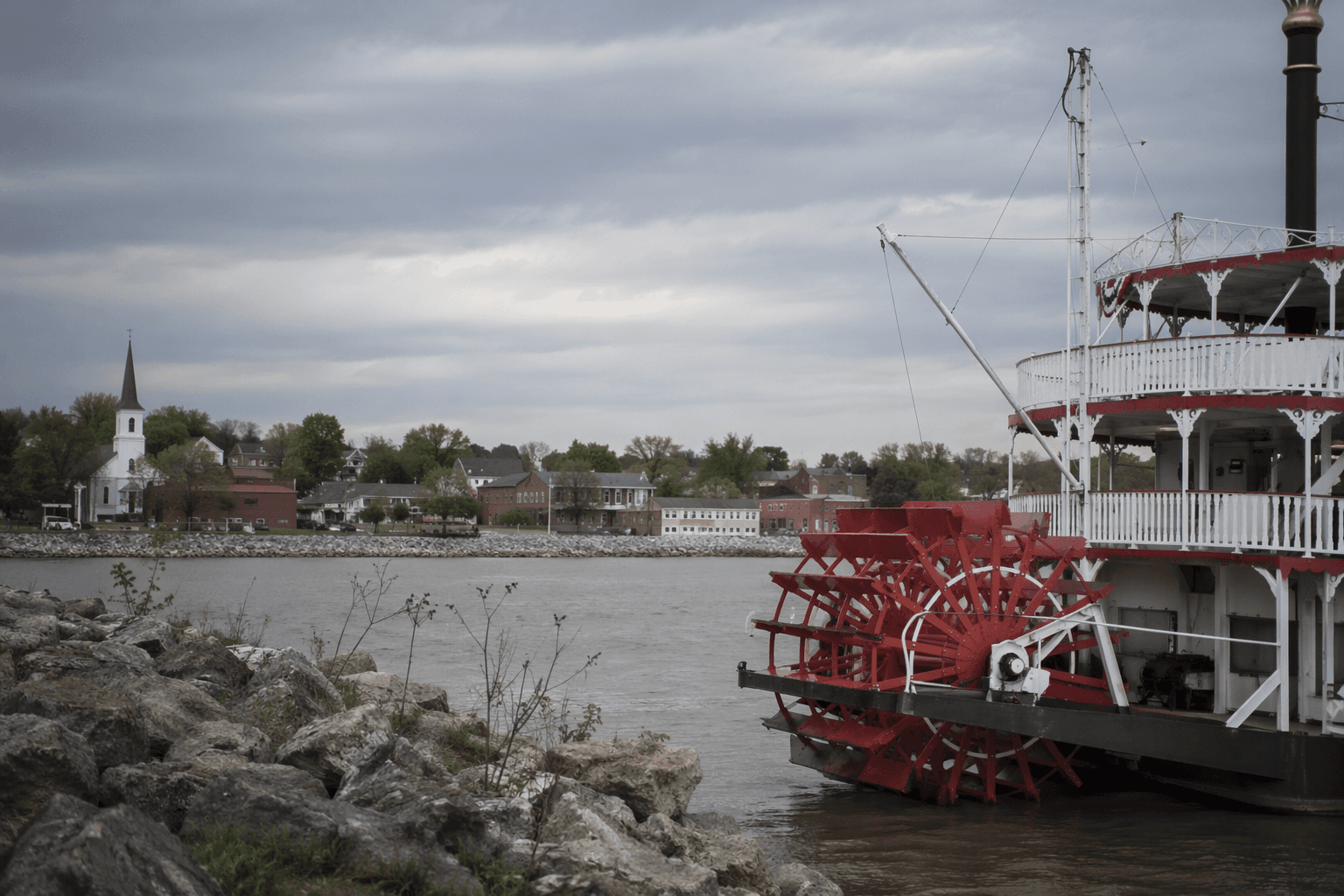
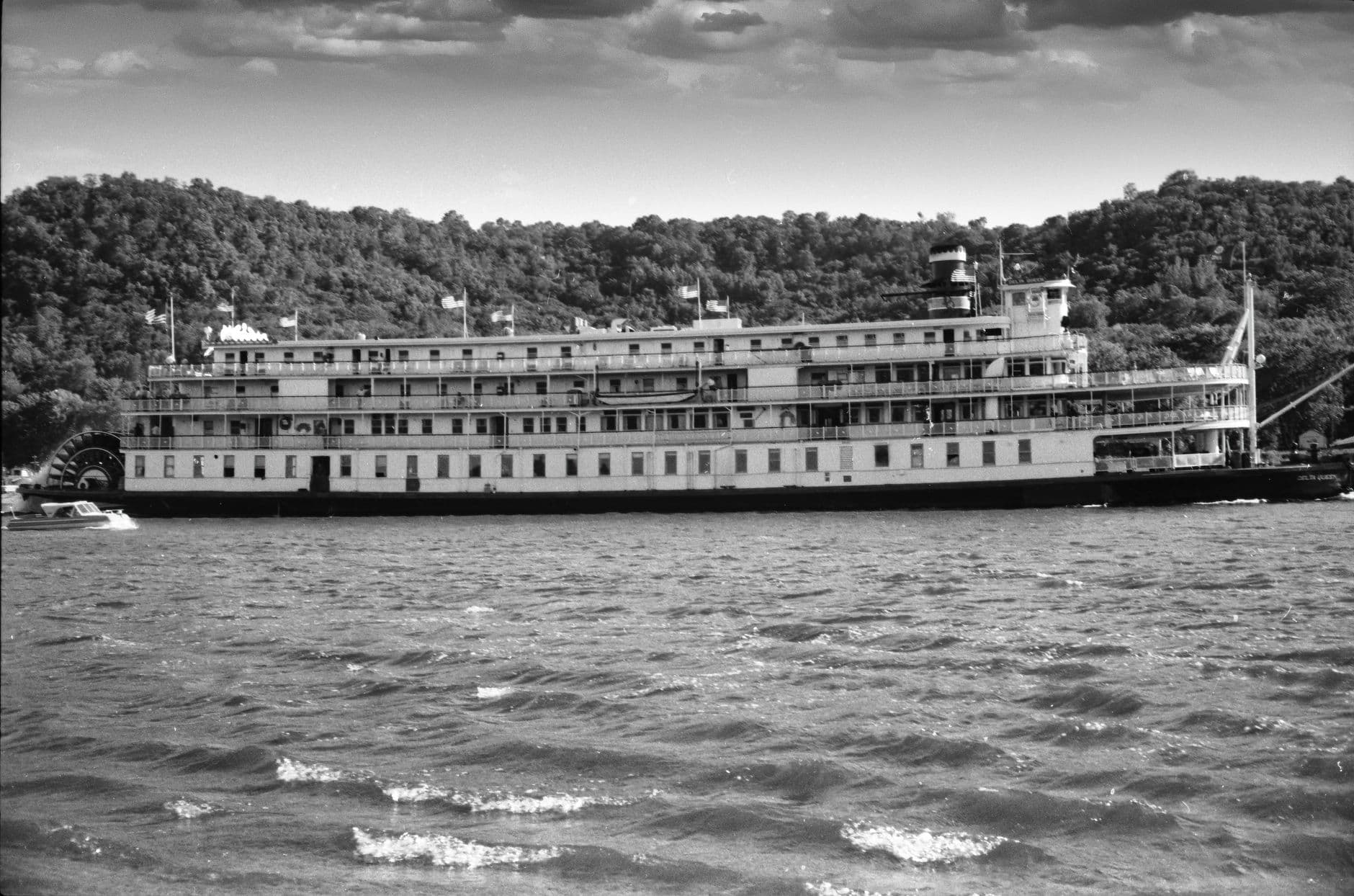
The village history page dates Meredosia to 1832 and describes it as an important commercial center on the Illinois River. That is the first key to reading the town today: its growth came from water, not from being a stop on the margins. Before the village was organized, transportation moved by canoe and keel boat, then steamboats began arriving in 1826, giving the settlement a faster link to regional commerce and helping push it toward incorporation six years later.
The Illinois State Historical Society’s Historic Meredosia marker gives that river story a sharper edge. It says the village’s name is tied to French-language legends, including one that connects it to Antoine D’Osia, a French priest said to have been the first white man to live in the area, and another that points to the willows along the shore, or “osiers,” giving the place the meaning “Lake of the Willows.” That origin story matters because it shows Meredosia as a place shaped by language, migration and the river landscape long before it became a modern village in Morgan County.
French names, fur trade and the first rail experiment
Meredosia’s early economy was not local in the narrow sense. The marker identifies the Kappal Brothers Fur Company as the Midwest’s second largest, with annual shipments of more than $500,000 in furs to Russia and England. That figure is the clearest evidence that this Illinois River community once sat inside an international trade network, not just a county economy. For a place that now feels quiet, that scale is the kind of detail that explains why the river corridor still looms large in the village’s identity.
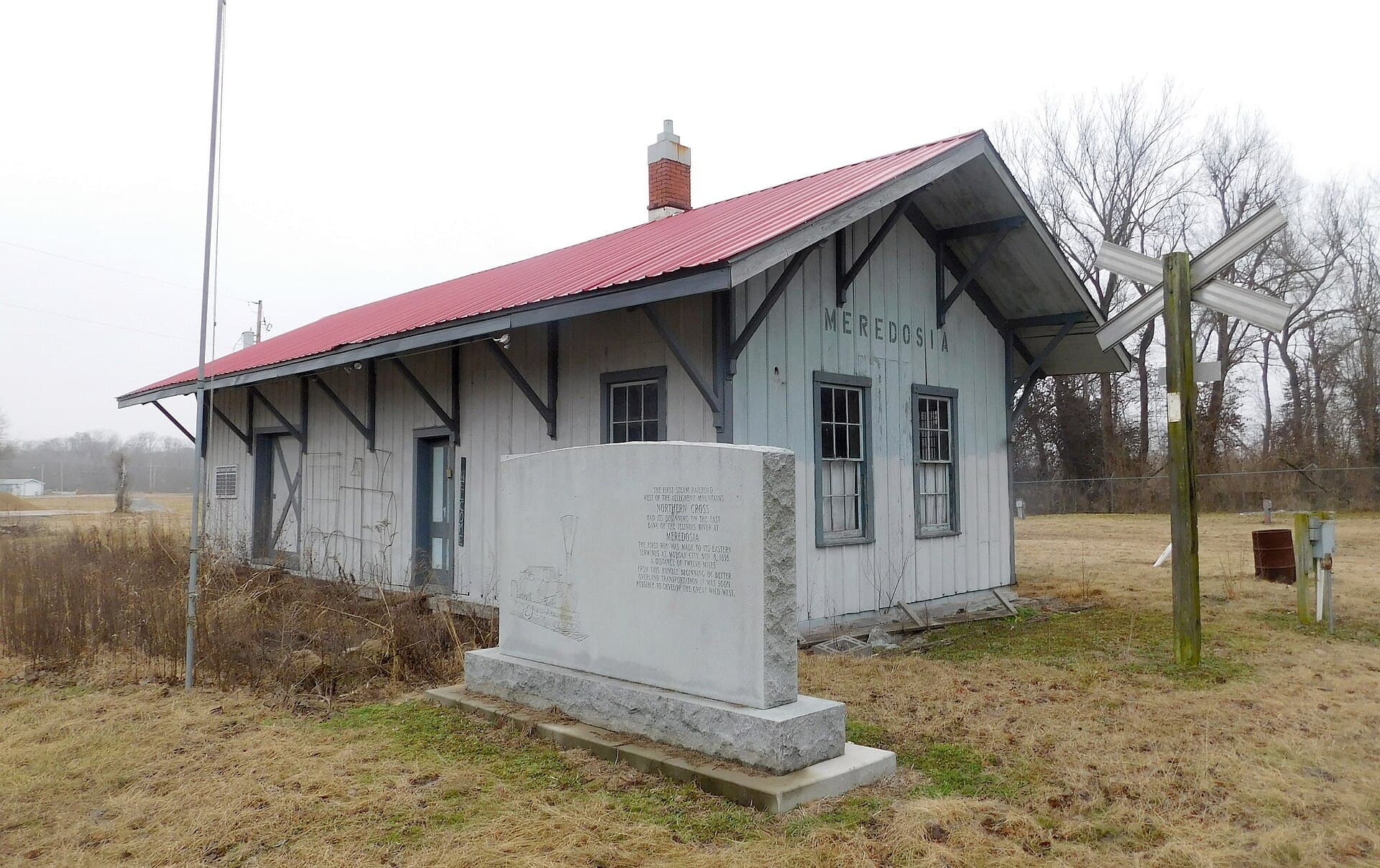
Rail history also runs through Meredosia in a way few people would expect. The marker says the first steam locomotive west of the Alleghenies was built there, and that the Northern Cross, which became the Wabash Railroad, began on November 8, 1838, when the experimental locomotive Rogers made its initial journey. Those dates place Meredosia in the earliest chapter of American rail development, when steam power was still being tested as a practical engine for long-distance movement. The village’s story, then, is not only about river commerce but about the moment when river towns began to connect to a larger transportation system that changed the Midwest.
From shell buttons to industrial decline
Meredosia’s pearl-button era belongs to a broader Illinois river economy, not an isolated local novelty. The Illinois Department of Natural Resources says the shell-button industry in Illinois began in 1891, thrived along the Illinois and Mississippi rivers and lasted until the 1940s, when plastic replaced shell as the preferred raw material. In Meredosia, the historical marker adds a local labor dimension: shellers worked the river daily and supplied their catch to three local button factories. That turns the industry from a decorative footnote into a working system of extraction, processing and manufacturing tied directly to the river.
This part of the story helps explain why Meredosia still reads as a boom-and-decline community. The same river access that helped fuel fur trading and rail ambition later supported a manufacturing niche that eventually disappeared when materials and markets changed. The pattern is familiar across river towns in the Midwest, but Meredosia makes it visible in one compact place: first commerce, then transport, then factory work, then contraction.
Boyd Park, Frank Skinner and the cultural memory of a small town
Boyd Park gives Meredosia’s history a human face. The Historic Meredosia marker says the Skinner Bandstand there memorializes Frank Skinner, the village’s most famous son, who went on to compose, arrange and direct musical scores for more than 500 motion pictures. A separate biographical record lists Skinner’s birth in Meredosia on December 31, 1897, and his death in Hollywood, Los Angeles County, California, on October 9, 1968. That arc, from a river village in Morgan County to Hollywood, underscores how far Meredosia’s reach extended even when the town itself remained small.
The bandstand is also a reminder that local preservation is not only about buildings and dates. It is about deciding which parts of a town’s story stay visible in public space. Boyd Park preserves Skinner’s name in a place where residents and visitors can still connect a global entertainment career to a village on the Illinois River. In a town with fewer than 1,000 people, that kind of landmark helps keep the historical layers legible.
Why the history still matters now
Meredosia’s present-day challenge is the same one facing many small river communities: how to turn a deep past into a usable future. The village sits in the Jacksonville Micropolitan Statistical Area, and its population fell from 1,044 in 2010 to 826 in 2020, a decline that makes the town’s long economic arc impossible to ignore. In 2011, Ameren Energy Resources Company announced the closure of its power station in Meredosia, costing the community more than 50 jobs. That loss fits the same rise-and-fall pattern that has defined the village since steamboats, fur shipments and rail experiments first made it matter.
The preservation question is therefore practical, not sentimental. The Historic Meredosia marker was dedicated on May 1, 1988, by the Meredosia Area Historical and Genealogical Society and the Illinois State Historical Society, which shows that locals have already treated the village’s history as an asset worth marking in public. For Morgan County, that history still offers a clear frame for tourism, interpretation and redevelopment: Meredosia is a river village whose past explains its scale, its landmarks and its struggle to reinvent itself after each economic tide receded.
This article was produced by Prism’s automated news system from verified source data, official records, and press releases, then run through automated quality and moderation checks before publishing. The system is built and supervised by the people who set the standards it runs under. Read our full AI policy.
Did this article answer your question?