Mixed Grain and Livestock Futures Leave Morgan County Farmers Watching Markets
Grain futures were mixed and livestock contracts moved only fractionally, leaving Morgan County farmers weighing hedges, storage and feed margins.

A modest wobble in grain and livestock futures left Morgan County growers and livestock producers reassessing short-term pricing and risk-management decisions. Market action on Jan. 16 showed little directional momentum, but the fractional moves matter for local elevators, feedlots and cash contracts.
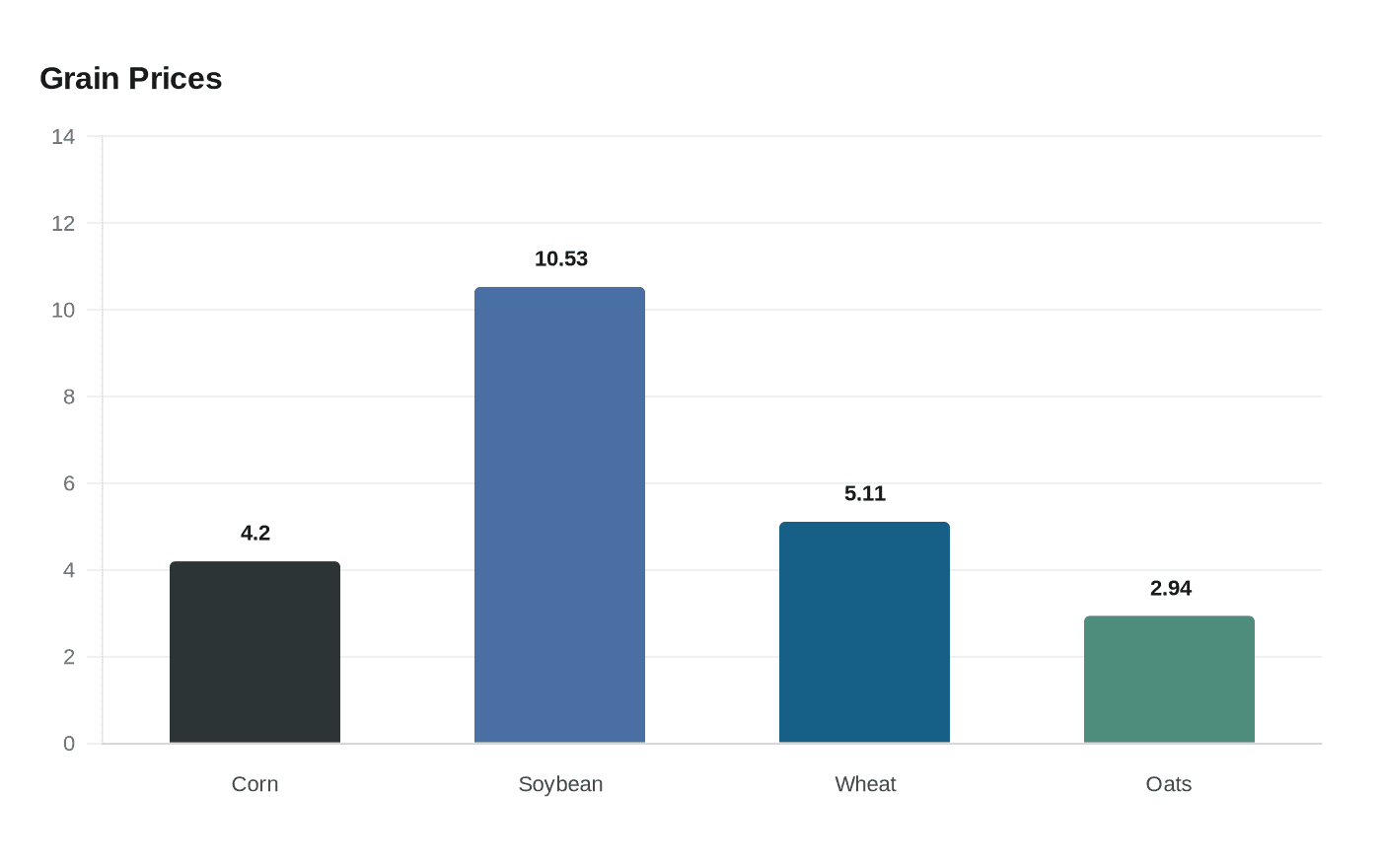
On the Chicago Board of Trade, March corn closed unchanged at $4.20 a bushel and March soybeans held at $10.53 a bushel. March wheat ticked up 0.5 cent to $5.11 a bushel, a change of roughly 0.1 percent, while March oats rose one cent to $2.94 a bushel, about a 0.3 percent gain. Over at the Chicago Mercantile Exchange, February live cattle was up 0.2 cent to $2.36 per pound, January feeder cattle slipped 0.03 cent to $3.68 per pound, and February hogs were down 0.2 cent to $0.88 per pound.
Those fractional cent moves add up locally. A 0.2 cent change equals about $0.20 per hundredweight, which translates to roughly $2.40 on a 1,200-pound steer and about $0.56 on a 280-pound market hog. For row-crop farmers, flat corn and soybean futures mean narrow incentives to price new bushels now versus storing grain for a later rally; for livestock producers the mixed signals change feed-cost calculations only slightly but can tighten margins when processing or basis shifts.

Morgan County elevators and forward-contract programs set cash bids based on futures plus or minus a local basis, so the muted trade primarily reinforced existing basis considerations rather than creating new price breaks. Grain merchandisers said today’s market would factor into conversations about on-farm storage versus immediate delivery, and for contract growers the tiny moves in feeder and live cattle contracts affect hedging roll decisions and break-even calculations.
Broader market drivers that local producers watch remain unchanged: export demand, South American weather, and USDA supply-and-demand updates tend to produce larger moves than the fractional shifts seen Jan. 16. Input costs such as fertilizer and fuel, along with interest rates and local basis patterns, will determine whether farmers lock in premiums or ride out prices.
For Morgan County readers, the takeaway is pragmatic: Jan. 16’s mixed and muted futures do not force immediate action, but they underscore the value of active basis monitoring and modest hedging to protect margins. Farmers and feeders will be watching upcoming supply reports, weather developments and local elevator bids for a clearer directional cue.
This article was produced by Prism’s automated news system from verified source data, official records, and press releases, then run through automated quality and moderation checks before publishing. The system is built and supervised by the people who set the standards it runs under. Read our full AI policy.
Did this article answer your question?