Morgan County Courthouse traces roots to frontier log cabin courtrooms
Morgan County's courthouse began in log cabins, burned in 1827, and still anchors court, records, and county services at 300 W. State Street.
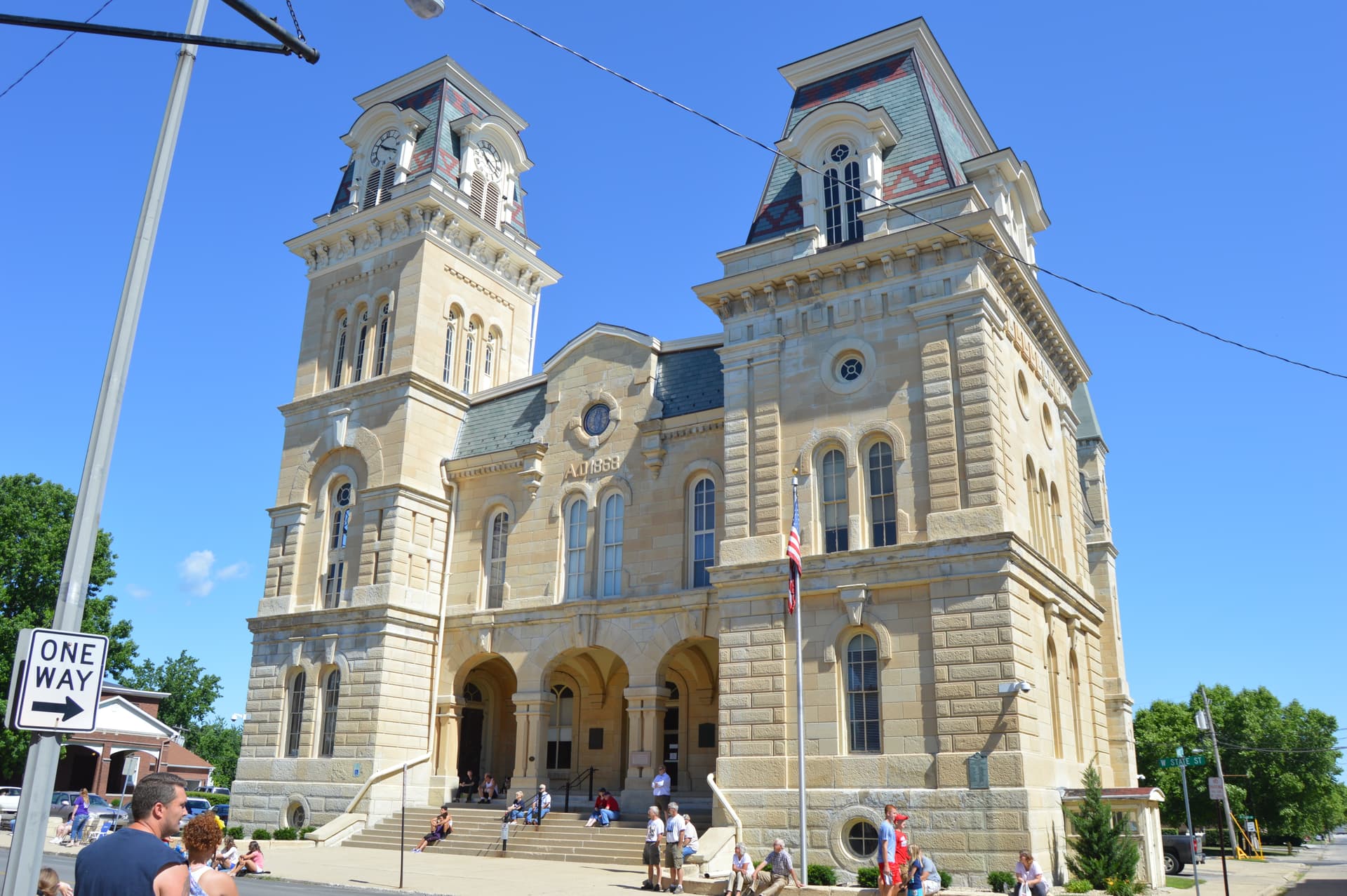
Morgan County’s courthouse is more than a historic facade in Jacksonville. It is the county’s working civic center, a place where frontier justice first took shape in log cabins, where records were nearly lost to fire, and where residents still go for court business and essential county services at 300 W. State Street.
From cabin courtrooms to a permanent courthouse
The county’s legal history starts before Jacksonville was founded. In April 1823, the first circuit court proceedings in Morgan County were held at Dr. George Cadwell’s log cabin, with Justice John Reynolds presiding. Court also met at James G. Swinerton’s log cabin, and proceedings were officially held at Olmstead’s Mound, a reminder that early county government followed settlement rather than waiting for a finished courthouse.
That changed in 1825, when Morgan County built its first county courthouse, a frame building. Judge John S. Sawyer served as the presiding circuit judge when that first courthouse went up, marking the moment when local government moved from improvised frontier arrangements to a permanent legal home. The shift matters because the courthouse was never just a building project. It was the county’s first durable statement that law, records, and public order would have a fixed center.
John Reynolds gives those earliest sessions added weight. He later became governor of Illinois, which connects Morgan County’s makeshift courtroom history to the wider political development of the state. The county’s early legal life, in other words, was not isolated backwoods administration. It was part of the same civic formation that was shaping Illinois itself.
The fire that nearly erased the record
That early courthouse did not last. A Morgan County history source says the first courthouse burned on December 6, 1827, and a genealogy source adds that the fire destroyed most records. For county history, that loss is more than a dramatic footnote. It helps explain why some early documents are missing and why courthouse preservation carries such practical importance in a place where so much of the paper trail was once vulnerable to flame.
The county soon built again. A 2000 Jacksonville history account says Morgan County’s second courthouse stood on the Jacksonville square from 1830 to 1869. That long span places the courthouse square at the center of county life for nearly four decades, even as Jacksonville itself was still developing. The same account quotes William Cullen Bryant, who described Jacksonville in 1832 as “a horridly ugly village.” The line captures how rough the town still seemed to outside observers, even while it was becoming the county’s administrative heart.
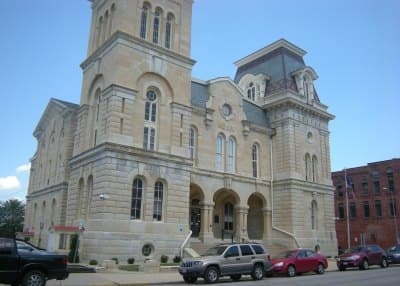
The current courthouse on 300 W. State Street is the third courthouse on the site, not the original frontier building. Mapping records describe it as constructed from 1868 to 1869 and designed by Chicago architect Gurdon P. Randall in a combination of Italianate and Second Empire styles. That design choice places the building squarely in the architectural language of post-Civil War public institutions, when counties across Illinois were building larger and more formal civic landmarks.
A courthouse that still handles county business
The building is not frozen in the past. The State of Illinois courts directory places Morgan County Courthouse in the 7th Circuit, District 4, and lists Suzann Maxheimer as trial court administrator. Morgan County government also lists the Circuit Clerk office at the courthouse address, which means the site continues to function as the day-to-day gateway to county court business.
The county clerk office adds another layer of public use. Its responsibilities include elections, vital records, tax extensions and delinquent taxes, payroll, accounts receivable, and county board support. Those functions make the courthouse part of ordinary civic life, not just legal proceedings. People go there for records, for election administration, for financial administration, and for the business that keeps the county running.
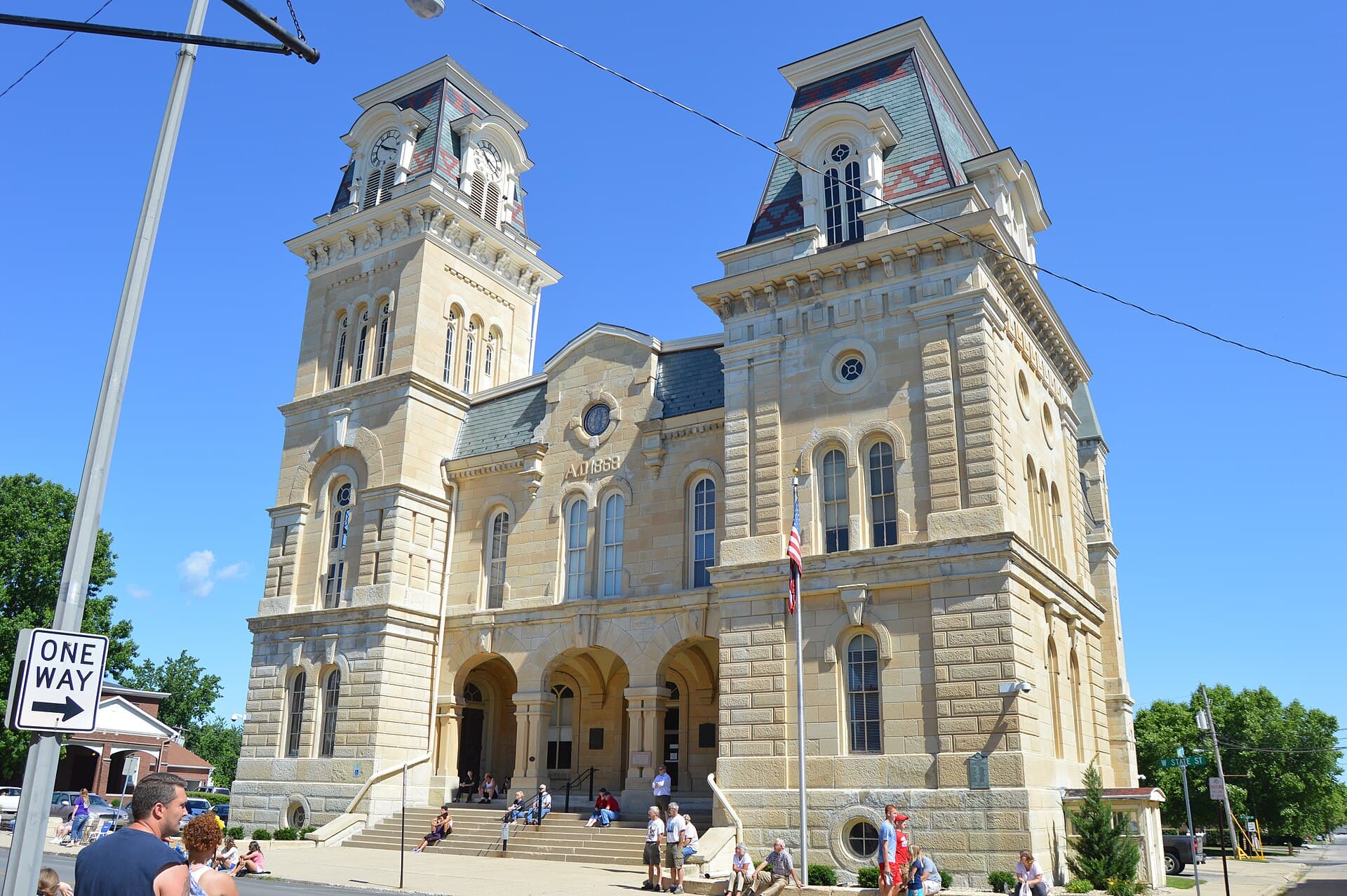
That continuity is one reason the courthouse matters locally. The same site that once hosted circuit court in a log cabin now handles the records and procedures that tie Morgan County’s government together. It is where residents still encounter the machinery of county authority, from court filings to elections administration to the records that document births, deaths, taxes, and public action.
Preservation, recognition, and the county’s civic memory
The courthouse’s historical value has also been formally recognized. The Morgan County Courthouse at 300 West State Street was added to the National Register of Historic Places in 1986. That listing places it among the county’s protected landmarks and acknowledges that the building’s importance reaches beyond routine government use.
Preservation is not just symbolic. In 2009, White & Borgognoni Architects, P.C., prepared a restoration needs assessment for the courthouse’s exterior. That report signals ongoing attention to the building’s condition and reinforces the county’s investment in keeping the structure useful as well as historic. In practical terms, that means the courthouse is being treated as both an active workplace and a heritage asset.
Morgan County’s courthouse story is therefore a story of continuity under pressure. The county began with court in cabins, lost crucial records to fire, rebuilt on the Jacksonville square, and eventually settled into the present courthouse at 300 W. State Street. The building still serves the public in the same basic role it was created to fill: a stable place where county government can be found, records can be kept, and justice can be administered in the center of Jacksonville.
This article was produced by Prism’s automated news system from verified source data, official records, and press releases, then run through automated quality and moderation checks before publishing. The system is built and supervised by the people who set the standards it runs under. Read our full AI policy.
Did this article answer your question?