Morgan County Health Department handles food, wells and septic permits
Morgan County Health Department handles the permits, vaccines and records families actually need, from food inspections and wells to WIC, lead screening and STI care.
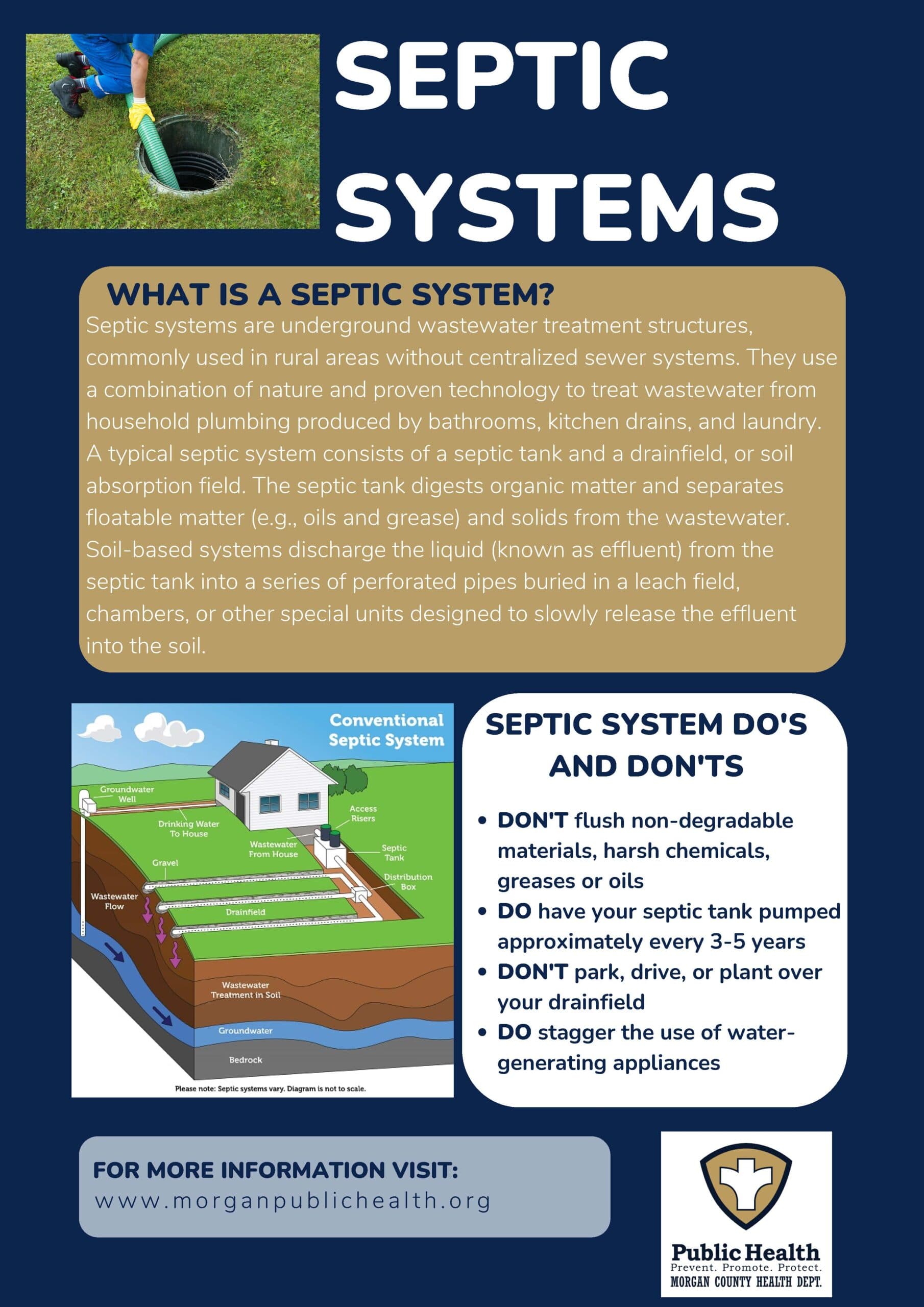
Morgan County Health Department is the office to call when a restaurant needs inspection, a private well needs testing, a septic system needs a permit, or a family needs a vaccine or birth record. Based at 425 E State St in Jacksonville, the department serves as a countywide public-health hub, with service information organized on its own website for residents who need answers fast.
Food-service rules and inspections
If you run a food-service business in Morgan County, the department’s Environmental Health division is the place that handles the basics that keep kitchens open and customers safer. Its food sanitation work includes food-service inspections, food-service licensing, food safety and sanitation education, and Food Protection Manager Certification. That means the office is not just checking boxes on a form; it is the local gatekeeper for the standards that apply before food reaches a plate.
For residents, the practical point is simple: this is the county office that helps determine whether food-service establishments are meeting sanitation rules. The Environmental Health page says the division is dedicated to improving quality of life, ensuring public health and safety, and preventing environmental hazards through education and surveillance, which is the logic behind those inspections in the first place.
Wells, septic systems and environmental complaints
The same Environmental Health division also handles water well permitting and testing, septic permits, solid-waste issues, nuisance investigations, West Nile virus surveillance and vector control. That mix matters because the public-health problems that show up on a rural property or in a neighborhood often begin with the same office: the one that looks at water, waste and disease-carrying pests before those issues spread.
If your property relies on a private well or septic system, the department is the local authority that deals with those permits and checks. Residents dealing with solid-waste problems or nuisance complaints also fall under this division’s work, which makes environmental health one of the department’s most direct touchpoints with daily life outside the clinic setting.

Family services people often miss
The department’s services list goes well beyond environmental oversight. Morgan County residents can use WIC, vital records, immunizations, lead screening, vision and hearing services, and STI clinic services through the health department. WIC is aimed at eligible women, infants and children, while vital records are the local route for birth and death records that families often need during school, medical, legal or estate matters.
The clinic side matters just as much. Immunizations, lead screening, vision and hearing checks and STI services are the kinds of preventive care that can save families travel time and help catch problems earlier, especially in a county where residents may otherwise have to drive farther for public-health support. The department’s program page also says it uses safety measures for respiratory illnesses such as flu, COVID-19 and RSV, so clinic visitors should look to the department’s current guidance before coming in.
Who runs the department
The department’s annual-report page lists both MCHD Annual Report FY2024.pdf and Annual Report BOH FY 25.pdf, giving residents a paper trail for recent operations and board oversight. The 2024 annual report says the department focused over the last 12 months on communicable disease control and surveillance, environmental health, emergency preparedness and other core public-health duties.
Leadership is spelled out in the 2023-2024 annual report file as well. Andrea Ratermann is listed as board president, Roger Ward as vice president, Becky Mahr as treasurer, Nicholas Doll, D.D.S., as secretary, Richard Minter, D.O., as medical director, Kari Jo Kelso, DVM, Holly Norton, Terra Litchfield as county board representative, Leilani Segura, MD, Chris Adams, BS, LEHP as administrator, Stefanie Johnson, BS, LEHP as environmental health director, and Jennifer Plate, BSN, RN, IBCLC as community health director. That structure matters because it shows the department is not a loose collection of services; it is a governed county agency with named officials responsible for public health decisions.
Why the surveillance work matters locally
Some of the department’s most technical work has a very local consequence. On May 17, 2024, the Illinois Department of Public Health reported that one of the first two mosquito batches in the state to test positive for West Nile virus that year was in Morgan County. That gives the county’s mosquito and vector surveillance work real weight, because it is one of the systems that helps detect disease risk before cases grow.
Lead screening fits the same pattern. Illinois’ lead prevention program, as described in the state’s 2023 Annual Surveillance Report published in July 2025, is built around early detection through blood lead testing and surveillance, plus case management and environmental services for exposed children. In Morgan County, that makes the health department’s lead screening service part of a broader prevention chain, not an isolated test.
A county office with a long memory
Morgan County Health Department officially opened on July 3, 1922 under director R. V. Brokow, MD, as the county’s first full public-health agency. More than a century later, the work still looks familiar: keep food safe, track environmental risks, protect families from disease, and maintain the records and clinics people need when life gets complicated. For Morgan County, that is the difference between a department you notice only in a crisis and one that quietly helps keep everyday life moving.
This article was produced by Prism’s automated news system from verified source data, official records, and press releases, then run through automated quality and moderation checks before publishing. The system is built and supervised by the people who set the standards it runs under. Read our full AI policy.
Did this article answer your question?