West Central 911 telecommunicator keeps Morgan County responders moving
Before responders reach the scene, Gattaca Daniels is already moving Morgan County help into place, one calm call at a time.
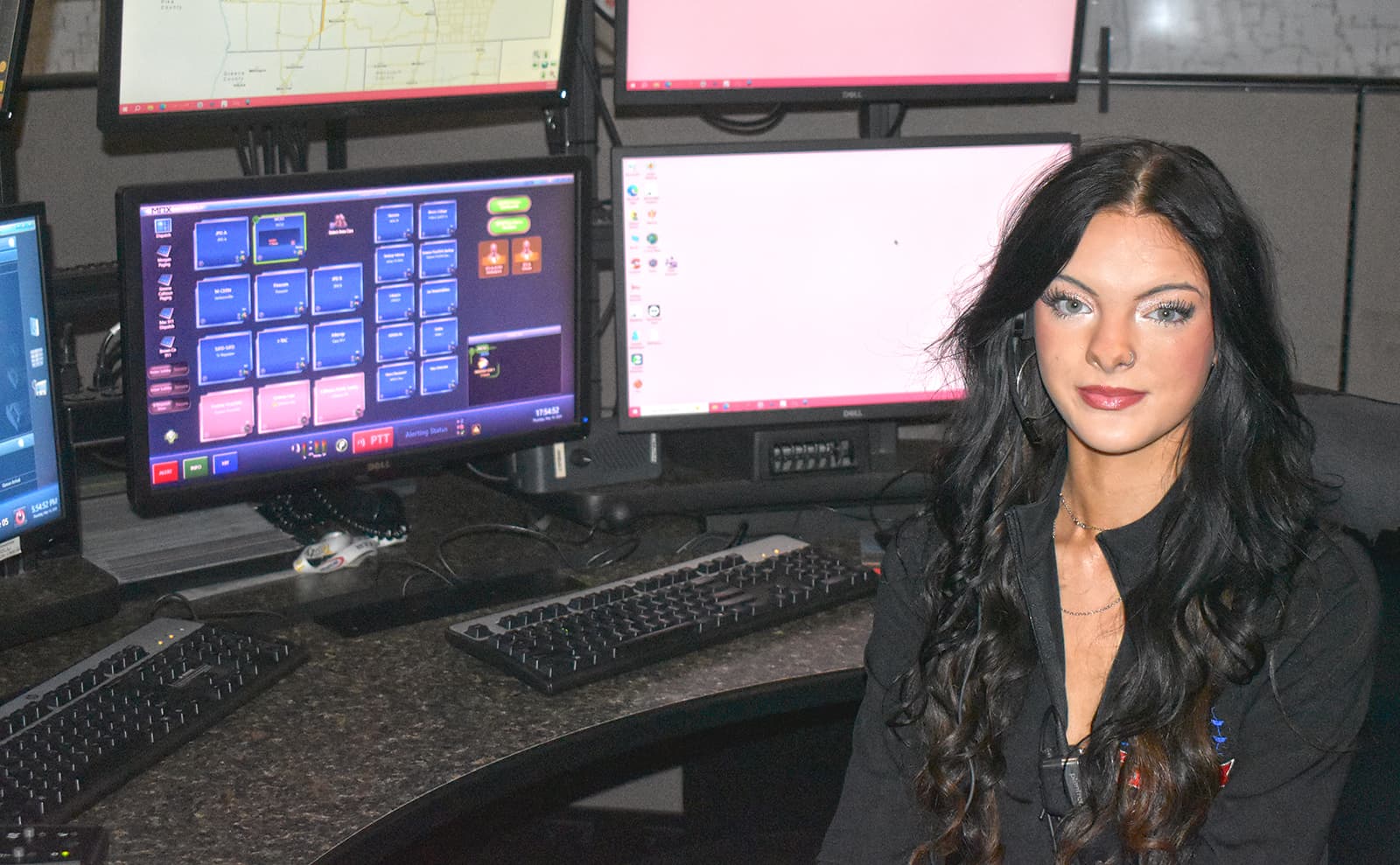
A front line most people never see
Before a deputy rolls, before a medic turns a corner and before a fire truck leaves the bay, a telecommunicator has already started shaping the outcome. In Morgan County, that work falls to people like Gattaca Daniels at West Central Joint ETSB, where the first voice on the line has to steady a caller, sort out the emergency and send the right help to the right place without losing a second.
That is what makes this job more than a dispatch function. It is a quiet public-safety post built on calm, focus and trust, and it carries an emotional load that often lingers long after the radio traffic ends. Daniels represents the steady hand behind the scenes, the person who helps turn panic into information and information into action.
How West Central keeps Morgan County moving
West Central Joint Dispatch Center grew out of a joint effort between the City of Jacksonville, the Morgan County Board, Passavant Hospital and the West Central Emergency Telephone System Board. That structure matters because it shows how public safety in Morgan County depends on cooperation across local government, health care and emergency communications, not just on the first responders the public sees in the field.
West Central Joint ETSB says it is the 9-1-1 authority for Morgan, Greene and Calhoun counties. It answers 9-1-1 calls for those counties and non-emergency calls for Morgan County, serving more than 50,000 people across about 1,400 square miles. The center operates 24 hours a day, 7 days a week, 365 days a year, which means the work never stops when weather turns bad, traffic backs up or the county is sleeping.
For Morgan County residents, that round-the-clock coverage is the difference between a caller hearing a ringing phone and hearing a trained professional who can keep help moving.
What the first voice on the line must do
A telecommunicator’s job begins when someone reaches for the phone in a moment of fear, confusion or pain. The work is to gather information fast, keep the caller focused and connect law enforcement, fire or EMS to the scene as quickly as possible. That takes more than speed. It takes the ability to listen carefully, ask the right questions and stay composed when the person on the other end cannot.
West Central tells callers to stay on the line and remain calm when they dial 9-1-1, simple advice that reflects the center’s core role in emergency response. The dispatcher cannot help if the caller hangs up too soon or loses track of where the emergency is happening. Clear information and a steady voice help the center send aid faster, whether the call involves a crash, a medical emergency, a weather event or a police response.
That pressure is part of why telecommunicators often carry the burden of the scene before anyone else arrives. They hear the panic first, and they often hear the aftermath last.
A job shaped by state oversight and new standards
Illinois treats 9-1-1 as a regulated public service, not an informal call center function. The state first gave oversight authority for 911 systems to the Illinois Commerce Commission on September 25, 1975. That changed effective January 1, 2016, when regulation and oversight of 9-1-1 authorities moved to the Illinois State Police.
Today, the Illinois State Police Division of Statewide 9-1-1 is responsible for statewide Next Generation 9-1-1, text-to-9-1-1 and support for statewide land mobile radio infrastructure. Those are not abstract upgrades. They are part of the modern communications network that helps emergency centers keep pace with how people contact help and how first responders are dispatched.
State law has also tightened expectations for the people answering the phones. Public Act 102-0009 requires 9-1-1 authorities and answering points to make sure telecommunicators and supervisors comply with training, testing and certification requirements. Illinois State Police advisory-board material says those requirements apply to an estimated 4,000 public safety telecommunicators statewide.
Illinois has also adopted trauma-informed, victim-centered training requirements for handling sexual assault and sexual abuse calls by PSAP telecommunicators. That shift shows how the job now demands not only technical competence but also the emotional awareness to handle some of the most difficult calls in public service.
Why the profession is under strain
The broader 9-1-1 world is under pressure, and that strain reaches local centers like West Central. The National Emergency Number Association describes telecommunicators as highly trained emergency-communications professionals and says its mission centers on standards development, training, thought leadership, outreach and advocacy. That language reflects a profession that has become increasingly specialized and increasingly essential.
At the same time, recent NENA and Carbyne survey reporting has highlighted burnout, staffing shortages, outages and cyber threats affecting 9-1-1 centers. Those pressures help explain why a calm voice on the line is not a small thing. It is the product of a system that depends on professional skill, constant readiness and emotional resilience.
Illinois has also publicly recognized the work. Governor JB Pritzker proclaimed April 13-19, 2025, as Public Safety Telecommunicators Week in Illinois, and previously proclaimed April 14-20, 2024, as Telecommunications Week. The dates are a reminder that the state honors the profession for a week, but depends on it every day of the year.
What Morgan County residents should remember when seconds matter
The most practical lesson in Daniels’ work is also the simplest: when you call 9-1-1, stay on the line and stay calm. The telecommunicator needs your voice, your attention and your best information while help is already being set in motion.
In Morgan County, that unseen exchange is the first link in the chain that brings deputies, firefighters and paramedics to the scene. West Central Joint ETSB sits at the center of that chain for Morgan, Greene and Calhoun counties, tying together local government, Passavant Hospital and the region’s emergency responders through one steady point of contact. For residents, that means every call to 9-1-1 enters a system built on training, coordination and patience, where the work starts long before anyone arrives at the door.
This article was produced by Prism’s automated news system from verified source data, official records, and press releases, then run through automated quality and moderation checks before publishing. The system is built and supervised by the people who set the standards it runs under. Read our full AI policy.
Did this article answer your question?