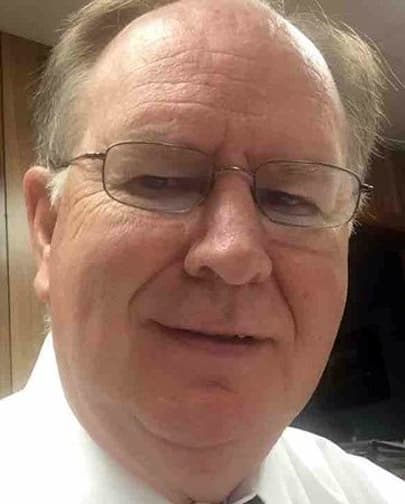
Winchester Native Pete Lackey to Be Honored With Illinois State Police Memorial Sign
Pete Lackey, a Winchester PE teacher turned undercover agent, was murdered in 1972 and his killer walked free. Now Illinois will put his name on a highway sign.
Pete Earl Lackey was 30 years old and heading east on U.S. Route 36 through Jacksonville to testify in a drug case when the defendant spotted him at a curve locals call Deadman's, rammed his car from behind, and slashed his throat with a knife. That was November 27, 1972. Fifty-four years later, Illinois announced it will put his name on a highway sign.
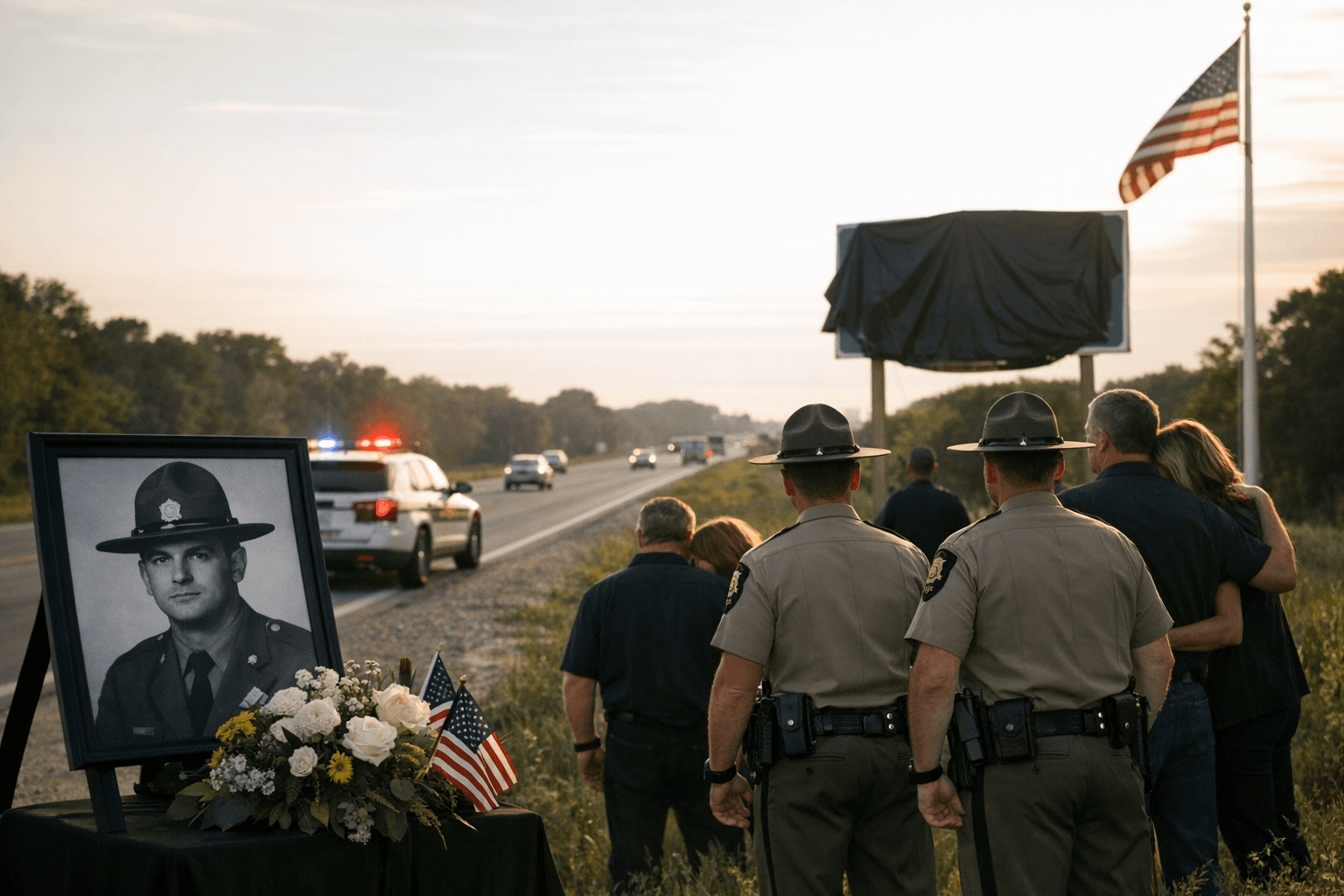
The sign honoring Lackey will be placed on Interstate 72 near New Berlin, Illinois. It is part of a statewide initiative announced on Illinois Trooper Day, April 1, 2026, also the 104th anniversary of the Illinois State Police founding, to erect uniform memorial signs for all 73 ISP officers killed in the line of duty.
Lackey had spent roughly two years with the Illinois Bureau of Investigation at the time of his murder, working undercover narcotics operations alongside colleagues including Philip Kocis, who would later rise to Commander of the Illinois State Police. A former physical education teacher and coach at Winchester High School, he holds the grim distinction of being the first IBI officer ever murdered while on duty and was one of only two Illinois State Police officers to die in the line of duty in all of 1972.
On the morning of his death, Lackey was en route to Springfield to testify against Barron Dean Fonner, a 26-year-old from rural Jerseyville who was the defendant in a drug case Lackey had helped build. Fonner recognized Lackey's vehicle on that stretch of U.S. Route 36 east of Jacksonville, forced him to the shoulder by ramming his car, then attacked and killed him with a knife at approximately 7:30 a.m.
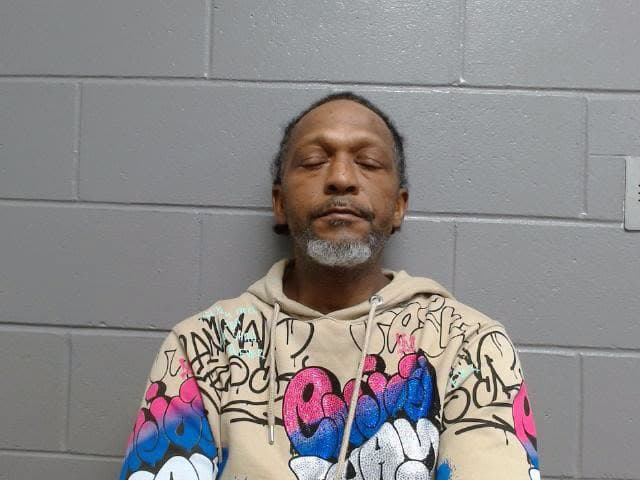
Fonner stood trial for the murder in Decatur. A jury acquitted him on a self-defense claim. Years later, he admitted to killing Lackey while under the influence of narcotics and reportedly bragged about it. More than 15 years after the murder, he mailed death threats to Philip Kocis, who had worked undercover narcotics cases with Lackey in 1972 and testified at Fonner's trial. Fonner ultimately died in prison.
The sign on I-72 near New Berlin will not be Lackey's first public recognition. State Rep. C.D. Davidsmeyer (R-Murrayville) previously sponsored a House Joint Resolution to rename a portion of Old U.S. Route 36, the very stretch where Lackey was killed, in his honor. The Illinois House adopted the resolution unanimously, 114 to 0.
The 2026 program is a joint effort among the Illinois State Police, the Illinois Department of Transportation, the Illinois Tollway, and the Illinois State Police Heritage Foundation. It will replace the patchwork of varied memorial signs installed under earlier efforts with a standardized, uniform design, ensuring equal recognition for all 73 fallen officers. ISP Director Brendan F. Kelly acknowledged that prior efforts had left gaps and said the new initiative corrects that. Governor JB Pritzker publicly backed the program.
Illinois lawmakers first began passing resolutions to designate highway stretches for fallen troopers in 2011; the first known sign under that effort honored Trooper Lory Price on State Highway 13. The first ISP officer ever killed in the line of duty was Trooper Albert J. Hasson, struck by a vehicle on old Route 66 north of Chenoa in 1924. Installations for all 73 officers are expected to be completed over the coming months across Illinois highways and the Tollway system.
Fonner walked out of that Decatur courtroom a free man, and no subsequent admission ever changed that verdict. The sign on I-72 won't change it either, but it will mark the road with Lackey's name in a way the courts never did.
This article was produced by Prism’s automated news system from verified source data, official records, and press releases, then run through automated quality and moderation checks before publishing. The system is built and supervised by the people who set the standards it runs under. Read our full AI policy.
Did this article answer your question?