Buckingham County Brush Fire Along Woodland Church Road Draws Multi-Agency Response
Just before 1:20 p.m. Wednesday, Toga Volunteer Fire Department and multiple agencies spent hours battling a large brush fire along Woodland Church Road in Buckingham County.
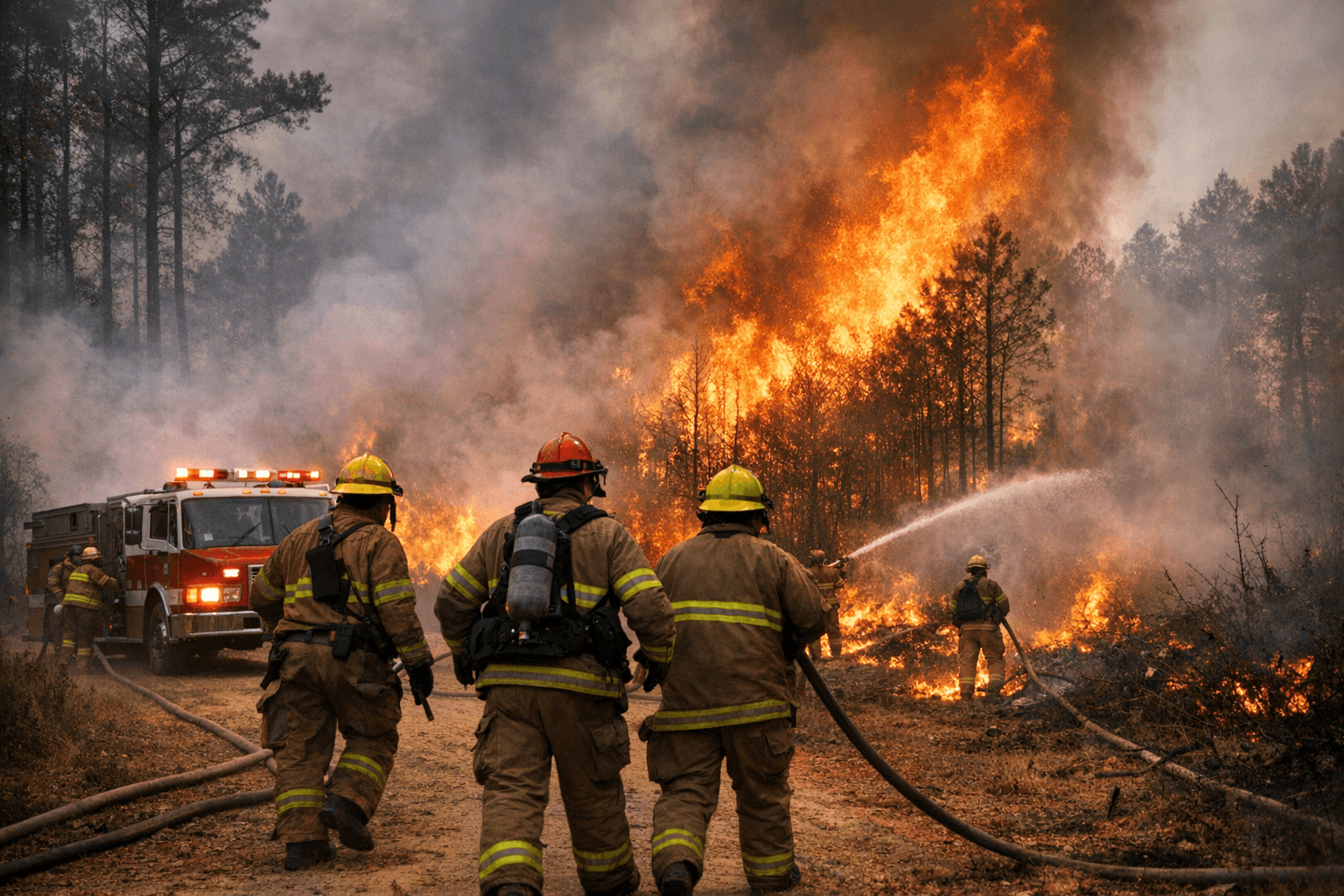
The call came in just before 1:20 p.m. Wednesday, and by the time it was over, crews from the Toga Volunteer Fire Department and units from several other agencies had spent hours fighting a large brush fire along Woodland Church Road in Buckingham County, Virginia.
Toga VFD served as the primary responding unit, with mutual aid drawn from multiple surrounding agencies to match the scale of the blaze. The extent of the fire was significant enough to demand the kind of coordinated multi-agency operation that strains the county's volunteer-based fire system, where rural terrain covered in forest and brush can push a fire well beyond what a single department can handle alone.
It is not the first time Buckingham County has seen this level of mobilization. On June 27, 2021, a two-to-three acre brush fire just south of Shelton Store Road near Union Hill pulled every volunteer fire department in the county to the scene simultaneously. Officials never determined the cause of that fire. The repetition of large-scale brush fire events in the county reflects a persistent vulnerability: sparsely populated rural counties like Buckingham depend almost entirely on volunteer departments for wildland fire suppression, and when a blaze spreads, mutual aid requests multiply fast.
The Woodland Church Road fire comes against a broader national backdrop of escalating wildfire activity. On Alaska's North Slope Borough, the largest county-level political subdivision in the United States by area, covering more land than the entire state of Utah, the 2025 tundra fire season produced the region's biggest wildfire in eight years. The Ikpikpuk Fire, a lightning-sparked blaze named for the 195-mile river flowing north into the Arctic Ocean, burned approximately 2,000 acres of Arctic tundra. A second fire, the Bronx Fire, burned approximately 618 acres on the North Slope during the same season.
Alaska's 2025 wildfire season consumed an estimated 1.68 million acres statewide, roughly double the 10-year average. By June 20, 2025, approximately 312,000 acres had already burned, well above the state's five-year spring average. For Fairbanks-area residents, 2025 marked the fourth consecutive summer with at least 100 hours of smoky skies. Alaska wildfire managers described the North Slope tundra fires as scientifically significant but low operational priority given how widespread fire activity had become across the state. "We've got a lot going on throughout the state," one Alaska wildfire official said.
The North Slope Borough Fire Department serves roughly 10,705 residents scattered across a remote expanse governed from Utqiaġvik, the northernmost settlement in the United States, operating nine fire stations to cover territory most lower-48 residents cannot picture at scale. The Wednesday fire in Buckingham County and the North Slope's 2025 tundra season share the same underlying pressure: communities relying on limited local resources to hold a line against fires that increasingly refuse to stay small.
Sources:
Know something we missed? Have a correction or additional information?
Submit a Tip