Decades of gasline promises return to North Slope debate
North Slope gasline politics are back, but the real test is whether this version has financing, buyers and tax math that can survive scrutiny.
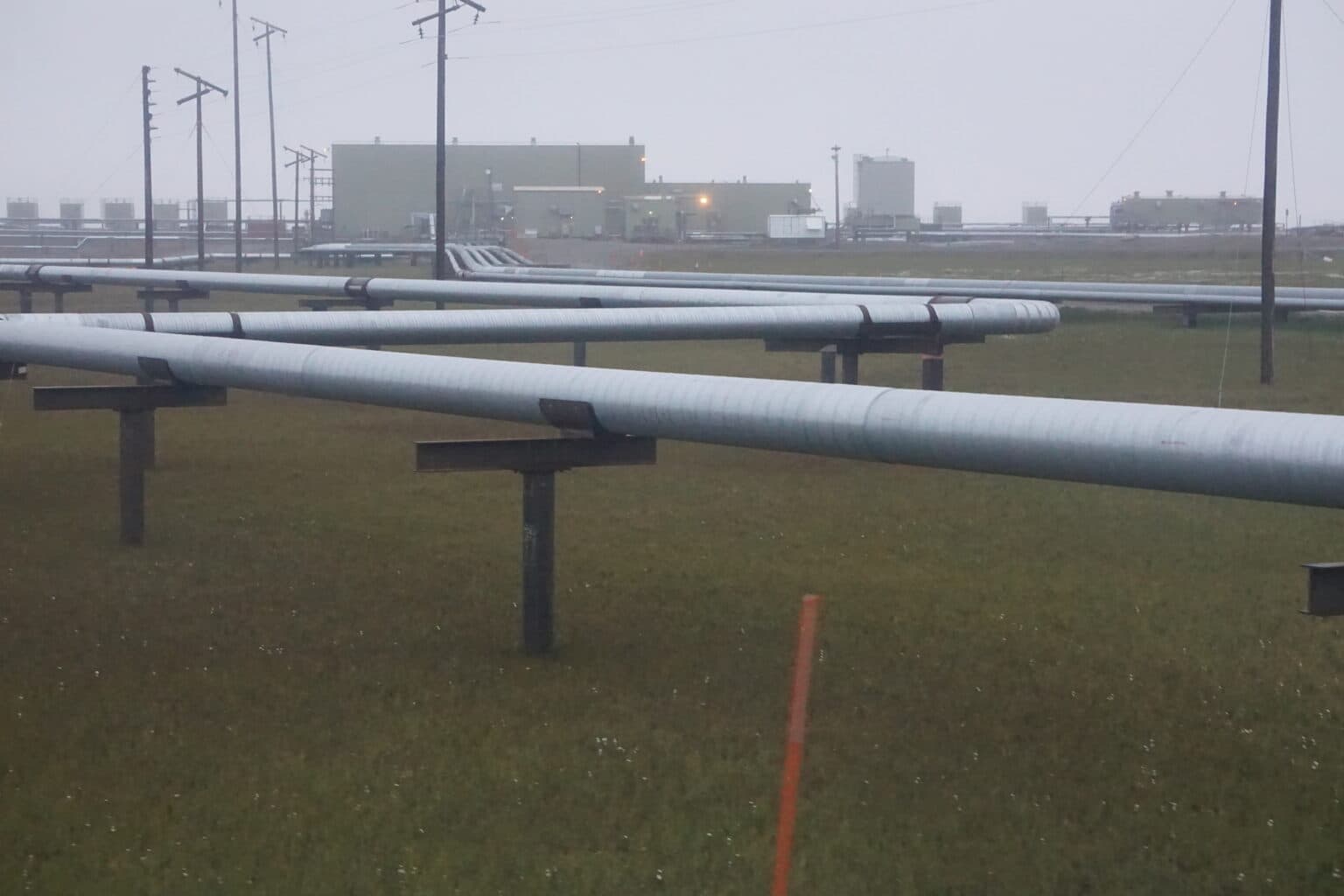
The latest Alaska LNG push is being sold as a fresh chance, but for Utqiagvik and Prudhoe Bay it is also a familiar test: does this proposal finally look bankable, or is it another round of promises layered over stranded gas? The stakes are immediate for North Slope communities because the debate is not only about statewide energy policy, it is about borough revenue, local jobs, future infrastructure and whether the gas under the tundra ever reaches a market.
Why this debate keeps returning
North Slope gas has been a political problem for generations because the oilfields produce large volumes of natural gas alongside crude, yet the gas has usually been reinjected underground rather than shipped out. The reason is simple and stubborn: there has never been a consistently economic way to move that gas to major markets from Prudhoe Bay and the other North Slope fields.
That reality was already clear more than four decades ago. In 1981, the University of Alaska Geophysical Institute reported that about 900 cubic feet of gas comes out with each barrel of Prudhoe oil, and that about 1 billion cubic feet of natural gas was being pumped back into the ground each day at Prudhoe Bay. Those numbers explain why the gasline argument never really disappears. As long as the gas stays stranded, the project keeps coming back in a new political form.
The federal government has revisited the idea many times. Congress considered North Slope pipeline concepts in 1973 and 1974 through H.R. 9414, then President Jimmy Carter made the issue a national priority in the late 1970s. Carter formally reorganized federal oversight of the Alaska Natural Gas Transportation System in Executive Order 12142, dated June 21, 1979, showing how seriously Washington once treated the prospect of moving North Slope gas south.
A proposal that has changed shape, not disappeared
The current Alaska LNG concept is described in recent reporting as an 800-mile or 807-mile pipeline from the North Slope to Cook Inlet. That is a massive piece of infrastructure, and its scale is part of why lawmakers want more than optimism before they sign off on tax concessions or state support.
This round of the debate is tied to Governor Mike Dunleavy’s effort to reshape the project’s tax treatment. On March 20, 2026, he transmitted legislation to replace the Alaska LNG project’s property-tax structure with a volumetric tax based on gas flowing through the system rather than on assessed value. The bill was described as starting at $0.06 per thousand cubic feet at full operations and increasing 1 percent annually.
That proposal moved quickly through the Alaska House, which passed it on June 12, 2026, while the Senate still had to act as the special session neared its close on June 19. Dunleavy’s office has framed the bill as a necessary step toward making the line happen, but lawmakers remain unconvinced that the current version has enough hard numbers behind it. State legislators have said Glenfarne has not released an updated project cost estimate or a gas-price forecast, leaving a major hole in the public case for the project.
The cost itself is enormous. The public estimate cited in Alaska media is about $46.2 billion, a figure that helps explain why financing, subsidies and tax treatment now sit at the center of the discussion. Glenfarne has also proposed capping gas prices for Alaskans if the tax deal advances, but that promise does not answer the deeper question of who will pay for the line, who will buy the gas and at what long-term price.
What is different now, and what is not
The strongest argument for treating this round seriously is that it is not just a general idea. It has a named developer in Glenfarne, a concrete route to Cook Inlet, and a tax bill that would change the revenue model for the project. It also has a narrow political window, with the Legislature weighing whether to grant the tax relief that supporters say is necessary to move forward.
But the unanswered questions are still large enough to matter. Earlier export ideas already showed that North Slope gas can be imagined in commercial terms, including the 1989 U.S. Department of Energy authorization for Yukon Pacific to export North Slope LNG to Japan, South Korea and Taiwan. Yukon Pacific had been exploring a trans-Alaska pipeline and LNG terminal since 1982 to serve Pacific Rim buyers, which means Alaska has seen export ambition before without seeing the project fully delivered.
That history matters because the current proposal still has to prove the basics that make a project real. It needs financing. It needs customers. It needs a tax structure that investors can live with and a public case that residents can trust. Without those pieces, the line risks becoming another chapter in a very long pattern of near-misses.
Why North Slope Borough residents are watching the tax bill so closely
The local fight is not abstract, especially in the North Slope Borough, which had an estimated population of 10,582 as of July 1, 2025. Borough leaders have warned that Dunleavy’s tax proposal could sharply reduce municipal revenue, and one estimate reported in Alaska Beacon said the borough could collect about $12 billion less under the plan than under current law.
The Alaska Department of Revenue has gone further, saying the change could amount to roughly a 90 percent reduction in property-tax revenue once the pipeline reaches full capacity. For a borough that relies on that revenue base to support local government and services across a vast Arctic region, that is not a technical detail. It is the central question.
Five Alaska mayors testified in support of the pipeline on March 31, 2026, but they also warned about municipal revenue losses. That split captures the broader tension around this project: communities want the jobs, infrastructure and energy opportunity that a gasline could bring, but they do not want to trade away the fiscal foundation that keeps borough government functioning.
Rep. Robyn Niayuq Frier of Utqiagvik has also raised concerns about the tax switch and about lowballing the cost. Her criticism reflects a wider concern on the North Slope, where residents have heard many versions of the same promise over the years and know that a project can sound close long before it is actually built.
What to watch next
The accountability test now is straightforward. If this proposal is different from the North Slope efforts that died before, it should be able to show its financing, identify its buyers, explain its tax structure and release a credible cost and price forecast. If it cannot, residents in Utqiagvik, Prudhoe Bay and across the borough have every reason to treat it as another speculative round in a very old debate.
Until those pieces are real, the gasline remains what it has been for decades: a reminder that North Slope gas is still waiting for a route to market, and that the people living closest to it are the ones most likely to pay the price if the numbers do not hold.
This article was produced by Prism’s automated news system from verified source data, official records, and press releases, then run through automated quality and moderation checks before publishing. The system is built and supervised by the people who set the standards it runs under. Read our full AI policy.
Did this article answer your question?