Legislature backs North Slope gas pipeline, urges federal help
Lawmakers revived Alaska LNG with HJR 18, but North Slope readers still face the same question: when do permits, financing and construction actually follow?
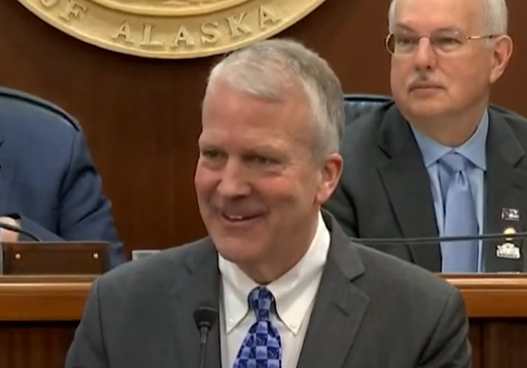
For North Slope communities, the test is not whether lawmakers can endorse a gas line, but whether that endorsement changes anything on the ground for Prudhoe Bay, borough revenues, jobs or energy costs. House Joint Resolution 18, which the House concurred in on May 20, does not authorize construction, but it does add fresh political pressure behind a project that would move North Slope gas through Alaska and, if it ever clears the remaining hurdles, to Nikiski and global markets.
The resolution’s short title is “Urging Support for AKLNG,” and its sponsor list grew far beyond Rep. Mia Costello and Sen. George Rauscher to include a broad bipartisan bloc from both chambers. It asked for faster action on the gas project and for federal help to move it forward, then directed copies to President Donald Trump, Interior Secretary Douglas Burgum, Energy Secretary Chris Wright and Alaska’s congressional delegation. Gov. Mike Dunleavy called the Legislature into a second special session beginning May 21, the same day the resolution was highlighted publicly.

That timing matters because Alaska LNG remains a large, unresolved infrastructure bet. Alaska Gasline Development Corporation says the project would carry North Slope gas through the center of the state to a liquefaction facility in Nikiski, with Prudhoe Bay and Point Thomson anchoring the resource base. Project materials describe Phase One as a 739-mile, 42-inch pipeline, with Phase Two adding LNG export infrastructure and bringing the total pipeline length to 807 miles. The backbone line is described as having a daily capacity of about 3.3 billion cubic feet.

For the North Slope Borough, the practical question is whether that scale translates into taxable infrastructure, contractor work and steady employment. Federal permitting documents filed in 2025 said the project is intended to commercialize North Slope gas that has been stranded for nearly 50 years. If the project advances, it could reshape the value of industrial assets in the borough and affect how local government plans for revenue over the long term. But the state’s own tax debate shows the risk as well as the promise: Alaska Beacon reported in March that Dunleavy’s proposed property-tax break could cut pipeline tax revenue by roughly 90% once the line is at full capacity, a direct concern for the North Slope Borough, the Matanuska-Susitna Borough and the Kenai Peninsula Borough.

The broader policy pitch extends beyond exports. HJR 18 also calls for a spur line to Fairbanks and propane infrastructure for communities along the Yukon River, tying North Slope production to in-state heating and cooking needs as well as overseas buyers. The Fairbanks North Star Borough has already backed a North Slope pipeline with a Fairbanks connector, and a separate legislative document says AGDC stopped work on an in-state pipeline in 2019. Current project timelines place in-state gas deliveries in 2029 and foreign export capability in 2031, but HJR 18 still leaves the same central uncertainty in place: political momentum is not yet the same thing as a financed, permitted pipeline.
This article was produced by Prism’s automated news system from verified source data, official records, and press releases, then run through automated quality and moderation checks before publishing. The system is built and supervised by the people who set the standards it runs under. Read our full AI policy.
Did this article answer your question?