Montis weather cameras offer cheaper remote forecasting for North Slope users
Montis is betting that a $25,000 camera-and-sensor setup can give North Slope pilots and responders better weather visibility than waiting on a $2 million FAA installation.
A cheaper view of the weather
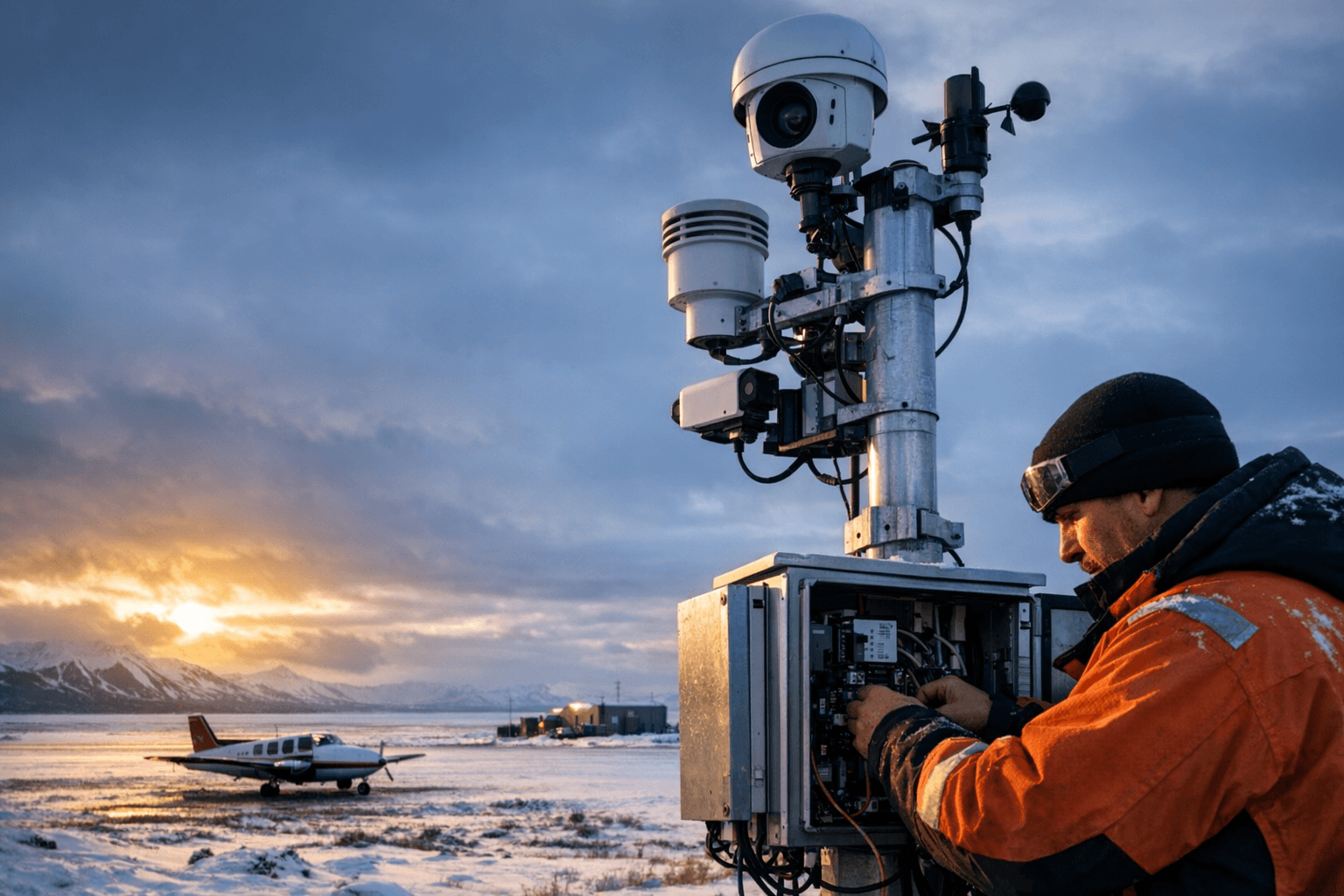
Walter Combs and Montis Corporation are pitching a simple idea with big Arctic stakes: if a community can see the weather clearly enough to make flight decisions, it may not need to wait for a multimillion-dollar airport system. Montis says its weather observation system, or MWOS, can be installed for about $25,000, far below the cost of a traditional FAA setup, and it gives users a live camera view alongside weather data in one place.
That matters in the North Slope Borough, where aviation is not a convenience but the backbone of daily life. When visibility drops over places like Kaktovik and Barter Island, the difference between a clean departure window and a delayed one can affect medevac flights, search and rescue, freight runs and the small but vital supply chains that keep isolated communities moving.
What Montis is offering
MWOS combines 360-degree camera images, weather sensor data, ADS-B tracking data and analytics. In practical terms, that means a pilot, dispatcher or field operator can pan, tilt and zoom the camera while checking the weather data at the same time. Montis also says customers can choose whether a feed is public or private, which gives a borough, airline or road operator room to control who sees local conditions.
The company says the system debuted in Alaska in 2024, with the first installation in Rampart. Since then, Montis says it has grown to about 15 locations in Alaska and several more in the Lower 48, with a goal of reaching 100 by the end of 2026. That scale is still modest compared with federal networks, but it is enough to make the system a live operational tool rather than a one-off experiment.
Why the North Slope Borough bought in
The North Slope Borough’s purchase gives Montis something especially valuable: a side-by-side comparison tool in one of the hardest operating environments in the state. In Kaktovik, the system showed blustery weather and low visibility, the kind of conditions that can ground flights or force crews to rethink a route in real time.
That is not a trivial upgrade for a borough whose flight division says it provides critical-care air ambulance and basic life support services across the North Slope. The borough’s search-and-rescue mission is built around rapid airborne response to medical evacuation, search and rescue missions and other emergency situations, so every additional layer of weather awareness has operational value when the next flight window is narrow and the weather can turn fast.
How it compares with FAA-grade systems
Combs has been blunt about the price gap. He said FAA-owned Automated Weather Observing System installations can cost up to $2 million, and if one goes offline it can remain out of service for weeks or months. That is a serious weakness in a region where a missing weather readout can be as damaging as bad weather itself.
Montis is not replacing the FAA network, and it should not be treated as the same kind of certified infrastructure. The Federal Aviation Administration says its weather camera program has been operating for more than a quarter century, with hundreds of camera sites across Alaska, the continental United States and Hawaii, and images updated every 10 minutes. The FAA also says those cameras provide near-real-time visual weather information to pilots, dispatchers, Flight Service Specialists and National Weather Service forecasters.
The question for North Slope users is not whether cameras are useful. It is whether a lower-cost system can deliver enough reliability, visibility and redundancy to fill the gaps that expensive FAA-grade installations leave behind. In a place where a technician may not be able to get in quickly, the failure mode matters as much as the purchase price.
Who is most likely to buy it
The likely buyers are the users who feel weather risk most directly and do not need a full federal installation to justify the spend. That includes borough governments, regional carriers, medevac operators, village airports, road crews and other remote infrastructure managers trying to reduce delays and uncertainty without waiting on a major capital project.
Montis already has users beyond the North Slope, including Warbelow’s Air, and the company says it has more than 8,000 registered users on its VisRoute site. That suggests the market is not limited to airport managers alone. Anyone responsible for a landing strip, an air taxi route, a vertiport or a remote road corridor could find value in a camera that shows what the weather is doing right now instead of relying only on a forecast that may already be stale.
The policy and infrastructure backdrop
The broader Alaska picture helps explain why a cheaper system is getting attention. In August 2025, state officials said the FAA would install 174 additional weather observer systems in Alaska, and radio and state reports said the state has about 160 aviation-specific weather stations. Those numbers point to an obvious problem: even with new federal spending, the network is still thin relative to Alaska’s size, remoteness and aviation dependence.
That is where a system like MWOS can fit. It is not a substitute for every instrumented weather station, but it may be a practical layer of coverage for places that sit outside the strongest federal footprint. In a borough where aircraft connect villages, clinics, fuel deliveries and emergency response, even a modestly priced camera tower can have an outsized effect if it keeps one flight moving or helps one crew decide not to launch into a worsening system.
What still has to be proven
The North Slope will also be the harshest test of whether this model works at scale. A camera-and-sensor package still has to survive ice, wind, power interruptions, communication outages and months when maintenance access is limited. It also has to stay useful when blowing snow or low cloud cover reduces visibility to nearly nothing, because that is exactly when local operators need the best possible read on conditions.
That makes the real comparison not just price, but durability and trust. If MWOS can keep delivering usable information in places like Kaktovik and Rampart, it could become a valuable middle ground between expensive FAA hardware and the patchy weather awareness that remote Alaska has too often lived with.
Sources:
Know something we missed? Have a correction or additional information?
Submit a Tip