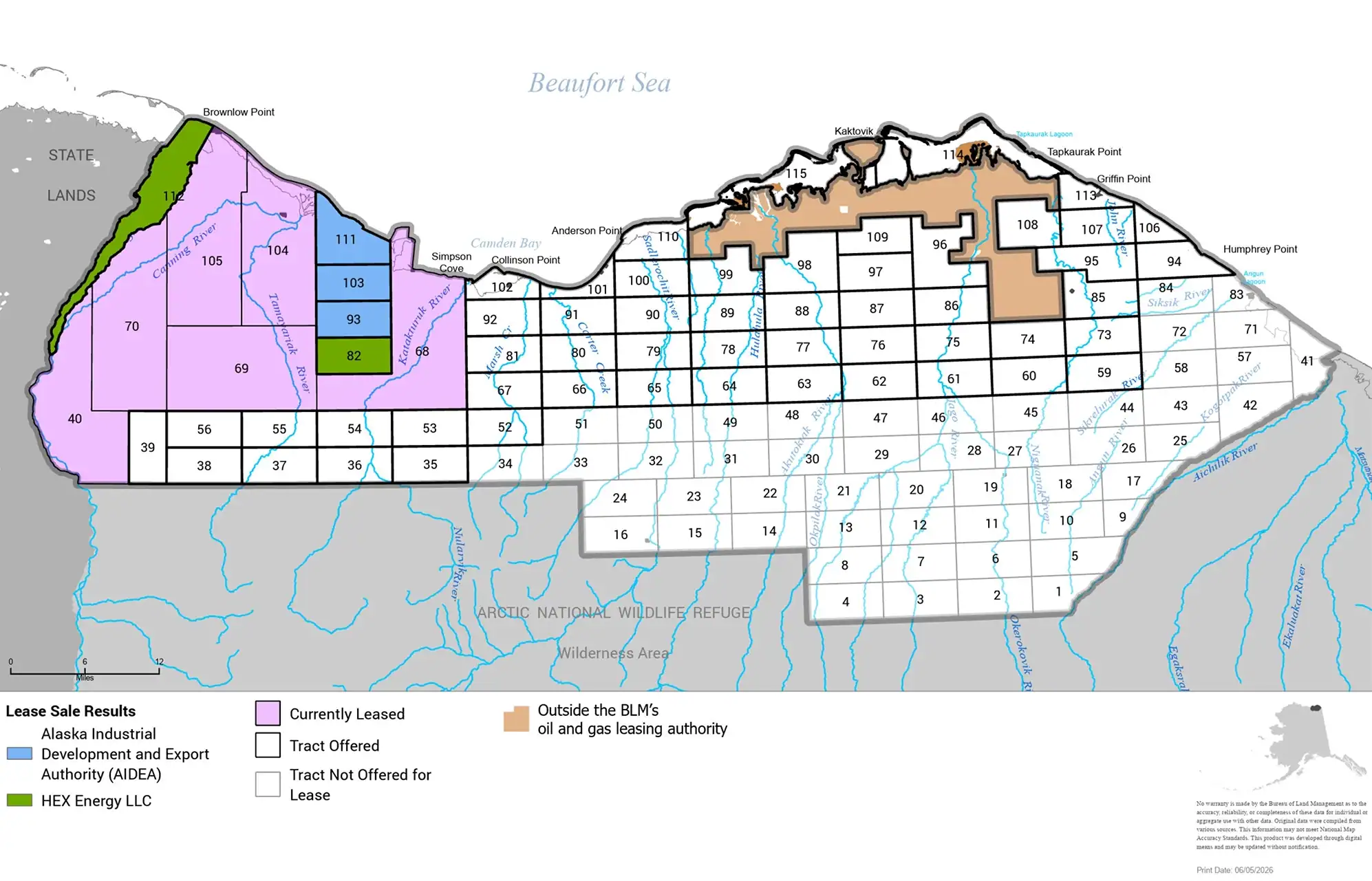
North Slope oil output projected to rise with Pikka, Willow projects
North Slope oil could top 650,000 barrels a day by the early 2030s, but the surge from Pikka and Willow is expected to crest and then fade.

North Slope oil output could climb to about 650,000 barrels a day by the early 2030s as Santos’ Pikka and ConocoPhillips’ Willow projects come online, a rebound that could bring more borough revenue, more jobs and more strain on local systems before decline resumes.
That matters because the North Slope is still far below its historic high. Production peaked in 1988 at more than 2 million barrels a day, and Prudhoe Bay, discovered on March 12, 1968, has long been the anchor field for Alaska revenues and employment. BP says Prudhoe Bay has supported more than 16,000 Alaska jobs and that the state has earned $141 billion from North Slope production and development over four decades.
Pikka is expected to lead the next wave. Santos says Pikka Phase 1 includes a single drill site, an oil processing facility and other infrastructure designed to support 80,000 barrels of oil a day. The company took final investment decision in August 2022, and legislative materials say first oil is planned for the first half of 2026. Those same materials describe Pikka as a core position on state land, a project meant to maximize revenues for Alaska and local stakeholders.
Willow adds an even bigger step-up. ConocoPhillips says the project, in the National Petroleum Reserve in Alaska on the North Slope, is estimated to produce 180,000 barrels a day at peak. The company has said Willow could generate $8 billion to $17 billion in new revenue for the federal government, the state of Alaska and North Slope Borough communities. For borough leaders in places such as Utqiaġvik, Nuiqsut and the roads and camps that support the industry, that kind of money can mean stronger tax bases, more contract work and more pressure on housing, roads, air service and public facilities.
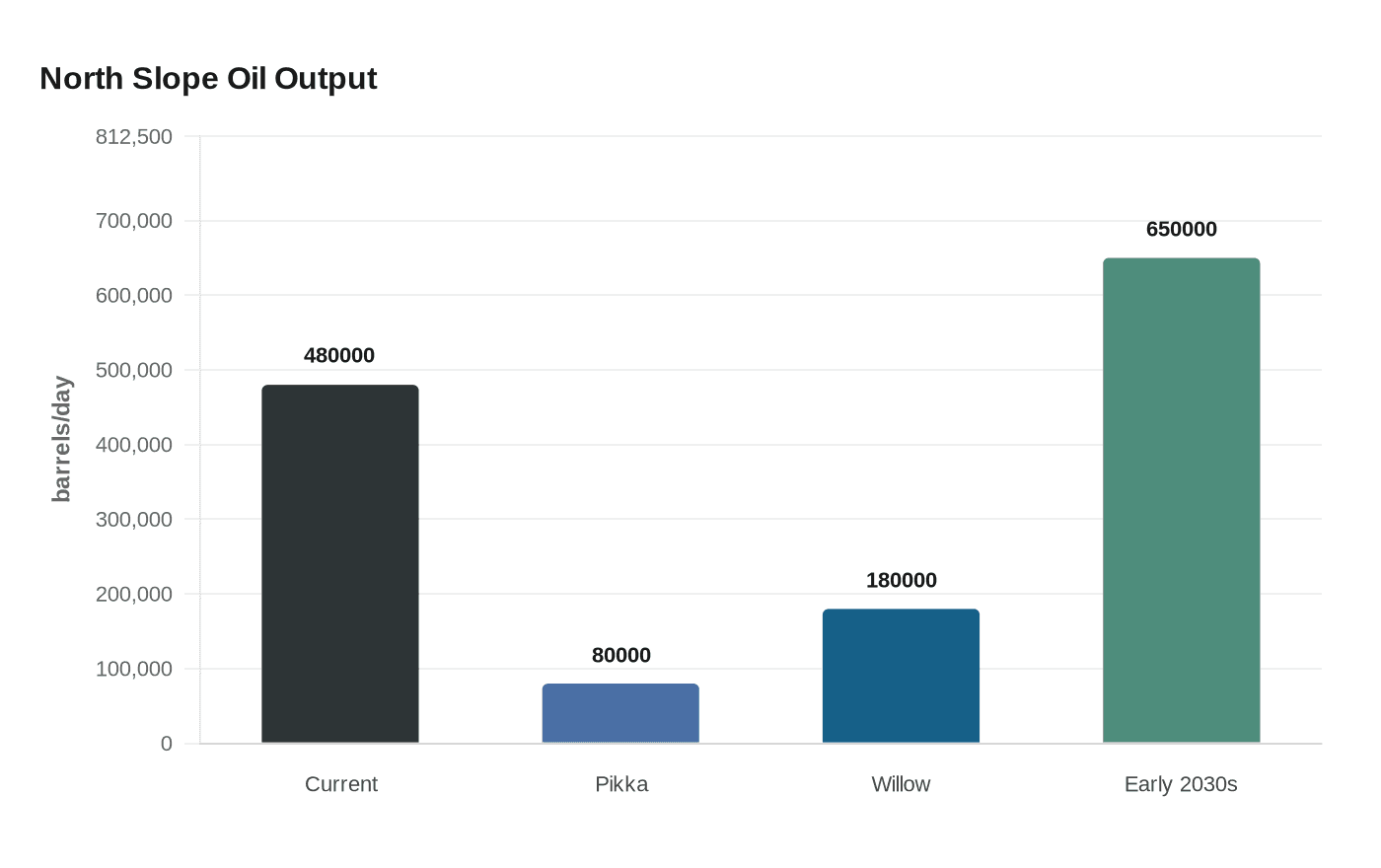
The Alaska Department of Natural Resources’ Fall 2025 forecast, presented to the Alaska Senate Finance Committee, projected near-term gains from new North Slope projects and a long-term outlook topping 650,000 barrels a day by the early 2030s. One report places current production at around 480,000 barrels a day, which means the coming jump would be substantial but not permanent.
That is the key point for local planning. Pikka and Willow could help push North Slope output higher for a few years and extend the region’s oil economy, but the production curve is still expected to bend downward again after the peak. For a borough that depends on oil for jobs, revenue and infrastructure support, the question is not whether the rebound comes. It is how long it lasts, and how much of the upside can be converted into durable community gains before the next decline begins.
This article was produced by Prism’s automated news system from verified source data, official records, and press releases, then run through automated quality and moderation checks before publishing. The system is built and supervised by the people who set the standards it runs under. Read our full AI policy.
Did this article answer your question?