Whistler Blackcomb Owner Faces Class Action Suit Over Ski Pass Pricing
A class-action antitrust lawsuit filed against Vail Resorts, owner of Whistler Blackcomb, claims the Epic Pass pricing model forces skiers into a near-$1,100 bundle or face day tickets topping $350.
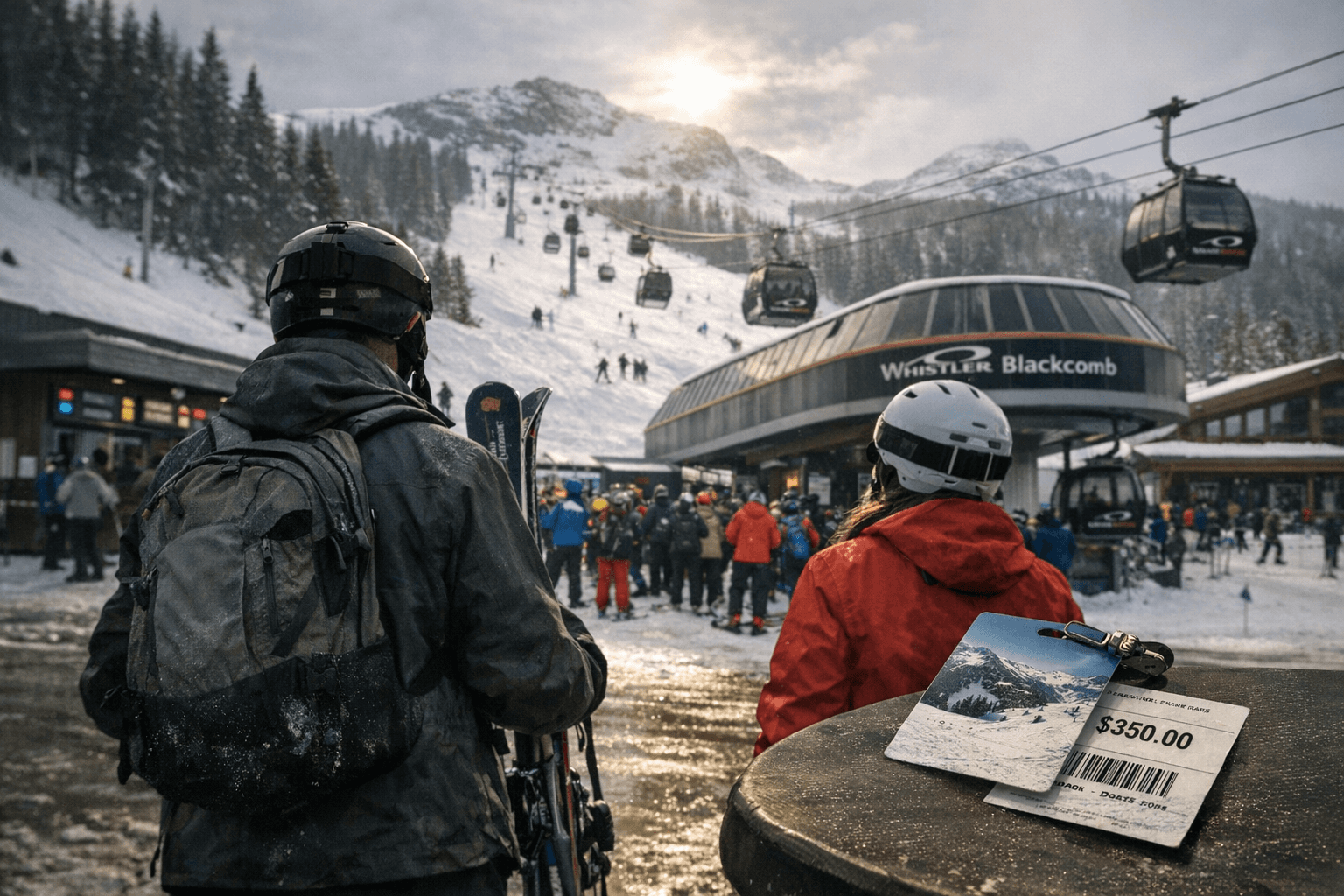
Vail Resorts, the Colorado-based company that owns Whistler Blackcomb, was named as a defendant in a federal antitrust class-action lawsuit filed March 23 in U.S. District Court in Colorado, alleging that its Epic Pass system and a parallel product from rival Alterra Mountain Company have created an illegal duopoly that has driven up ski costs across North America.
The case, known as Goloja v. Vail Resorts Inc., was filed March 23 in U.S. District Court in Colorado and targets both companies' flagship pass products. The lawsuit was filed on behalf of plaintiffs Landin Goloja, Tyler Maybee, Caitlan Reynolds, Daniel Sheiner, and "all others similarly situated."
The class-action complaint alleges the companies have used their flagship Epic and Ikon passes to coerce consumers into bundled purchases while inflating single-day lift ticket prices. The lawsuit claims Vail and Alterra use their Epic and Ikon passes to effectively control access to must-ski destinations like Park City, Deer Valley, Whistler Blackcomb, and Mammoth Mountain. By bundling these marquee resorts with smaller regional hills, the companies are allegedly forcing consumers to buy access to resorts they may not want.
The price gap between passes and day tickets sits at the center of the complaint. A single-day adult lift ticket at Whistler Blackcomb purchased day-of ranges from $305 to $351 USD, depending on the day of the week and part of the season. The Epic Pass costs $1,089 for adults 31 and over, $869 for anyone between 13 and 30 years old, and $555 for children aged 5 to 12. The lawsuit also alleges the companies have deliberately made day lift tickets prohibitively expensive to push skiers towards the multi-resort passes, locking them into one ecosystem.
As of 2026, Vail operates 42 ski areas and has partnerships with about 30 more, while Alterra operates 18 and partners with roughly 70 others, according to the filing. "For years, skiers have been told that soaring lift-ticket prices, reduced choice, and overcrowding are simply the new reality," said Greg Asciolla, chair of DiCello Levitt's antitrust and competition litigation practice. "Our complaint alleges that these outcomes are not the result of healthy competition, but of exclusionary conduct by two companies that dominate access to the most desirable destinations."
Vail pushed back on the core allegations. The company said the Epic Pass has brought the price of skiing down, noting that the price of the pass today is about 40% cheaper in 2026 than a pass to only Vail and Beaver Creek was in 2008, before the creation of the pass. Vail Resorts CEO Rob Katz also denied in a recent interview that crowding has gotten worse, saying ski areas have upgraded their infrastructure as the sport becomes more accessible and grows in popularity.
The stakes extend well beyond pass holders. Season pass holders comprised about 49% of visits to U.S. ski resorts in the 2024 to 2025 ski season, while day-lift tickets made up only 32% of all trips. If successful, the case could force major changes to how ski resorts partner, bundle access, and price skiing across North America.
Sources:
Know something we missed? Have a correction or additional information?
Submit a Tip