Amargosa Valley Advocates Seek National Conservation Area Status for Ash Meadows
Amargosa Valley's town board unanimously backed an Ash Meadows National Conservation Area, a congressional designation that could reshape land use as Greenlink West towers rise nearby.
When the Amargosa Valley Town Board voted unanimously on March 26 to formally demand a National Conservation Area around Ash Meadows, board chair Carolyn Allen made the stakes plain: water, wildlife, and the long-term character of a community that has watched mining proposals, solar farms, and now a major transmission line move toward its doorstep.
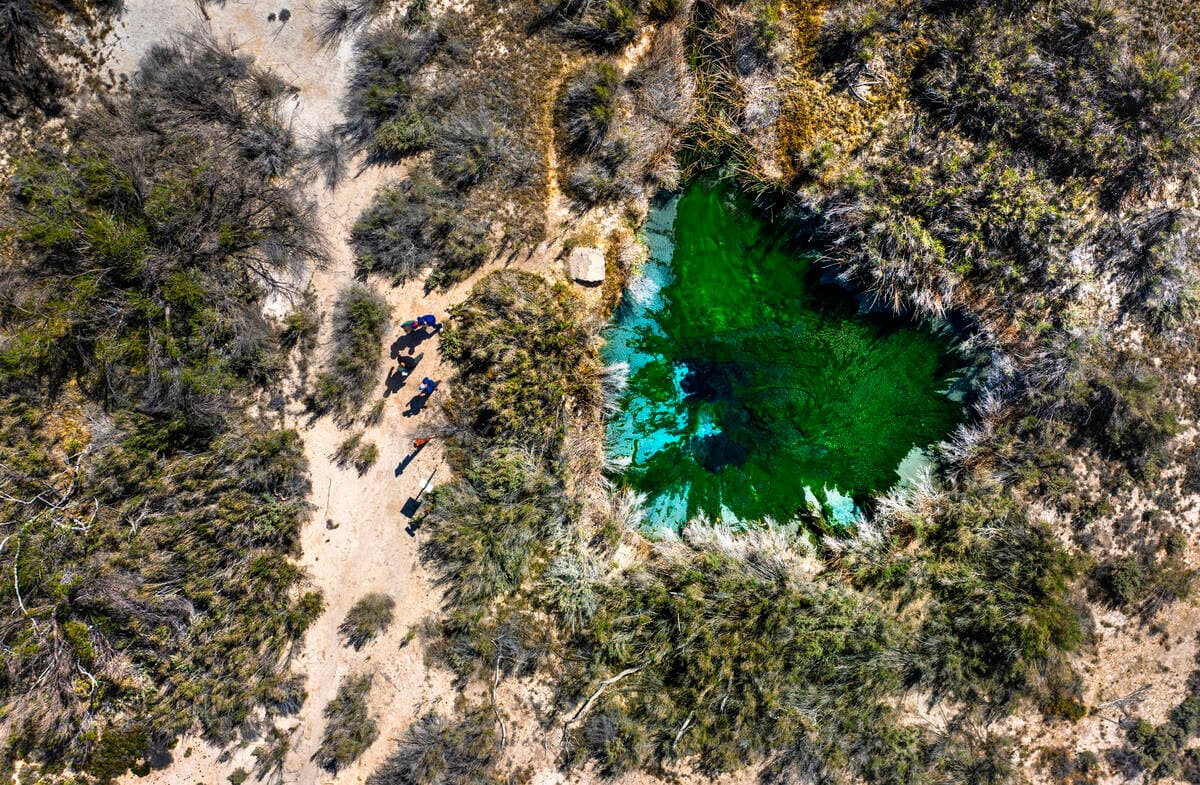
The resolution calls on Congress to establish the Ash Meadows NCA, a federal designation that neither the Bureau of Land Management nor an executive order can grant or revoke on its own. An act of Congress is required, giving the designation a durability that refuge managers and local advocates argue the area's ecology demands. Ash Meadows National Wildlife Refuge, the heart of the proposed NCA, holds a complex of 30 perennial springs and more than 24,000 acres of desert wetlands in one of the driest corners of North America. At least 25 endemic species live there and nowhere else on Earth; 12 are listed as threatened or endangered under the Endangered Species Act. The refuge is also a RAMSAR Wetland of International Importance, a status shared by only four sites in the United States.
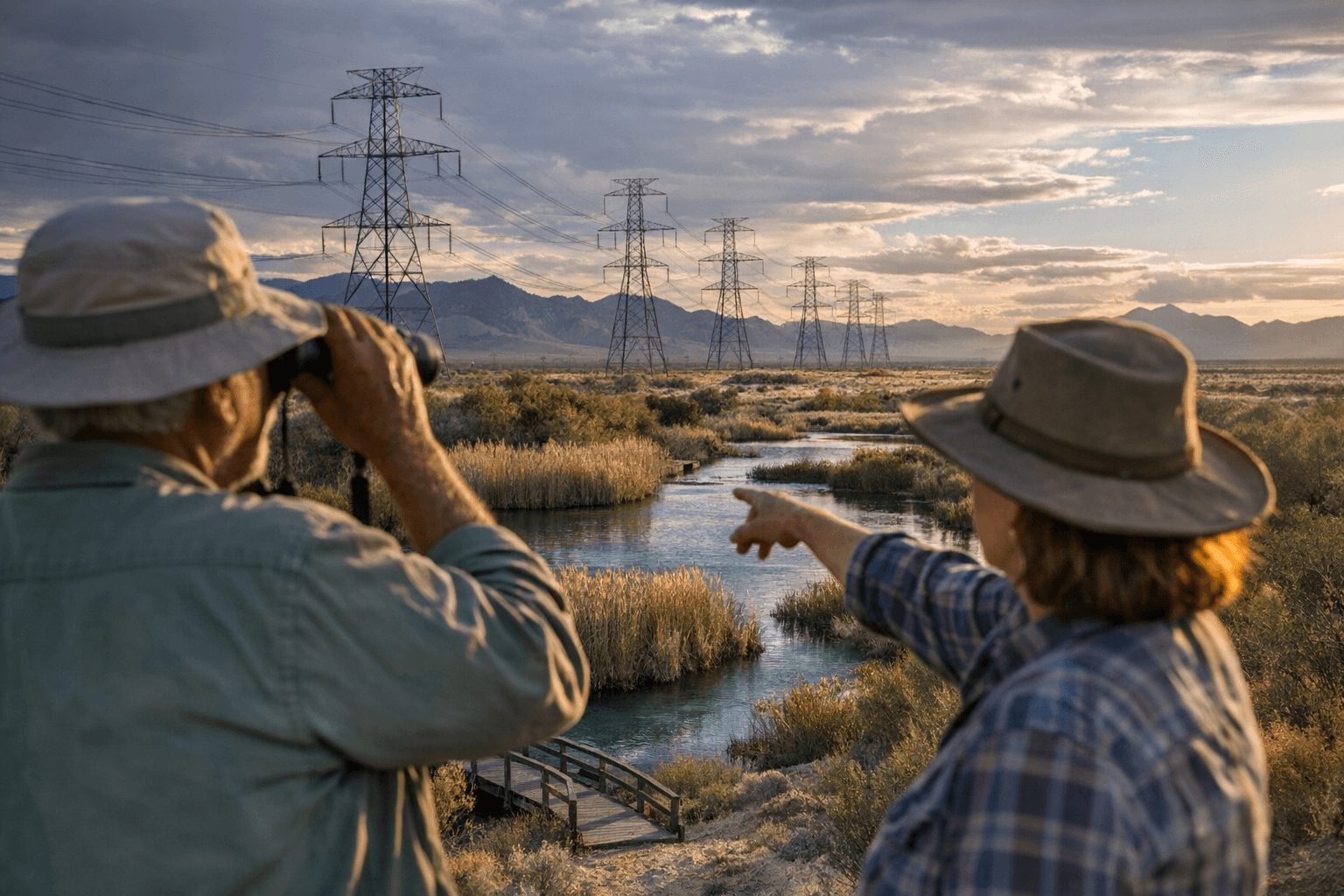
Mason Voehl, executive director of the Amargosa Conservancy, walked the Rock Valley Wash last Wednesday alongside Allen and longtime Amargosa Valley resident Sherry Oettinger, 70, to illustrate how close Greenlink West infrastructure now sits to refuge boundaries. A Greenlink sign marking a tortoise exclusion zone is visible from the wash. Construction on NV Energy's high-voltage transmission corridor is already underway in Amargosa Valley; the Sagebrush Substation broke ground earlier this year and helicopter crews have been stringing wire between towers along the corridor.
For Voehl, that proximity sharpens the urgency of a congressional fix. "With the amount of flux and chaos in our politics, I won't rule anything out," he said, acknowledging that routing a conservation campaign through Congress carries its own risks but yields protections that no single administration can dissolve.
An NCA designation would increase environmental review requirements for future large-scale development on surrounding BLM-managed land, affecting utility-scale solar proposals, new transmission rights-of-way, and well permits near the springs that sustain the refuge's hydrology. Grazing allotments, OHV access corridors, and commercial permitting within a designated boundary would all face heightened scrutiny under BLM's management mandates for National Conservation Lands.
The path forward runs through Nevada's congressional delegation. Proponents must persuade members to introduce or attach NCA legislation and move it through committee, a process that has taken years for comparable Nevada designations. The BLM could also conduct a formal suitability study, which would trigger a public comment period and give Amargosa Valley residents a structured opportunity to place their position on the record. No such study has been announced.
The Amargosa pupfish, visible darting through the clear water at Fairbanks Spring inside the refuge, has persisted in this basin for millennia. Whether it survives the next century of energy infrastructure and land pressure may depend on whether a unanimous resolution from a small southern Nye County town can move the United States Congress.
This article was produced by Prism’s automated news system from verified source data, official records, and press releases, then run through automated quality and moderation checks before publishing. The system is built and supervised by the people who set the standards it runs under. Read our full AI policy.
Did this article answer your question?