Ash Meadows Refuge Protects Rare Springs, Shapes Nye County Health
Ash Meadows National Wildlife Refuge in southern Nye County preserves spring fed wetlands and several endemic and endangered species, including the Devil's Hole pupfish, while operating visitor programs and strict protections to safeguard fragile habitat. The refuge’s rules and outreach influence local tourism, water stewardship, and public health, and raise questions about equitable access to outdoor space for rural and low income residents.
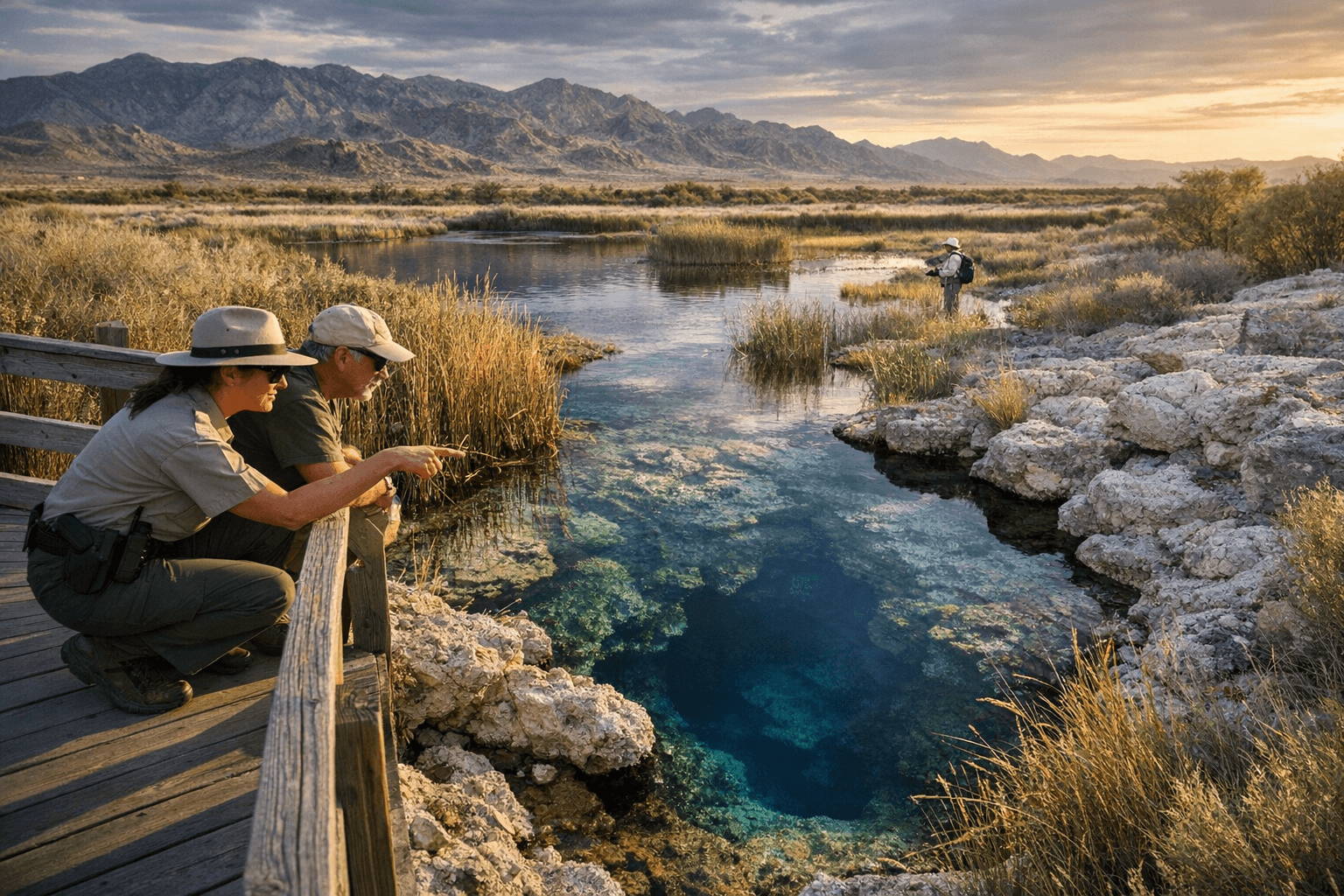
Ash Meadows National Wildlife Refuge, managed by the U.S. Fish and Wildlife Service as part of the Desert National Wildlife Refuge Complex, protects a cluster of spring fed wetlands in southern Nye County that are home to several endemic and endangered species. The refuge was designated to conserve fragile spring habitats, and its unique systems include pools and spring outflows that support species found nowhere else on Earth such as the Devil’s Hole pupfish.
To protect those resources the refuge enforces a set of visitor policies. Visitors are required to stay on boardwalks and designated roads to avoid trampling vegetation and disturbing spring substrates. Off road vehicles and drones are prohibited. Pets must be on leash. The refuge operates outreach and education programs including junior ranger style activities and provides contact information and visitor policies for those planning a trip. Officials advise checking the refuge webpage at fws.gov/refuge/ash-meadows/visit-us/rules-policies for current access, seasonal hours and rules before visiting.
For Nye County residents these protections matter beyond conservation. The springs and wetlands function as small scale natural infrastructure, contributing to groundwater-dependent ecosystems that local communities rely on for scenic, cultural and recreational benefits. Access to nearby natural places supports mental health and physical activity, and seasonal visitation brings economic benefits to rural businesses that serve visitors and outdoor learners.
At the same time access is uneven. Rural residents without reliable transportation, and households facing economic barriers, may find it difficult to reach remote public lands. Accessibility for people with limited mobility and outreach in languages other than English are ongoing concerns for equitable nature access. Public health and land management agencies share responsibility for ensuring that conservation measures do not unintentionally restrict safe and inclusive use of outdoor spaces.
Protecting Ash Meadows therefore intersects with local public health and policy questions. Maintaining trails and boardwalks, staffing visitor services for education and compliance, and coordinating groundwater monitoring are investments that support both species recovery and community wellbeing. Policymakers and agencies in Nye County can consider approaches that link refuge stewardship to broader health and equity goals, including transportation planning, school based outdoor education partnerships, and accessibility improvements.
The refuge remains a critical ecological and community asset for southern Nye County. Respecting the rules on site and engaging with the refuge’s education programs helps ensure these rare springs and the species they sustain are preserved for current and future generations.
Know something we missed? Have a correction or additional information?
Submit a Tip